Showing posts with label Homesteading. Show all posts

Monday, July 25, 2016

Raising A Years Supply Of Meat

Raising A Years Supply Of Meat | The Elliott Homestead (.com)
I can see the progress in raising a years supply of meat.
Sure, it’s been slow. And extremely difficult. And full of blood, sweat, and tears. But still – I can see the progress! And I’m so thankful that the land is beginning to bear fruit for us.
Well, technically not “fruit.” Meat, really. But the term bearing fruit sounds better than bearing meat, right? Never mind.
We made it a goal here on the homestead, last year when we began working this five acre piece of property, to produce our own meat. Ideally all of it. But at least some of it. Lawd have mercy – we’re getting there! We’ve been digging fence posts, stringing hot wire, and building gates more often than I care to. Good gracious. That’s hard labor. But as we prepare for the summer, fall, and winter ahead – it blindsided us how close we are to producing our annual meat supply. Wow! Could we actually do this?!
Mind you – it’s anything but a self sufficient production. Our hay comes from a farmer down the road and that supplies our sheep (and cow) with their main food supply. Our pigs are fattened on grain that comes from within the state, but not grown on our farm. The meat chicken’s grazing is also supplemented by grain from within our state. Frankly, I’m thankful to support this particular grain company – who sources only organic, non-GMO, and local grains. They’re fantastic and I’m happy to put my money in their wallet.
That being said. We’re still growing and harvesting the meat here on our farm – and that’s something to get excited about. At least… if that’s what you’re into. Which, I totally am.

Raising A Years Supply of Meat

1. First, let’s decide on how much meat we eat and thus, how much meat we need.

I don’t track this as well as I should, but I would guess that our family of four eats about 10-12 pounds of meat per week. 5 of that usually comes in the form of a broiler chicken and the remaining 5-7 pounds is an assortment of beef cuts.
(Roughly) 11 pounds per week x 52 weeks per year = 572 pounds of meat per year.
Thus, 572 pounds of meat produced on the farm is our goal. This allows each person (Stuart, myself, Georgia, and Owen) about .4 pounds of meat/day. We usually have two vegetarian meals and one meat-centered meal each day.

2. Then, let’s decide on what type of meat to raise.

If you like chicken, by all means raise chicken. And if you’ve got the land for a steer or other large animal, by all means, utilize it! We run our animals on five acres here, only two of which has been “developed” thus far. The pastures are far from ideal and we’re a heck of a long ways from conquering our watering system in this dry, desert climate. All of these factors went into play when deciding which animals we would like to raise for food.
Thus far, we’ve decided on:
chickens in the process of being butchered
Chickens: We run our meat chickens in a very large, open, outdoor pen where they can have access to grass, bugs, weeds, and sunshine. Even with growing enough for our family for a year, and providing them with ample space, we still only utilize a small fraction of land for their production. The other bonus is that they’re usually harvest before they reach 11 weeks of age, so the land and time commitment to raising them is minimal.
We like to eat one chicken per week – this provides us with 3-4 meals plus stock. Thus, we plan for about 50 birds – one for each week of the year.
two pigs rooting around in a pen
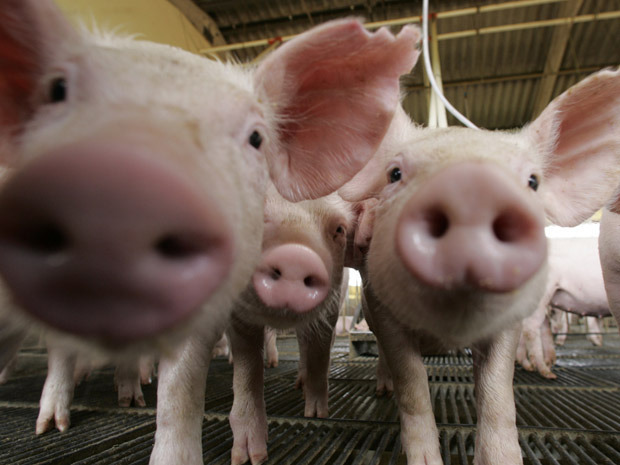
Pigs: One for us, one for my parents. Again, our pigs have access to a large, outdoor pen where they roll in their self-made mud puddle and lay in the sunshine all day. And again, even with ample room for rolling and frolicking in the pasture, they still require pretty minimal space. Plus, they make bacon. An ideal candidate to have on the farm. Our pigs were purchased from our hay farmer, just a quarter mile down the road. Don’t tell my husband this but I’m really flirting with the idea of bringing a breeding sow onto the property…
We’ve already also talked about raising another pig next year – we’ll have another mouth to feed and our other kiddos will be getting bigger and more hungry, no doubt! But for now, one is enough.
sheep grazing in a field
Sheep: Adding meat sheep was a great move for us. Much of our land is rocky terrain that is too steep for a cow to maneuver easily. Bringing the sheep onto the farm will be a great way for us to manage this scrubby landscape and with proper time, care, and good management – turn it into healthy pasture. Sheep are quick to fatten – often ready for harvest at just ten months old. They also don’t require a ton of feed or any grain, happy to graze and munch hay for their calories. We added breeding stock this year so that we can self-replenish our meat sheep harvest each year with new lambs.
We will most likely raise anywhere from 1-4 lambs each year for butcher, depending on our ewes.
Shaye with recentl butchered rabbit meat
Rabbits: We raised meat rabbits in Alabama and loved the ease and quick harvest they provided. Though we’ve yet to get them set up on our new farm, we’d like to have our rabbit system in place before this next winter. We could easily be harvesting fresh meat all winter long! They’re cheap. Easy. And actually extremely delicious.

3. Doing the math.

Chickens: Last year, our broilers dressed out at about 4.5 pounds each. At fifty birds, that’s roughly 225 pounds of meat. On top of that, we utilize heads, feet, and bones for chicken stock. The liver, lungs, kidneys, and any extra trimmings go to the dog which provides him with food (we don’t purchase dog food). The feathers from the chickens are used as mulch in the garden beds, along with the blood. Nothing is wasted.
Estimated chicken harvest: 225 pounds.
 Pigs: Since this is our first year raising pigs, it’s sort of a guessing game. Our pig farmer just came by to see our pigs and said that ours are about a month ahead of where his pigs are at the same age – they’ve been eating Scratch ‘N Peck Pig Grower, tons of food and garden scraps, and about two gallons of fresh, raw milk each day. On top of that, they also get the leftover whey from my cheese making. I’m estimating them to be a little bit above average when it comes time for harvest in October. I’m using my friend Quinn’s stats from her homesteading hog raising to help me guesstimate my yield – her’s has consistently been around 200 lbs. of meat per pig and like Quinn, we’ll be utilizing EVERYTHING. Lard, organs, and odd bits included.
Estimated pig harvest: 200 pounds/pig.
Sheep: Again, newbie here. But I’ll try my best to guesstimate. This year, we’ll be harvesting one lamb – a ram lamb. He’ll be about 10 months at harvest, which won’t be until December – even January, if we feel like he could benefit from another month of eating. He’ll be fattened on alfalfa/grass mix, scrubby pasture, and whatever garden scraps I’m feeling generous enough to share (those sheep sure do love lettuce!). Because this is our first year, it’s hard to know what to expect but drawing on other’s experience, I’ll give it my best guess. And (sorry to be repetitive) but everything from the lamb will be utilized – either for us or for the dog.
Estimated lamb harvest: 80 pounds
Total: 225 (chicken) + 200 (pig) + 80 (lamb) = 605 pounds of meat. 
(rabbit not included)
(oooh! and I totally forgot about the turkey! let’s tag on another 15 pounds for him!)

4. Where does that leave us?

605 pounds of meat would help us reach our goal and then some! Though, let’s be honest. Nothing ever works as well as we expect it to. The likelihood of all 50 broilers making it to harvest is minimal. Perhaps the hogs will weigh less than I planned. And, Lord have mercy, what if something happens to the lamb?
It’s all part of farming. And as you can see, for the smallholder (that’s what Hugh from River Cottage calls us) an animal loss is a huge deal. Because of this, I’d like to prepare to raise more meat than we need. Supplementing with rabbits will help, although they are a fairly small contribution (weighing in at about 3 pounds/each). Another lamb or two would be nice, but that will have to wait until next year when our older ewe has her first lambs. We also have a fantastic rancher just a few minutes away that raises beef for us – we are happy to continue purchasing our annual quarter to supplement the red meat supply.
In a way, raising meat is sort of like gardening. You have to always plant extra, knowing that some seeds will be lost to the birds, others ravaged by ants, and even others will be lost to disease. Calculating loss into the equation is essential if we’re actually going to make it on what we raise here on the farm.

5. A few take-away points.

– Raising your own meat is possible! Most people think they need to stop at a vegetable gardening, simply because of space limitations but it’s possible to raise meat – even in your backyard! Chickens and pigs both require minimal space. Even lambs can get by in a fairly small area. We give them room to graze pasture because we can, but I know plenty of folks to raise their animals on acre plots in town.
– Don’t expect your meat raising to go as planned. Oh wait – did I say that already? Nothing. Ever. Goes. As. Planned. Plan and prepare with a backup. Ya know. Just in case.
– Enjoy your animals while you have them. They’re dying for us to be sustained and I think that’s a pretty amazing provision. It’s important to be thankful and to take good care of them while you’ve got ’em.
As always, I’m thankful for the Lord’s provision in His creation. He’s given us land, able bodies, willing hearts, and the opportunity to raise this meat for our family this year. How thankful we are!
There is bacon at the end of this long road. I can smell it from here…

Wednesday, March 23, 2016

Sow, Grow, Stow

An artful approach to living emphasizes self-reliance & traditional homemaking skills.

August 26, 2013
http://www.rodalesorganiclife.com/home/sow-grow-stow?cid=soc_Rodale%27s%20Organic%20Life%20-%20RodalesOrganicLife_FBPAGE_Rodale%27s%20Organic%20Life__ 
From her productive homestead in northeast Portland, Oregon, Harriet Fasenfest has been gardening, preserving, and cooking up a storm for more than a decade. The stylish and energetic 60-year-old ran a string of popular Portland cafés and restaurants in the 1980s and '90s, all while raising her first son as a single mother. These days, she has turned her attention to the home, making it her mission to promote the role of the modern-day balabusta—Yiddish for "a good housekeeper." Harriet's mother, Sonja—a German immigrant balabusta of considerable prowess—taught her the essence of good homemaking. Growing up in the Bronx, Harriet knew nothing about vegetable gardening; those skills came later, growing from her passion for preserving. But she learned about food at an early age.
"When I was a kid, I went shopping with my mother—to the butcher, bakery, and greengrocer—each one was an experience," Harriet says. "Homemakers were proud of their ability to select good food and prepare it."
Growing and preserving food crops at home is another important part of Harriet's vision for successful homemaking. Not necessarily because it's cheaper to prepare meals from a homegrown harvest, she adds, although it can be, but because it helps us see that we can produce or make what we need instead of buying everything from a store. "Figure out what you need and get the raw materials directly from the farmer or your own garden—then you become the producer." This puts you in control of what and how much you consume so you can tailor meals to your household's needs, she says.
Harriet's direction crystallized in 2000 when she noticed mountains of rotting fruit beneath an old pear tree in her garden. "That was my 'Newton' moment," she recalls. "What had turned these ripe pears from a prized food resource into a nuisance in my back yard? How had I come to take them for granted and leave them to rot? What had turned those nutritious pears into valueless objects?" The years that followed found her planted in her kitchen, processing all the gleaned food she could get her hands on as she learned the once-common (but today esoteric) techniques of food preservation.
Photos: Jon Jensen
Harriet's kitchen credentials grew via mentoring from her friend Marge Braker, a home economist with the Oregon State University Extension Service in Clackamas County. Together, the two women presented workshops on food preservation and cooking until Braker's retirement. Harriet continues the workshops from her home studio. With her book A Householder's Guide to the Universe (Tin House Books, 2010), Harriet aims to deliver "the real story on how to live authentically and repair what's broken in our society." The term "householding"—which she borrows from a book of essays by farmer and environmental activist Wendell Berry—is bound inextricably to the seasons. Harriet describes householding to include the full range of activities involved in the domestic economy, from planting and harvesting each month's fruits and vegetables to keeping track of what's ripe at local farms and snapping it up at its peak. Life is busy through spring and summer, becoming downright frenetic in fall when she practically lives in the simple outdoor kitchen that doubles as her teaching studio. In winter, all the frenzy of the gardening season is rewarded with an abundance of homemade food.
Harriet's pantry is stocked with swoon-worthy jars of pickles, preserves, fruit, vegetables, and grains, all from local organic farmers and her own garden. The orderly rows of jars contrast with her voluptuously wild, overgrown back yard. In the garden, clumps of black-eyed Susans, nasturtiums, and other pollinator-friendly flowers are packed into every available niche of sunlight that isn't occupied by food plants. Beauty is obviously vital in Harriet's home and garden, as it is in every other aspect of her life, but what drives her is a singular need to craft a life that expresses her love of the planet through her day-to-day choices.
A Householder's Guide to the Universe is as much a manifesto and call to action as a how-to guide to living a better life. It offers inspiration, advice, rants, musings, recipes, and stories about Harriet's own struggles negotiating the challenges of householding. The book is organized by month, providing a seasonal framework for understanding the processes and ideas behind householding. "I'm not advocating a throwback to Betty Crocker," she says. Instead, she hopes the book will challenge and entice readers to consider a new way of thinking about home economics.
Admittedly, not everyone has the time or ability to commit to householding. But Harriet questions the thinking that has us measuring our time in terms of money, arguing that anyone can at least make some choices about his or her home economy. She also advocates for households of all descriptions: "You don't need to have a conventional nuclear family to household. It's about creating a household of commitment," whether with family or friends. "There's a lot of preciousness about the idea of householding. We see picture-perfect people doing it and maybe want to emulate it, from the outside in. But it isn't just about getting chickens," Harriet says. "For it to be meaningful, we should understand the home as a microcosm of the world. You may not be able to change the global economy, but you can change your home economy."
Rich or poor, busy or at loose ends, with or without children, there are sacrifices as well as benefits involved in the householding life.
"It's hard to do it without giving up something," Harriet says. "Are you willing to be available when the harvest is ready? Can you budget differently, with the largest outlay of money in fall when you're putting up food? And can you learn to eat your mistakes?" Householding is a skillset—a tradition that has been taught over the centuries, generation to generation of, usually, women.
"You can't take a lifetime of knowledge and distill it into a day, a week, a year, or even a book. To become a balabusta, it takes time." But you have to start somewhere, and your own back yard is as good place a place as any.
A Kitchen in the Garden
Harriet Fasenfest's outdoor canning kitchen is a simple open-air space, formerly a carport, shaded by grapevines. She uses the outdoor kitchen to preserve her garden's bounty in summer, when a big simmer-ing pot of tomato sauce would heat up the house. In A Householder's Guide o the Universe, Harriet lists the essentials for an efficient outdoor kitchen:
  • A tabletop propane burner or barbecue grill for the canning pot. Optional but convenient: a second burner on which to cook jam or sauce while the canning pot heats up.
  • A counter-height work surface for filling bottles.
  • A sink with a bucket below to catch draining water.
  • A drinking-water-safe hose connecting the sink to an outdoor faucet.
     
Originally published in Organic Gardening Magazine, Oct/Nov 2013

Tuesday, February 23, 2016

The Sustainable Couple: Kelli’s Homestead

http://104homestead.com/happy-sustainable-couple-kelli/
To me, homesteading means engaging in a give-and-take relationship with the earth. That means growing your own food, cooking from scratch, raising backyard livestock, collecting rainwater, simplifying your life, reducing your impact, and basically not being a jerk to Mother Nature. She is, after all, part of the reason why we are surviving.” – Kelli
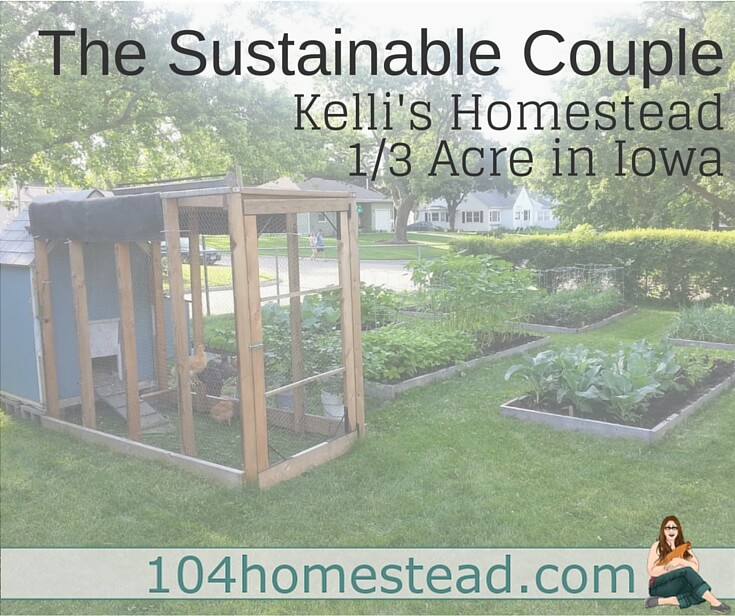
Kelli and her husband are urban homesteaders living on 1/3 of an acre in Iowa. She is the author of homesteading site, The Sustainable Couple.

The Sustainable Couple

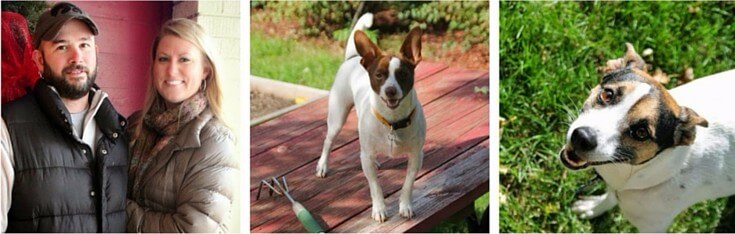
Homesteader Profile: Kelli, her husband, John, and their two dogs live on a 1/3 acre urban homestead in a large Eastern Iowa city. They share details about our homesteading adventure, including our gardens, our chickens, our home, and more at The Sustainable Couple.

Kelli’s Homesteading Journey

Our urban homestead and The Sustainable Couple was born about 5 years ago. We had lived in our new-to-us home for about a year and we wanted a small garden. At the time I was working as a high school language arts teacher and had the summer off. Tending a garden seemed like a nice summer hobby. I did a little research, discovered we’re right on the line between Zone 4 and Zone 5, and rented a tiller from the hardware store. What started as a simple 6’x8′ garden in the ground eventually became six raised garden beds, each measuring 4’x8′ for almost 200 square feet of raised bed space. We also have some edible landscaping under the shade of a few big trees, which adds about 50 additional square feet of space.
Kelli and her husband are urban homesteaders living on 1/3 of an acre in Iowa. She is the author of homesteading site, The Sustainable Couple.
You could say that gardening was a gateway urban homesteading drug, because then came the compost bins. I even tried vermicomposting for a few months, but killed the worms by accident. And then canning and preserving the harvest.
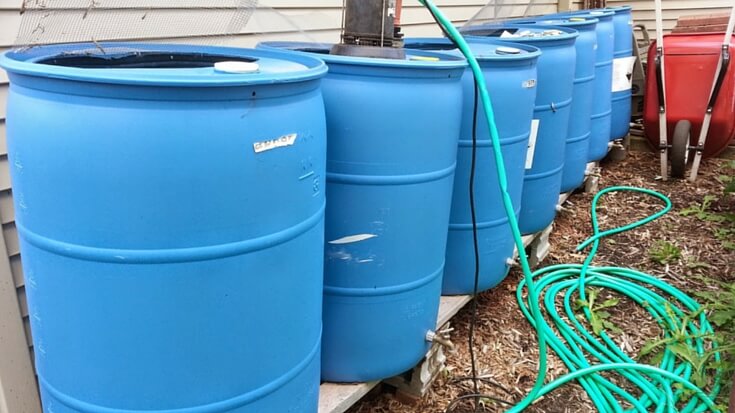
Soon I realized that watering my garden from the faucet – and paying for city water – was not a good idea. So naturally we needed rain barrels, and installed 14 of them, complete with an irrigation system to get the water from the barrels to the garden.
Kelli and her husband are urban homesteaders living on 1/3 of an acre in Iowa. She is the author of homesteading site, The Sustainable Couple.
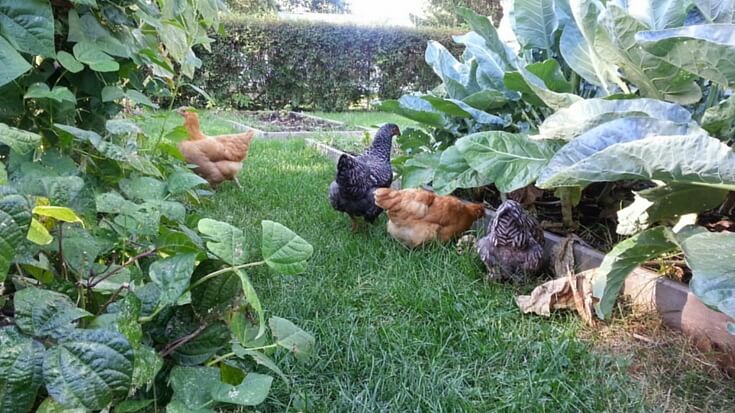
With all of that wonderful organic produce, I began cooking from scratch. It’s a fun challenge to see if we can avoid buying processed foods from the store (our local food co-op). Then came our small backyard flock of laying hens, which we lovingly refer to as “The Ladies”.
Kelli and her husband are urban homesteaders living on 1/3 of an acre in Iowa. She is the author of homesteading site, The Sustainable Couple.
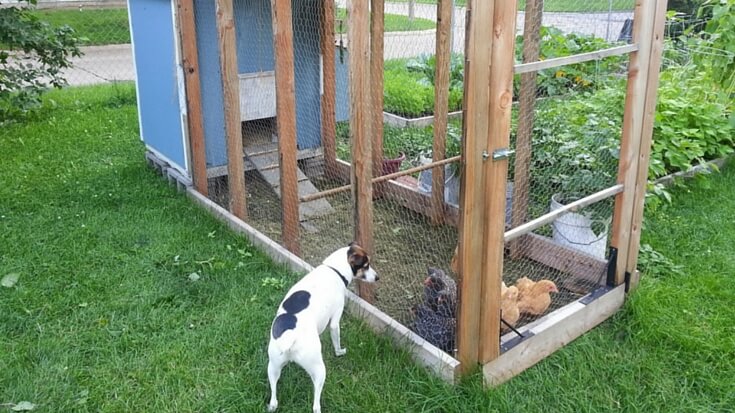
Any urban homesteader will tell you that the moment they get an animal that produces something for the homestead, they feel like they’ve achieved the dream. For us, it was the yard birds that made it happen. Not only do we feed these partially free-range girls a 100% organic diet on a budget, but they supply us AND several neighbors with eggs. We sell about 2-3 dozen eggs a month. It’s not much, but it more than pays for their feed bill.
After about 5 years we realized we were building up this little homestead in the city without even knowing it. Our home was built in 1840, it requires a bit of upkeep. This is where my electrician husband gets to shine! Nearly 100% of our home renovations are DIY, frugal, and earth-conscious.
Heck, frugal, earth-conscious renovations don’t stop with our house. Our chicken coop is actually a retro-fitted HAM radio shed!
But we’re not done yet, folks. We’ve got some big plans for this year. In 2015 we hope to add more edible landscaping to the front of our 1/3 acre lot. You’ll see that we have quite a large front yard:
Kelli and her husband are urban homesteaders living on 1/3 of an acre in Iowa. She is the author of homesteading site, The Sustainable Couple.
This is a lot of space that isn’t being used for food production. Talk about a missed opportunity! So, this year means blueberry and raspberry bushes, maybe two fruit trees, and lots and lots of herbs and ‘pretty’ vegetables (like rainbow chard).
In our home, we’re going to continue composting nearly all of our food waste (which isn’t much). We’re going to continue preserving our harvest, sharing bumper crops with the community, family, and friends.
Lastly, in 2015 we are going to refocus on making home the center of our homestead. To us, this means spending more time on our passions, with our family and with our friends. This means slowing down, unplugging, savoring the minutes. It means asking “Why?” and “Why not?” It means putting our homestead before our day jobs at times, because the heart of the homestead is in the hard work and love between the two people who share it: The Sustainable Couple.
Kelli and her husband are urban homesteaders living on 1/3 of an acre in Iowa. She is the author of homesteading site, The Sustainable Couple.

Kelli’s Advice for Urban Homesteaders

Think big. Not in scale, but in idea. You can do nearly everything on a small, urban piece of yard or patio that a person with a few acres does in the country. You’re altering the scale and process by which it is done. We live in the heart of a city of 40k+ people. We live 5 blocks from a bustling, vibrant downtown district. We have chickens, and 6 raised beds in our backyard, and rain barrels, and a front yard garden, and edible landscaping. Last time I checked, this rivals some homesteaders who live on acreages. Think big, friends.

Thursday, November 12, 2015

A great read!

Thursday, November 12, 2015

I am gaining on them.

Alcoholism is real. Let's start by saying that. And if you are a two-hundred pound ovine with nothing else to do on a dreary day but get drunk, that is what you do. Ask my ram, Monday, who has thwarted every single fence repair and electronic shock I've thrown at him to break the barrier and lead his flock to the Promise Land; the fermented apples resting in glorious piles at the base of my neighbor's apple trees. I woke up this morning at dawn—and was getting dressed in farm armor to head outside for chores—when I glanced out the window and saw all seven sheep eating on the hillside. Good, I thought.

Good, I had no reason to rush as I set the percolator on the wood stove and got the dogs outside to pee and regarded my morning with the rural civility it deserved. But as soon as I headed inside to pour that first cup of coffee I heard the crash of a giant horned head bursting through woven wire and brush and knew that demon sheep was back to his addiction. I heard the baaas of his girls behind him, and came out just in time to see them romp across the little road to my neighbors yard. Goddammit.

My neighbor was outside with his granddaughter, waiting for the school bus. This whole thing is both embarrassing and ordinary. I wave and send my two sheepdogs after the sheep, about fifty yards away from us. Gibson uses the little road as his path to an outrun. He then does this dog-food commercial leap over a stone wall and slams into the grass below it with decision. God's Body there is nothing better than seeing a beast doing what it was born to do! I can't help but whoop for him, and little Friday trails behind him. He runs towards the sheep, slows down to his crouch and slink, and gets all seven back on the road and home in seconds. I don't know how anyone out there raising sheep isn't doing it with border collies. They have better fences, clearly.

The dogs and I spend the next hour outside in the sick-warm of an unseasonable November. It is mud everywhere. EVERYWHERE. I am carrying out fresh hay, grain, and lugging water buckets and while my body is on the tasks of livestock breakfast my mind is just on hunting. Whitetail season opens again in a few days. I'll be out there trying, but I am being realistic about this season. It's been five years of hunting and not once have I filled my freezer. I want to because sixty to a hundred pounds of venison is a serious haul of grass-fed protein for a winter larder. It's money I don't have to spend at the grocery store. It's going to be a tight winter and anything hunted is an economic and gastoral blessing. I hope I get lucky. I have a muzzle loader tag this year as well, so maybe a late season doe will be a real thing.

I am thinking of deer, but also about taking Anna Kendrick out to chase some squirrels this afternoon. I don't care if she gets one or not, that girl just needs to fly. I am planning on taking a long hike with her on the mountain this afternoon. Her, flying beside me, stealing my hat from my head, playing tag with the glove... it's worth every second spent with her even without a kill. We walk and I think and watch the woods like the pair of predators we are. If the rain isn't coming down in buckets I will take her out. The choice is made right there and then as I move the chicken pens out of the mud and onto solid grass.

Chores get done and the collies and I get dirtier. I say a quiet luck prayer under my breath for a house with linoleum floors. There is no carpeting in the living area anymore and that is a great thing. I see us walk inside with my coated boots of mud and manure and two dogs covered in the same and watch the muddy paws make a trail to the water bowl across plywood and plastic and smile. I think of when my sister came to visit a few weeks back and pulled me aside to say, in that loving-but-concerned sister way, that "I love you, Jenna but your house is gross." That hit me hard because before their visit I spent three days scrubbing and cleaning and buying things like scented candles and Febreeze and I thought the place was ready for a photo shoot. She saw the permanent stains on the plywood from thousands of muddy paws crossing them. She saw the curtain lace needing to be washed and turning from white to cream. She smelled those farm-house notes of wet dog, earth, puppy pee and burnt coffee. Of course it was gross to her. I shrugged. It was a reminder of how feral my life must seem to a mom with a suburban house and floors literally clean enough to eat off of, because she has babies crawling over them. When you got two adults, two incomes, and 100% less farming you can make your house spotless. I'm not saying it's easy, but with diapers catching most of the manure in your life its a hell of a lot easier to keep things tidy. I'm fine with my house being gross to some people. They aren't on Team Farm.

I'm back inside now and Gibson is asleep, exhausted, in the overstuffed chair. The wood stove is lit just to fight back the damp outside. Friday had her puppy breakfast and is in her crate asleep as well. Annie (who sleeps as much as possible at 16) slept through all of this mud and memories and hasn't moved off the comfy daybed since her morning piss. The house smells like wet dog and burnt coffee, and I still smile. I poured myself a giant mug of the nectar and I'm enjoying it with sugar packets I pocketed from the gas station because things are too tight right now to go out and buy a box of Equal. That sentence might sound tragic to people with cleaner floors, but I am happy. I wouldn't trade in this scrappy life for a maid staff, sugar canes, and espresso machine.

I am looking forward to a hot shower and the chicken and potatoes with lupine anticipation. It's not ten-pointer but it'll do. Last night I had two chicken thighs cooked in an asian sauce for dinner. It was amazing. The rest of that bird is in the crock pot, a sort of leftover stew to pick at when I get too wolfish to fuss with recipes. Yesterday morning I had bacon and eggs from this farm's chickens and pigs. When the place that gets you mocked, takes care of you so well, you don't really care about others' opinions. Kind of like when you're old enough to not be embarrassed by your parents anymore - just grateful.

Today is just about indoor work - graphic design clients and writing - and that is good. I'll clean up the place and run a mop and light some candles to fight against the mess. I'll put on a record, something good for a rainy morning like Iron and Wine or Band of Horses. The house will be filled with music and dog sighs. I'll get a hot shower (which I am looking forward to more than most people look forward to getting laid), pour myself some more strong coffee, and put on some clean clothes and lipstick and feel like the huntress with a mortgage I am.

I am okay with all of this being messy. I am okay with a sister grossed out by my floors. I am okay with people I went to college with being wealthy while I am sliding pink packets into my pockets after buying a cup of coffee at a gas station. If the race is about happiness, if that is our actual metric for a good life, I am lapping nearly everyone I know.

And the ones ahead of me?
I am gaining on them. 
http://coldantlerfarm.blogspot.com/2015/11/i-am-gaining-on-them.html 

Wednesday, November 4, 2015

How to Start Your Own 1-Acre, Self-Sufficient Homestead

http://www.earthables.com/self-sufficient-homestead-1436501898.html
Ever thought about creating your own self-sustaining homestead? There are a number of ways to do it, including these.
Using just one-acre of land, you home can provide you with most of your everyday needs, whether you decide to keep livestock like pigs, chickens, cows, goats - or, no animals at all.

Raising a Dairy Cow
A dairy cow can provide you and your family with plenty of fresh, unpasteurized dairy products as well as meat. Plus their manure makes a great natural fertilizer too.
While caring for a dairy cow does cost hundreds of dollars each year, compared with how much money you would spend on dairy products each year, the fresh milk supply - along with the increasingly better soil fertility can make it a good investment.

tumblr_mx7hvobatz1rxudkfo1_5001mslizot.wordpress.com
While it isn't impossible to maintain a self-sustaining homestead without a cow, it can make it much easier to do so. You'll need to milk the cow regularly, and make sure someone experienced is available to help while you're away.
It's not difficult to milk a cow once you learn how, and it can be done as quickly as eight minutes. Your reward is fresh cow's milk that can be used to make everything from cream, cheese and a delicious glass of milk.
Crop Rotation and Your Pasture

If you do get a cow, half of your acre will need to be dedicated to pasture. It can be plowed every four years if you plan to rotate crops, or left as is.
Most experts recommend rotating crops in strips of one-quarter at a time, resulting in freshly sown pasture that varies with age which provides the most productive land usage.

How To Start A 1-Acre, Self-Sustaining Homestead

Dorling Kindersley
Grazing
It's important not to allow the grass to become overgrazed. If it does, cows will need to be moved right away. Proper grazing management is essential for keeping the grass healthy. Grass needs plenty of time to fully grow before its grazed, or mowed down.
Just a half-acre of grass can keep a Jersey cow fat and happy all summer. While you probably won't have any leftover grass at the end of the season, if you do, you can use it to make hay.
To prevent overgrazing, the cow will need a place to stay inside for the winter, while still allowing for fresh air every day.

Other Animals
Different animals require different living conditions, though most will need some type of indoor shelter during the colder months of the year. A movable house with a strong, movable fence around it, works well for pigs. Chickens could be kept in a permanent house in one corner of the garden, or, in mobile coops on the land.
ecodaily.com
Gardening

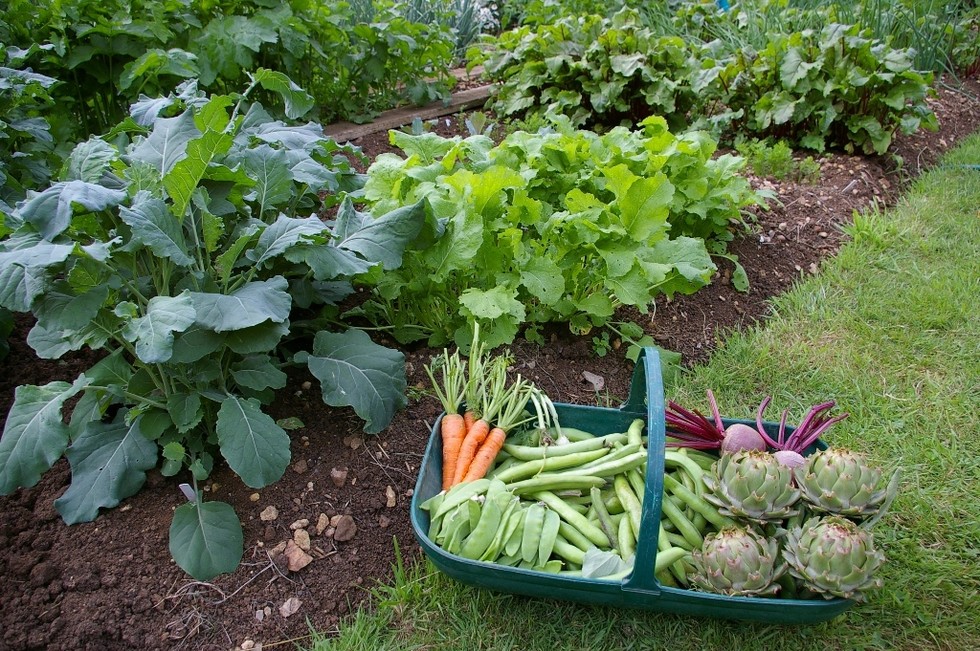
The other half of your acre can be used for a garden. Separating it into four sections so that annual crops can grow in a strict crop rotation is ideal.

For example:
Grass (four years)
Plot 1: Potatoes
Plot 2: Legumes (pea and bean family)
Plot 3: Brassicas (cabbage family)
Plot 4:Root Vegetables (carrots, beets, etc.)

colegardens.com
Even if you only have a minimal amount of space to work with, you can still develop a self-sufficient home!


cabin1Lamar Alexander
This was an excerpt from The Self-Sufficient Life and How to Live It, written by the late John Seymour, first published by Dorling Kindersley in 1976. It's a treasured classic for those who want to get back to the land, and highly recommended.

Thursday, June 25, 2015

Building Homesteading Partnerships

http://www.countrysidemag.com/building-homesteading-partnerships/
Pantry4
I caught up with Bryce as he loaded a pair of speed skis into his beat-up pickup truck.
“Hey, I’ve got a quick question.”
Bryce slid the skis through the back window and between the bucket seats. “Yeah, what’s up?”
“Are you gardening this year?” I pointed to his front yard, which had not been covered with lawn since either of us moved into the neighborhood. Bryce loves fresh produce as much as I do and attempts to grow what he can in his patch of dirt.
He shrugged. “Yeah, I guess I need to get on it.” Every year, Bryce plants at the last minute, harvesting meager crops from neglected plants just before frost.
“What if we gardened for you in trade for whatever produce you don’t need?”
His eyes lit up. “Yeah….” He scanned the barren dirt yard. “It is a lot of work for one guy.”
Unlike me, Bryce is single with no children. Even from his neglected garden, he harvests extra and offers it to my family. Bryce is often at work or playing outdoors. He knew a good deal when he saw it.
Within minutes, we had a basic plan: His dirt, my seeds. His water, my work. His produce, my food preservation skills. Because his yard was just across the fence from my own, I could send my children to pull weeds or turn on the water. Bryce was excited about pickles, popcorn, and marinara sauce. And, I told him, if I ended up using more than my fair share of the produce, I’d give him fresh eggs from my chickens.
Thus we acquired Garden #3.
Slowly, we’re taking over the neighborhood. Garden #1 resides at my rented property. Here I have my chickens and the crops needing the most attention. A block away lies Garden #2, in the yard of a friend who eschews manual labor but loves a home-cooked meal. In the house to my right is the man who does repairs in trade for food for his family. The neighbor on the other side lets me glean apricots from his tree. And though the lady at the end of the block has no verbal agreement with me, she has a small beehive. I like to offer produce from my garden, made possible by her bees.
Living a mile south of downtown Reno, we don’t have access to the farms we want. We also live in a high plains desert, which limits most horticultural endeavors. Very few of us can “do it all,” and many have additional jobs and families to care for. But working within a tight group can share resources a long way.

Start Small

The first year I moved into this little house, my husband and I stayed up until 2 a.m. on many nights to finish canning peaches, marinara sauce, or jelly from the grapes growing over the back fence. As people at church asked about my purple-stained hands, I realized few knew how to can. Even women of my mother’s generation couldn’t make jelly. As I explained how I preserved food, I gathered interest.
The next year, I had too many grapes and not enough time. I approached a few friends and asked, “Do you want to learn how to make grape jelly?”
“Yes!” they immediately exclaimed. “What should we bring?”
“Just the sugar and jars for your own jelly. I have all the grape juice.”
That year, I finished canning with the help of friends. My husband didn’t have to step into the steamy kitchen. More friends, happy husband. We all won.
Those first years, I didn’t yet have chickens. I hadn’t learned how to ferment or to make cheese, and garden #1 was just called, “The garden.” If I had attempted all that while settling into a new house and a fairly new career, I’d have been overwhelmed to the point of failure. My pleas for help wouldn’t have reached far because I didn’t know anyone else. The homesteading network had to grow slowly to be successful, just as any worthy endeavor.

Network

You do not simply make grape jelly. You take pictures of purple-stained hands and post them on Facebook, touting your jelly-canning escapades.
Soon I received referrals to friends-of-friends wanting to learn. Katie referred me to Beck, who dearly longed to learn the art of canning. Soon Beck and I became good friends. We shared experiences through Facebook messages, meeting to exchange seeds and plants. Beck introduced me to Danielle, an avid gardener and canner who lived in upstate New York but now has a Reno apartment and three small children.
Danielle started a Facebook group, bringing together like-minded friends. Beck and I help moderate. In less than a year the group has swollen to over 270 members. We discuss all things homesteading, share pictures and brag or offer items for sale.
Each year, I raise several hundred plants, keep what I need, and sell the rest to send kids to camp. I started the first year with about 200 plants, and since then the sale has snowballed. Now I start about 1,000 plants and sell on a first-come, first-served reservation system. It’s become so involved that last year I lost a few varieties because of unmonitored greenhouse temperatures while I worked two jobs. I had no time to market my seedling list and I made very little profit. This year, Beck and Danielle worked miracles. By creating Google docs to organize orders, helping with the work, and sharing the list, they’ve helped me pre-sell over 700 plants. We anticipate this year to be the most profitable. And guess who’s getting free plants for their own gardens? (Don’t tell. It’s a surprise.)

Have Something To Offer

“So how do we get into something like this?” asked David as I drove back from the cheese-making class.
Juana and David had accompanied me as I taught a dozen new friends how to make mozzarella in thirty minutes. Crystal, from the Facebook group, hosted the class and bought the milk. We both invited our friends.
“I don’t think we can,” said Juana. “We live in an apartment.”
I smiled as I passed convenience stores and housing complexes. “You don’t have to own chickens or have a garden,” I explained. “Just network and have something to offer. There are a lot of people who have those chickens but need help caring for them. What do you have that you could trade?”
Juana paused while she thought about it. “I don’t know,” she said. “I do crafts.”
“We can work,” said David.
“Really, that’s what a lot of farmers need most,” I explained. “A lot of us have the gardens or the animals, but we also have to make a living. We’d gladly share our produce with someone who showed up for a few hours to help weed or plant.”
Apartment-dwellers often have other skills valuable to farmers, including childcare, sewing skills, or technical knowledge.
My friend Caidyn posted on Facebook, “Up with the fishes in the morning!” He was out on Pyramid Lake, which is well known for large, delicious trout.
“Are you pulling in any big fish?” I asked in a comment. “I used to trade homemade bread for fish when a coworker went to the lake.”
Caidyn and his family don’t eat much trout. He pulled in some twenty-inchers but had released them. “Wish I knew,” he said.
I told him I would buy and/or trade for any decent-sized trout he caught. Caidyn was excited about the potential of another mutually beneficial decision.
Even those who aren’t “able bodied” have something to offer.
Though my friend Beck would love to do more, a painful disability limits her movement. Beck’s Google doc saved so much time with my seedling sale that I’ll gladly share plants and produce with her. She also serves as my local media liaison for my writing and farming projects.
When you make your connections, be sure you reciprocate somehow. People offer each year to “take anything I don’t want.” Homesteading is such hard work that it doesn’t even make sense to plant something I don’t want. Any bounty I cannot immediately use or store goes to those who offer something in return.

Be Willing To Work Hard

While at that cheese-making class, I explained how to purchase good milk.
“Do not buy ultra-pasteurized,” I said, “because it’s heated so high the proteins get damaged. You’ll probably use regular pasteurized milk because raw milk is illegal.”
All the cheese-students paused. A few jaws dropped.
Only twenty eight states allow sale of raw milk for human consumption Some states allow sale of goat milk, and some limit sales volume. Where I live, I simply cannot purchase it. Though Reno sits close to the California border, where sale is legal, anyone with a Nevada ID cannot purchase raw milk within a Californian establishment.
“But….” I glanced over at Mandy and let her finish for me.
She said, “I just bought some baby dairy goats. I’ll have milk in about a year. And I live on a big dude ranch that needs a lot of work done. If you come help me, I’ll help you out.”
I’ve known Mandy for years. She means what she says. Though she has the land and the knowledge, Mandy also has three small children. Her dreams of sustainability would have to wait many more years if it weren’t for homesteading partnerships. Mandy had attended the cheese-making class because she needed to learn how to process milk. She needed to network. Mandy’s milk will be legally accessible to friends if she gives it as a gift of gratitude for their hard work.
You don’t have to drive to an old dude ranch in the desert to enjoy these partnerships. Barb, my 75-year-old massage client, is not about to climb a ladder to harvest from her 30-year-old apple tree. Each year, she calls me up. “I don’t know how many the birds have left,” she said. “And I don’t know how many worms there are. But come get them.”
We have some rules for our kids: Clean up Barb’s fallen and rotten apples first. Be kind to her tree. Fill two buckets with the nicest apples and put them in Barb’s garage. Rake the lawn before we go. If Barb isn’t feeling well, she only has to get up long enough to let us know she’s home. We receive a tree full of free, organic apples and she gets free yard work.
Never make people regret their offer. Or it won’t be offered next year.

Know Your Circle

I share a unique agreement with two friends. With eight children between the three of us, we don’t have surplus food money. We also don’t want to use tight budgets as excuses to feed our children junk.
We’ve developed a money-saving shopping system. If we find clearance sales or produce deals and have extra money, we buy enough for everyone. We know the other two ladies will reciprocate in the future. That way, if apples are four pounds for a dollar in my neighborhood and the other two friends can’t leave their homes, we can all take advantage of the same sale. A similar agreement exists within our gardens. If I grow cucumbers and harvest more than my family can use, I contact them first. Usually, they put all the cucumbers to good use. If they can’t use them, I offer the food to someone else. When they have extra tomatoes or surplus canning jars, they ask if I need them.
This group exists because of trust and a shared vision. Members are only threefold because trust thins the further you reach from your inner circle. If we had different eating styles, this plan wouldn’t work. Feelings would get hurt if one felt more entitled or selfish than the others. We don’t plan to add a fourth member to the group because we need to keep that trust factor, but we’ll gladly tell others how to create their own groups.
Larger circles include informal scratch-my-back agreements. Last year, Amy lost her first chicken to overzealous dogs. Though the hen faded fast, she was still alive and suffering, and Amy couldn’t complete the deed herself. She contacted Sheryl, who contacted me. We handled the sensitive job with compassion. Amy has always been grateful. Just yesterday, she offered two wooden shipping containers, which would make excellent planter boxes. I deferred the offer to Beck. Those containers will soon be handicapped-accessible planter boxes.

Be The First Name For Referrals

As I explained to David how to contribute to a homesteading circle, I also detailed the importance of getting his name out there.
“Nobody can ask you to help on his farm if he doesn’t know you’re interested in helping,” I said. “So get on social networking. Volunteer at urban farming projects. Think about what you have to trade, and be sure people know about it.”
It could start with a blog, or a cooking group. You could be a small-time neighborhood gardener searching for someone with similar tomato interests. Eventually the network grows and you can access zucchini you can’t grow on your apartment patio or meat that’s unavailable at your grocery store.
In the six years since I stayed up until 2 a.m. canning with my husband, our endeavor has grown to an informal educational system. I write for national poultry and farming magazines, sharing the info with local groups. With plans to acquire a static teaching location, Beck and Danielle help offer classes within churches and homes. Friends visit Ames Family Farm for research as they determine whether they want to undertake homesteading endeavors. Each year more people learn how to can, then invite friends and family to learn the next year. When they have apples or need advice on making vanilla extract, they defer to the members within our little homesteading community.
We accomplish miracles with very little space.

Friday, May 15, 2015

How Much Time & Land Is Needed To Survive Off The Land?


http://www.granny-miller.com/how-much-time-land-is-needed-to-survive-off-the-land/
Granny –
You have a lot of canned goods that you did yourself and seem to farm quite a bit. How much time (in hours per day on average) do you invest in order to successfully be food self-sufficient over the course of a full year? To go along with this question, how much land and time would you have to have in order to survive off the land? (as in pay your bills by selling food)
Lee

Lee –
Your first question is easy to answer the second is not so easy.
It is not possible to enjoy what is considered a modern and varied diet and be 100% food self-sufficient.
A life without sugar, coffee, olive oil, oranges, lemons, coco and other products that aren’t native to Pennsylvania, would be hard for me to tolerate  year in and year out.
It is possible to live off of just the food you raise but it’s horribly monotonous.
Much of my home food production is seasonal especially during the late months of summer.
But some of the food production is ongoing daily throughout the year.
The home canned food that you see comes from a very large vegetable garden, small orchard, grape arbor and assorted animals. I rise at 5:00 AM most mornings and each season brings different work.
During the summer months many hours are spent in the kitchen and garden.
During canning season ( June – October) 12 – 14 hour days in the kitchen or garden at least 2 or 3 times a week are not uncommon.
It is more than a full-time job.
During the rest of the year the animals must be taken care of every day.
The morning and evening chores to feed and care for them takes about 45 minutes twice a day; with all day most Saturdays and Sundays devoted to barn work, fence repairs and animal health.
In the spring I’m in the barn for about  3- 4 hours every day during lambing which can last 3 or 4 weeks.
Washing eggs is another daily chore.
Except for hard winter, 10 to 15 minutes a day is spent washing eggs.
On average two to three hours every day is spent cooking, baking and cleaning up the kitchen mess that comes with food self-sufficiency. And that’s not including my regular housework; cleaning, ironing, laundry, sewing and other domestic household tasks still must be done.
During the cold months I spend about 1 or 2 hours a day (spread throughout the day) tending to a cook stove to cook the food and the wood stoves to heat the house.
In the spring my husband & I spend a couple of weeks with a few 12 – 14 hour days plowing, tilling, sowing and planting.
Right now we are making hay which is another couple of 12 hour days spread out 2 or 3 times during the summer.
Just so you know what I have described above is not considered “farming”.
What I described is the labor and effort involved just to feed two middle-aged adults – no children and nothing much extra to sell.
We are using diesel engine equipment and not horse power. If we used horses or mules it would be less expensive – but much more work.
We sell some eggs, apple cider,chicken, beef, pork and lamb but the income is nowhere near enough to live on.
It won’t even pay all the taxes and auto insurance.
What my husband and I do, I would call a closed and sustainable domestic economic system. Some people call it homesteading and now a days the new name for it is “prepping“.
It works because we have embraced traditional agrarian sex roles and a traditional “cottage economy”.
You don’t need lots of land to produce some of your own food.
Many people produce much of their own food with a large garden, a dairy goat, backyard chickens and rabbits and a few fruit trees.
Two generations ago that’s what most people did whether they lived in towns or in cities.
Your second question cannot be answered in general terms.
Making money from your land depends upon where you are located, what type of ground you are working, your markets, and how healthy and strong you are.
I know of people who can make a living on 5 acres and those who can’t make it on 500 acres.
The key to self-reliance and living off the land by your own efforts is to as much as possible have no debt, needless bills and to own everything out right.
Barter your time for goods.
The powers that be have yet to find a way to tax our time or cabbages.
Grow as much of your own food as you can and learn to do without.
There is so much that people use every day and they don’t need it to be happy.
There is no shame in bagged lunches, no cell phone, thrift store clothes and living very modestly.Thrift is a forgotten virtue.
If I had to make a living (Federal Reserve Notes) from just farming I don’t believe it would be possible given my location and circumstances without cheap labor.
The farm labor issue is an almost insurmountable problem for small family farms. We are hamstrung due to over regulation.
I own good fertile farm land and 2 tractors, but I would need to hire at least 2 or 3 dependable people and pay them sub minimum wage to even stand a chance to break even by farming.
Some small farmers are using an unorthodox approach to the labor issue.
Certain well-known persons in direct sell circles (who shall remain unnamed but whose initials are JS ) are able to make a go of so-called direct sale family farming because they are using “interns” and “volunteers” for farm labor. These farmers/gurus/lectures/authors live close to extremely wealthy metro area markets bloated by federal tax feeders. Most small family farms don’t have the benefit of those types of markets.
In my opinion these folks are not really addressing the farm labor issue in a way that I would be comfortable with.
Good Luck to you in the future!

Katherine Grossman

Katherine Grossman was born and raised in the greater Washington, D.C area. But for the last 30 years Mrs. Grossman has lived a life of deliberate self-reliance in rural western Pennsylvania. She loves to garden, knit mittens; makes a killer meatloaf and has been known to deliver triplet lambs with her eyes closed. 

Tuesday, January 6, 2015

Learning to Live a Self-Sufficient Life

Even with advance preparation, the Schulz family found achieving their dream of a self-sufficient life was less about romantic vision and more about learning to live within daily reality.
By Robert Schulz
April/May 2010

Robert and Summer Schulz take their horse-drawn wagon out for a ride. They've built a self-sufficient life on a homestead in southeastern Wisconsin.
PHOTO: JOHN IVANKO
Slideshow
In June 2004, my wife, Summer, and I arrived at the 40 vacant acres of grass and woods we had just purchased, nestled in the hills of southwest Wisconsin. Summer was six months pregnant, and we had our work cut out for us to get a warm shelter built before the cold set in.

We came with high hopes and a solid work ethic. We also brought with us feelings of freedom, concern from our families, and anxiety over what we were about to embark upon. Both of us had been preparing for this step into self-sufficient life since we were teenagers, saving money and learning old-fashioned skills, natural building techniques, and various arts and crafts (including blacksmithing and fiber arts). We worked on conventional and organic farms, learning to live simply within limited means. We also held several intern positions, participated in WWOOF (World Wide Opportunities on Organic Farms), and spent enough time on other people’s land that we knew we wanted to have our own. As an artist, it had always been my dream to arrive on vacant land and gradually build up my homestead, a lifelong creation.
Our wish list for our dream property included privacy, a quiet road, 20 to 60 acres that were half tillable/half wooded, and, most importantly, a clean spring. Finding all these attributes was not easy, and we looked at more than 40 properties over five months. When we found a parcel that met most of our wishes, our only hesitation was that it was 30 miles from the main social center in the area. In exchange for being so far out, however, we landed amid a thriving Amish community. This was a major attraction for us because we knew people in the community would have rural living skills we could learn. We would also have a direct connection to their horse-drawn lifestyle, and the possibility of borrowing horses and equipment until we got a team of our own.

Making Plans

During the land search process, we started to design the home that we planned to build. It was a small, simple, straw bale structure that I thought I could put up in a couple of months. Well, more than five years later, we’re still putting the finishing touches on the house. One of the best bits of advice came from my older sister, who suggested I start by building the walk-out concrete foundation and putting on a temporary roof for the first winter. That gave us three solid walls, and I then framed the south-facing fourth wall, which is 80 percent windows. We could then start early the following spring and frame out the rest of the house without such pressure. This made it possible for us to get a dwelling built by October (our baby was born Oct. 6). Throughout that first winter, we had the time to design and build the home we wanted, using the materials we wanted, without having to rush or make compromises because of time constraints.

That winter, the plans for our house grew from 800 square feet to 1,380 square feet, as we realized that having personal spaces to focus on our individual passions would be critical for our overall happiness. Summer has her own room, and I have an office. These rooms are meant to be spaces that we can furnish, decorate, and use in ways that are right for us — self-expression within the family.

After more research and conversations with experienced natural builders in the area, we changed our plan from using straw bales for insulation to building our walls with a straw/clay infill packed into formwork. Why? First and foremost, we learned that mixing the clay slip into the straw before packing the walls assists in the deterrence of potential mold growth. The clay within will absorb any moisture from vapor penetration, and slowly release the moisture, keeping the straw from becoming compromised.
The straw/clay approach also makes it possible to use any wall thickness you desire. We decided to go with 12-inch walls because we wouldn’t have a huge house to keep warm and we didn’t want to lose too much interior space. The 12- inch thickness made it easy to frame, too. Another advantage of straw/clay fill is that it makes it easy to create a flush, “non-wonky-looking” wall, which is often tricky for first-time home builders when trying to stack straw bales. To top it off, the subsoil on our land is pure clay, so we had an unlimited source for not only the infill, but for the multiple coats of plaster we put on. Our base coats were a clay/sand/straw mixture, and for the finish coats we added lime to help with permeability (more lime = less permeable). Our finish coats, inside and out, are a lime-clay plaster, which offers a beautiful tannish, off-white color.

All It Takes Is Effort

Summer and I have developed short- and long-term plans for our homestead. We have focused the majority of our first five years on building the infrastructure of our immediate 2 acres, where we dwell and spend most of our time. This includes the house, blacksmith shop, sauna, washhouse, chicken coop, outhouse, a guesthouse (the newest addition), greenhouse, and a 25-acre fenced pasture for our horses and cattle. We’re happy with our progress in the past five years, but there are still things we wish we had or had done differently, such as building a storage shed sooner. Especially during the first years, having dry storage for wood, tools, hay and personal gear would have been extremely helpful. Tarp mania is never much fun. Looking back, we also wish we had installed an electricity source as soon as possible.

For the first four years, we used a gasoline- powered generator, mostly for cutting lumber during the building process. The noise, stink, and multiple trips to town for more fuel were not ideal, not to mention a greater use of fossil fuel. Originally, we weren’t sure we wanted to have electricity at all. Sometimes our ideals can keep us from healthy progress, and we try to create a balance by knowing when it’s OK to compromise. We now have an off-grid, 700-watt solar system that powers our lights (which used to be candles and propane), some minimal kitchen appliances and my blacksmith shop equipment. We have no refrigerator, freezer, clothes dryer, TV, or water heater. We do have a root cellar, clothesline, computer, and wood-fired hot water.

We want to meet face to face or be closely connected to what is involved in the processes of our lives. For example, the day we came to the land, we were able to walk down to the spring and fetch the water we needed. All it took was the effort. When we could afford the expense and were ready for more convenience, we improved our water system by installing a low-cost ram pump (which uses no electricity or fuel), trenching water lines 6 feet deep, and burying an old stainless bulk milk tank uphill for storage. We have gravity-fed water for the house and washhouse, all supplied by the awesome little spring we call Old Faithful. This is one of our greatest signs of independence — free access to clean drinking water.

We heat our water and our home with wood. In the house, we have an old Kitchen Queen wood cookstove and a small propane gas cookstove. We use the Kitchen Queen during the cold season and the gas stove the rest of the year. Getting off of the gas stove would be a huge step toward self-sufficiency, but it would also be a challenge. Our options for taking that step include having an outdoor kitchen (so that we wouldn’t heat ourselves out of the house in summer), cooking more with our little solar cooker, cooking outside over an open fire, and adjusting our diets so that we eat more uncooked foods. We’ll see.

The Next Five Years

Now into our sixth year, we’re looking at what we would like to accomplish in the next five years. We hope to pay off the mortgage. We’re not at the point yet where we make our income from our land. Summer is a massage therapist, and I’m a blacksmith and builder. We both love our professions because they fulfill us creatively, and because we’re able to coordinate our schedules so that our son can stay home with us.

Learning from others has been vital in allowing us to do what we are doing, and now that we’re established, we’re inviting work/study participants to come to our farm and observe what we’re doing. It’s our way of sharing rural skills. We gain friendships, are able to live and work alongside others, and it assists us in the multiple projects we have going. Another way that we have been able to get larger projects done is by having work days. For the past two summers, some good friends and I have teamed up. Together we’ve been able to tackle projects that require more hands, such as putting up new buildings — projects we may have otherwise had to hire labor to complete. Work gets done, and we get to spend time together and become closer to one another.

Farming The Land

Agriculturally, we prefer to do things on a small scale. We have three draft horses (for tillage, haymaking, hauling, and snow plowing), four milking goats, a flock of chickens, and two hogs. We’ve experimented with using the hogs for tillage to rid a future growing space of quack grass, and so far so good. We rotated them in a 16-foot-by-32-foot area, and they effectively rooted it up. After we moved the hogs to another area, we immediately cover-cropped the patch with buckwheat and rye. Over a four-month period, we created a new 5,000-square-foot garden space — and we ultimately got meat and lard as well.


We have gardens that provide the majority of our produce throughout the year, and with a new greenhouse, we’ll be able to grow greens, lettuce, and herbs through the winter. We have a large raspberry patch and have planted fruit trees, but we could have planted more perennials in those first years so that they would have matured by now. We are also able to sell some of what we grow. I have been growing garlic for nine years and have developed a small market for it.

Goals that we hope to accomplish in the next couple of years include getting the gardens, pasture, and fields to optimum fertility and balance, and creating larger crop fields that will allow us to grow animal feed and potentially put in market produce crops. We’d like to create sections in our fencing so we can better employ a rotational grazing scheme. We have plans to build a much-needed barn in the next year to house the animals under one roof. We’d love to create a haymow for hay storage. We’d also like to use the barn as a dance hall and educational building — agriculture, architecture and the arts, in one place.

Creating A Fulfilling Life

In living a rural lifestyle, we feel thoroughly fulfilled in our lives. We work hard each day and celebrate with creativity and good food. We enjoy being close to our friends and becoming stronger as a family. These are all things that take time and effort, and it’s what we want to be doing. In the country, it can seem as though one must compromise the arts and culture of the city. But this is one of the reasons we settled in Vernon County, Wis., where there are numerous social things happening. We feel that if we are seeking more “culture,” we should be there to help create it.
One way we have done this is through the Driftless Folk School, a nonprofit organization that focuses on teaching rural skills. We offer classes in a wide variety of subjects, including organic agriculture and cooking, building and woodworking, arts and crafts, and nature studies. Summer took on the task of organizing a music and dance program for the school, and we put on square and contra dances in a lovely community center in the nearby town of LaFarge. Being involved in this organization allows us to do volunteer service, and it helps strengthen our connections to our broader community.
We are so blessed to be living on our land, in the home we built, doing the things we want to be doing. We are guided by our conscience, supported by our friends and family, and inspired by what’s to come. The struggles we face often bring frustration, but the realization that we can pull through and grow stronger from such experiences has made us eager to take on the next challenge in front of us. With a spirit of innovation and a love for simplicity and living wisely, we wake up each morning with ambition. We hope to inspire others as we have been inspired, and we look to the future with optimism.

With a spirit of innovation and a love for living wisely, we wake up each morning with ambition.

You can view more photos of the Schulz homestead in the Image Gallery and at cu.MotherEarthNews.com.
 

Monday, December 15, 2014

How to Ditch the City and Start a Farm

By on March 27, 2014

http://thepaleomama.com/2014/03/ditch-city-start-farm/
Well, it’s been nearly 8 months since we gave up our big city-living and moved to the backwoods of Western North Carolina. My husband and I were both raised in large cities, so raising our children the same way just felt normal.
However there always was this itch and this itch just started to grow and grow. It would be in small ways at first…like me traveling hours to visit small farms to let my kids play with the animals or to pick blueberries. Then it grew much bigger…we started searching for homes in the suburbs that allowed chickens and possibly goats. Our realtor thought we were crazy and didn’t understand us.  We hit roadblock after roadblock and after *almost* buying a very expensive house on ONE acre (which we thought was a lot of land), because that was all there was, we felt like our dreams of homesteading were crushed.

What If

I remember the first time we played the “what if” game. My husband said to me one night, “what if we moved somewhere else.” At first, I was caught off guard that he was entertaining the same thought I was. Then I played “devil’s advocate” and said that we were raised in Orlando, this is where our families live, this is where we *should* live……….right?
This went on for months and we started going deeper with our feelings. My husband asked me where I always dreamed of living…he knew my answer but it’s just a dream….right? I mean, it’s just a game you play, like MASH as a little girl. You don’t really go and live in your dream place. You just dream about it...right?
Ok, so you get the drift of how confusing of a time this was for us. We both loved Western North Carolina. We loved visiting it and we even rented a cute little cabin near Asheville one year. We finally agreed that WNC was our dream place to live and we finally entertained the thought that we had the choice to move there *one day*. Sigh….one day….there it is again.
And then I said it. I said, “Why one day?” And my husband looked at me and felt the same way. Let’s do this NOW! Life is too short to not live and do what you dream of doing! And that was how it all began!
1094975_10152282796887013_870159395_n

How We Ditched the City and Started Farming

1) We Found a Job

This is much harder for some people…I know that. But, it’s worth trying, right? So, we drew a 100 mile radius around our dream city, Asheville, NC on a map and my husband applied at all the jobs in that radius that fit his career. We heard back from a few and we chose one! We came and visited the nearby city and we fell in, complete, love with the place. Actually how it really happened when we sealed the deal was like this: we went to a nearby vineyard and sat down and looked out at the beautiful mountains. I looked over at my husband and said, “let’s do it“!

2) We Found a Rental Home

We still weren’t ready to buy. We have been aggressively paying off debt for a year now following the Dave Ramsey plan. So, we knew that we needed to find a rental home that allowed us to start doing our homestead dreams. We found a perfect home on Craigslist that had 4 acres of land, a barn, a huge chicken coop, and a beautiful fenced pasture. We plan on staying in this home for a few more months till we are ready to buy.

3) We Said Our Goodbyes & Sold a Ton of Stuff

This was the hardest part of the move. It’s hard to leave your family, but it’s so rewarding to follow your dreams. So, we downsized and sold a lot of stuff to make the move easier. We sold our king set (we just sleep on a mattress on the floor now!), dining room table, and all our large furniture. This isn’t necessary but we wanted a fresh start and we needed the money for the move. In fact, we are just now (8 months later) starting to buy furniture again! We waited till we were 100% out of debt, which we are now!

4) We Ordered Chickens!

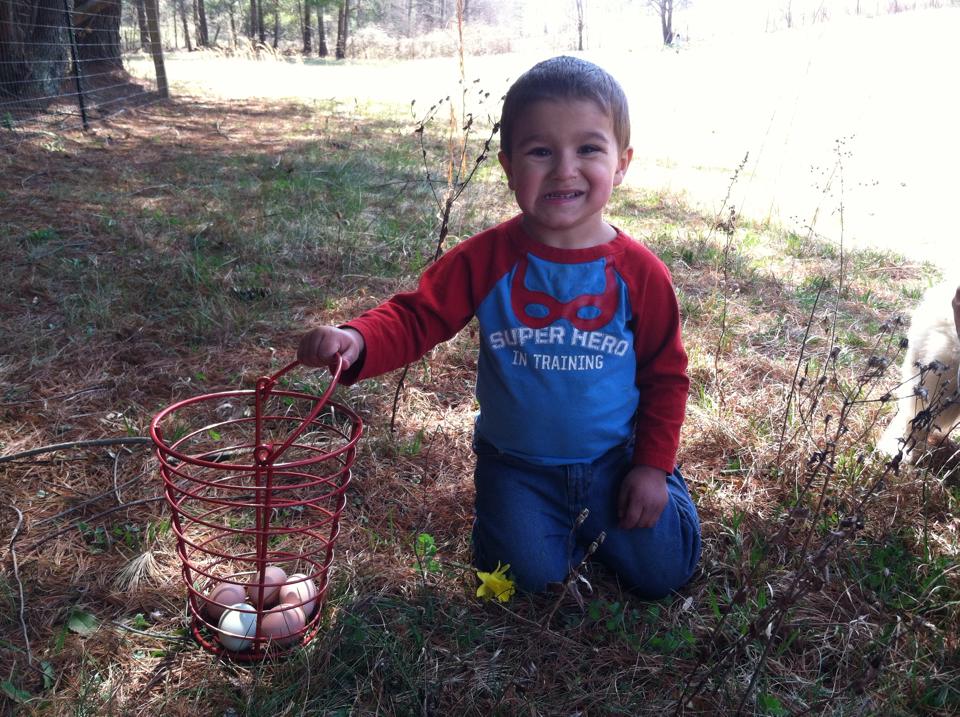
Seriously, I had the chicks ordered and planned for delivery before we were even in the state! I was so excited to start homesteading and couldn’t wait for my own pastured eggs! Chickens are the best way to start homesteading. They are the easiest animals to care for. It takes about 5 minutes in the morning and 5 minutes at night to care for my chickens. As chicks, you need a few things, like a brooder area (we use stacks of straw for this), a heating lamp, and food and water bowls. Start-up costs is under $100 and that is including ordering the chicks online and paying shipping. You usually can find chicks local at a feed store for pretty cheap too!

5) I Found My Goats

soph
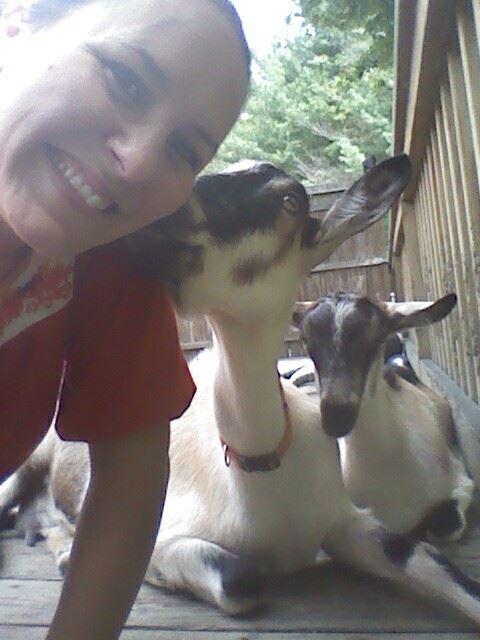
I had my goats planned, as well, before we even were in North Carolina. I knew I wanted fresh, raw, goat milk. Goats are MUCH easier to keep than cows and I am more keen on goat’s milk than cow milk. I found a lady on Craigslist who was selling a goat-in-milk and her doeling. I arranged for us to pick them up about a week after we moved. It actually is a hilarious story if you would like to go read about it! I watched You Tube videos on how to milk a goat for hours but it did NO good. You have to just learn it hands-on and it does take a little practice! However, it’s so worth it. My goat has been giving us nearly a half gallon a day for the past 8 months that we have had her. Sadly, I’m drying her off right now because she is pregnant (and so is her baby!) and needs a little break before her babies come in the early summer.

6) We Started Composting

1149041_10152304668567013_1965001985_n
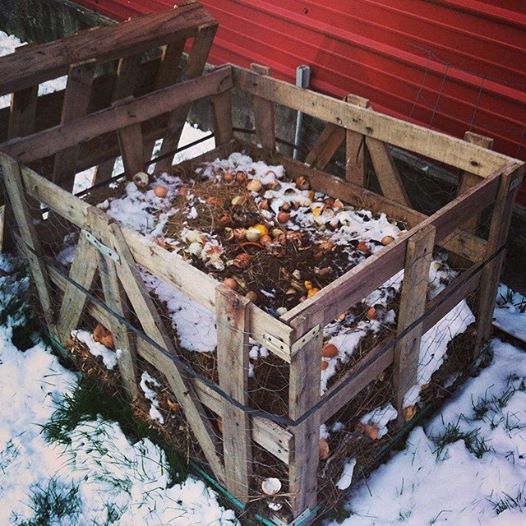
There is a local furniture store near us that gives away pallets and these large pallet containers. We grabbed them and started using it to hold our compost in. We definitely planned on a spring/summer vegetable garden so we started composting right away. We throw most our vegetable and fruit scraps to the chickens but we compost everything else! Composting is so easy.

7) We Started Raising Meat Rabbits

1503406_10152144268402013_545477526_n
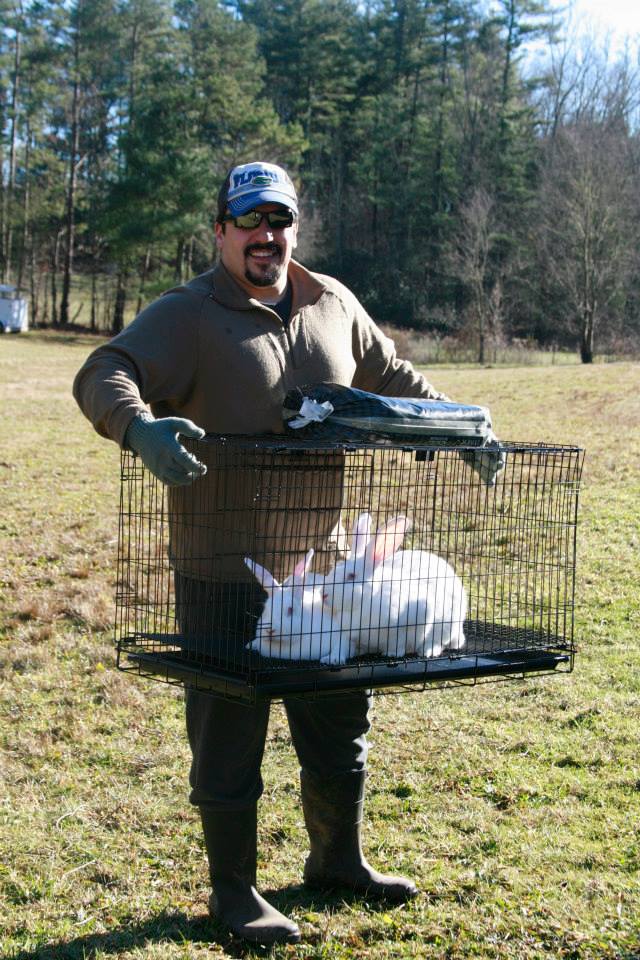
I don’t even know how we started doing this but it has become my husband’s favorite thing so far. We have 3 does (the moms) and 2 bucks (the boys) and we breed them every other month or so. Actually they are due any minute now for this round! The benefit of meat rabbits is that they reproduce a ton and have short pregnancies. Their meat is like chicken too! One set of meat rabbits (one buck and one girl) can give you 400lbs of meat a year! We pasture the offspring before they are ready to be butchered, that way they are living as natural as possible and eating lots of fresh grass.

8) We Slowed Down & Relish Our Life

1014008_10152303278872013_2013805231_n
This has been THE HARDEST thing for me to do since we have moved away from our city life. You never would have thought that slowing down would be so difficult, but it really is…especially if you are used to hurry, hurry, hurry everywhere you go. The drivers here drive me crazy…they are so pokey! It’s all a mindset and just truly realizing that being rushed is pointless. It doesn’t’ get you anywhere any faster. It just stresses you out and causes anxiety.

Conclusion

We couldn’t be happier with our decision to ditch the city and start a farm. Our kids absolutely adore their new life here. They miss their family, of course, but we are our own family now and it’s important to us to do what is best for them. The city was scaring me more-and-more and the thought of raising my kids there just kept me up at night.
Now they are able to cherish simple things like the joy of collection eggs, and planting seeds and watching them grow, and watching animals give birth! It is amazing to see how they thrive in this environment.