


I always get a little sheepish when I write posts about gardening.
As I’ve admitted before, gardening just doesn’t seem to be my special talent, and I’ve really struggled growing much of anything the last few years…Last year I excitedly announced my foray into the hugelkultur method. I was oh-so hopeful, but it turned out to be a disaster. Not a single thing grew on my hugelkultur bed. Not even weeds. (And that, my friends, is an accomplishment since I am incredibly talented at growing weeds.)
I assume as the wood in the base of the bed decomposed, it tied up the nutrients in the soil, which resulted in a no-grow zone. (All the tutorials I read said that wouldn’t happen, but I don’t know how else to explain it…)
So, I was back to square one.
Being the
My latest idea came from a pile of old gardening books that I inherited from my grandfather’s estate. To be honest, I didn’t really expect to find any gems in the pile of musty smelling volumes, but boy, was I wrong!
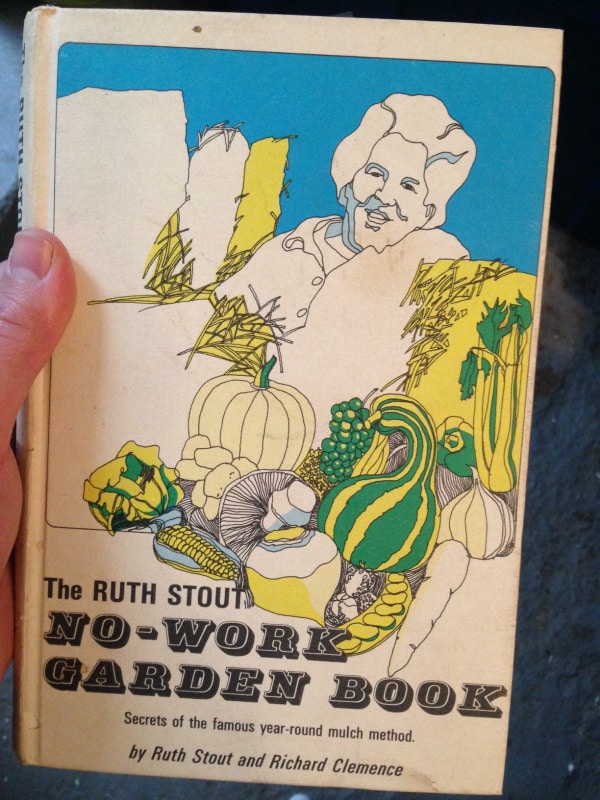
The Ruth Stout No-Work Garden Book by Ruth Stout and Richard Clemence (affiliate link) was originally written in 1971, yet her methods are still widely respected to this day. I was immediately drawn to her sassy style of writing– I think she and I would have gotten along just fine.

I had been leaning towards the idea of mulching for a while, but this book was just the push that I needed. I started dreaming about mulch… And lots of it.
How to Deep Mulch Your Garden
First off, let me start by saying there are LOTS of schools of thought on this–and many, many different mulching techniques. I don’t think there is any one “right” way– I believe it greatly depends on your soil and your climate. This particular method is the one I decided would be best for my situation at the present time, but I plan to tweak/adjust as needed.I am hoping to move towards a no-till concept for our garden. Up until now, we’ll tilled it every year (out of necessity).

Gorgeous compost
After the tilling, I spread a very thick layer of hay all over the garden (it was around 8-10 inches tall at first, but has already settled considerably)
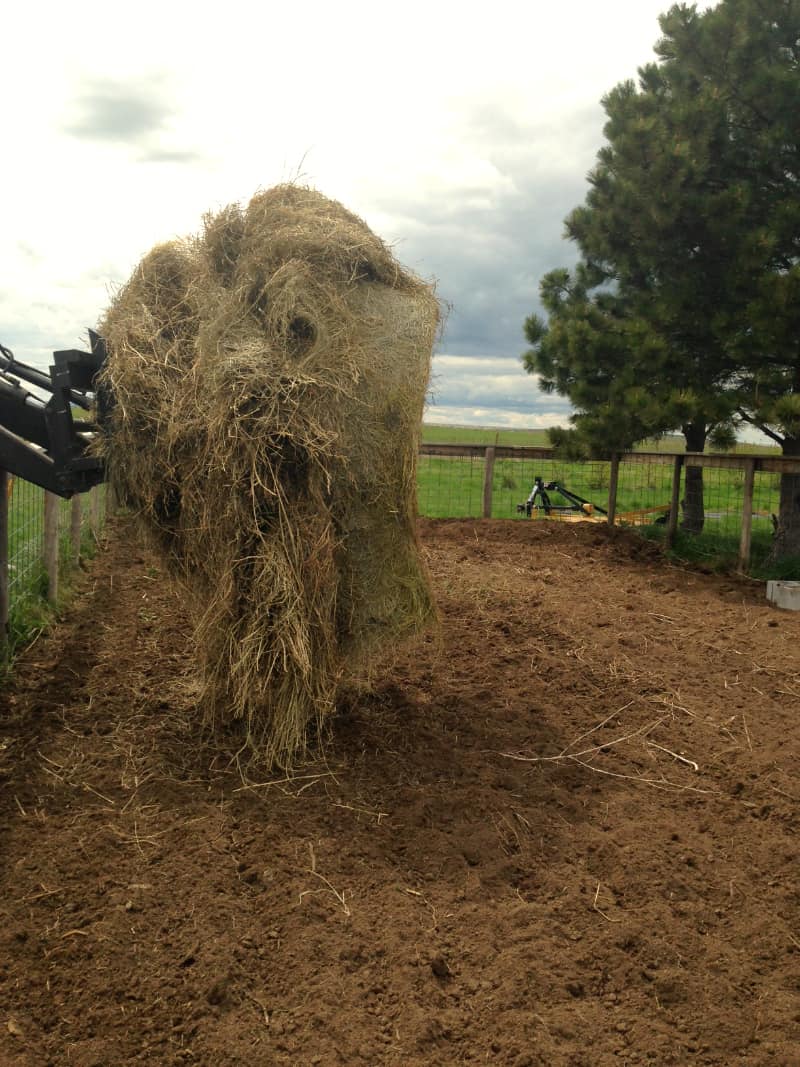
Getting ready to spread!
I’m not a fan of plastic or fabric barriers since they don’t decompose. One of the main benefits of using organic materials is that they feed the soil as they break down.
Different mulches provide different benefits, so there is plenty of room to experiment. Just keep in mind that you need a LOT of whatever mulch you decide to use.

After spreading the hay thickly over the entire garden, (which felt totally bizarre at first, by the way), I decided where I wanted to put my rows, and parted the hay in those areas, leaving an exposed strip of dirt.
I planted the seeds directly in the dirt, just like normal. As the seedlings pop up, I’ll pull the mulch around them to block weeds and conserve water.
Initial Observations
Even though it felt strange to cover my garden with hay at first, I’m really happy with the finished product (so far). The idea of a bare-dirt garden has always felt a little funny to me, since bare patches of dirt aren’t common in nature (and if they are present, then it usually means something is wrong…)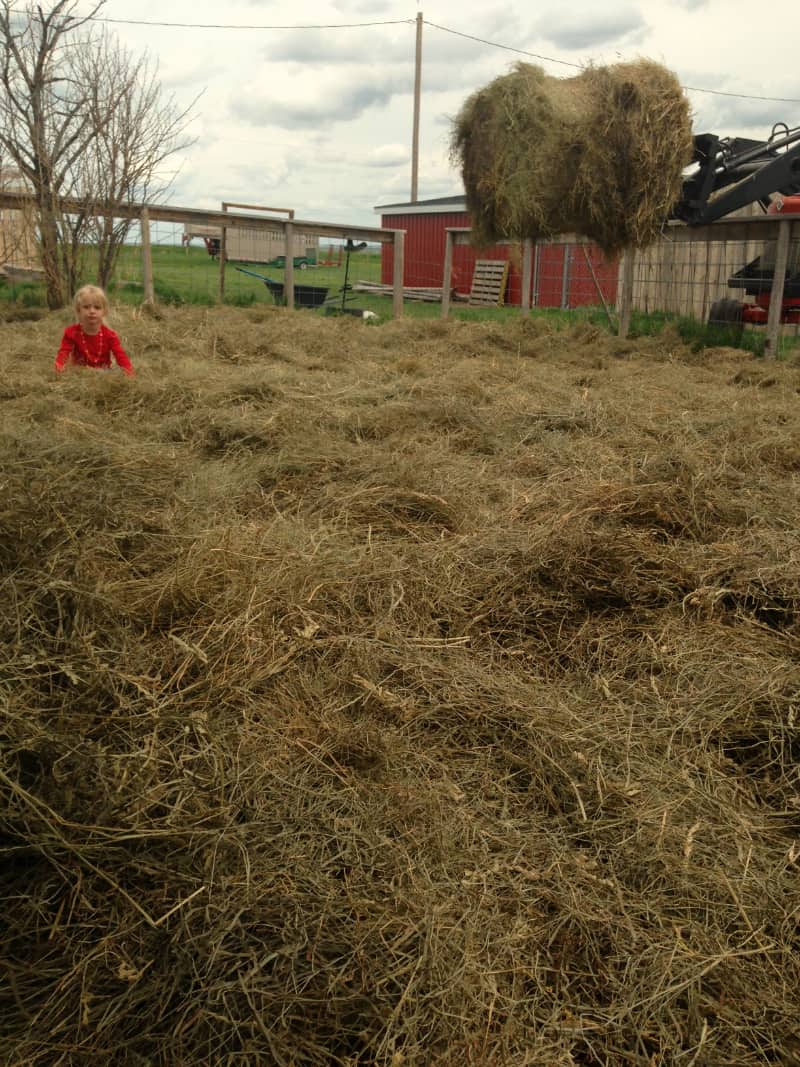
Do kids grow better with mulch too?
I plan to apply more mulch as needed, which will take a little bit of work, but still sounds much easier that all the weeding I was doing in years past…
I expect the heavy layer of mulch to greatly reduce our weed problem, and when the weeds do pop up, I plan to cover them with more mulch.
We’ve already had a couple of windy/stormy days since I spread the mulch, and I was happy to see that the hay stayed securely in place. So far, so good!
Why Not the Back to Eden Method?
Every time I talk about garden on the blog or Facebook page, I get half a dozen folks sending me links to the Back to Eden garden method.I’ve watched the video several times, and am completely enthralled by the concept. I was actually going to use that method this year, but after further research, decided to use hay mulch instead.
This post by my friend Quinn at Reformation Acres is what initially caused me to rethink my Back to Eden plans. I think she has very valid points, and since our gardening season is so delicate here, I decided I needed to do more investigation before dumping a huge load of wood chips on my garden.
(Honestly, the thought of having to remove all the chips if the plan didn’t work made me totally chicken out…)
Will I try the Back to Eden method later on? Maybe! I love the concept, and I still want to try a test-plot somewhere in my yard. But I figured hay-mulching method was slightly less risky for my first-round of experimentation, so we’ll see what happens with that.
So, say a little prayer for my garden this year… Hopefully it’ll turn out better than my hugelkultur experiment! I’ll keep ya posted…


0 comments:
Post a Comment