Showing posts with label farming. Show all posts

Thursday, February 4, 2016

The Sanctuary of the Barn

In Gene's Weekly Posts on January 13, 2016 at 9:03 am
https://thecontraryfarmer.wordpress.com/2016/01/13/the-sanctuary-of-the-barn/ 
image
From GENE LOGSDON
​A great story going around is about some Amish boys who found a novel way to make a little extra money. Their barn is the traditional kind, of course, with stables and hay mows and even dovecotes. Pigeons or rock doves have from time immemorial been a part of barnyard farming because they provide an economical source of squab or what my mother called pigeon pot pie, plus some fly control, and if you want, communication with faraway places. They can scavenge part or all of their food from the neighborhood and the barnyard itself. It seems that the pigeons in this story, that made their home in this farm’s dovecotes, had homing instinct. The Amish boys learned that a nearby game farm was buying barn pigeons to let loose as targets for would-be great white game hunters. Great white hunters are not great marksmen so they miss most of the time. The Amish boys’ pigeons flew back to their native barn and could be sold again until they died of old age. If that’s not real economy, what is?
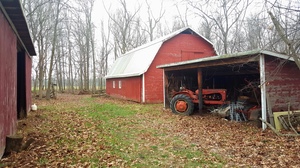
​As more people turn to small farming as a business, or just for fun, or both, they are going to experience some of the delight that those of us who grew up in farm barns cherish. And in doing so, many unforeseen advantages, like these pigeons, will occur. The local, artisanal food movement is reviving interest in all this (although I haven’t seen anyone selling pigeon pot pie yet) and therefore in smaller versions of the old traditional barn. That’s ours in the photo above which we built for a small flock of sheep, two cows and calves and one horse 35 years ago. (I think the pet craze has something to do with the new interest in farm animals too, a subject for later blogs.) These barns are built for animal and human comfort, not like today’s factory barns crammed full of animals with little thought for anything except how to reduce the per unit cost of production. Barns are becoming again society’s food sanctuary at the center of the new farming universe. As such, they give off an aura of peace and security that is uncanny and difficult to put into words. There are certainly times when mayhem can hold sway there too to keep the farmer from getting bored, but for the most part, standing in an old barn full of animals you feel a tranquility sort of like being in an almost empty church in the middle of a quiet afternoon. For some farmers, their barn is their church.
​On such farms the barn becomes a menagerie full of livestock pets. Children turn barns into playhouses, a place for games of hide and seek, of swinging on hay ropes, of sliding down mounds of hay. And of course the barn dance is still part of our living heritage. Basketball historically seems to have started in barns. As the mows emptied, the floor space opened up. Some say that’s why basketball’s main season is spring. At least I can guarantee you, basketball is still alive and well in some barns. Ask my grandsons.
​The work is challenging, but pleasantly so most of the time. Numbskulls do not last long in the barn. You know all your animals by name. Curlyhead needs to be penned tonight because she is about to have lambs. Make sure Trump, the rooster, is in the coop before you close up, or he will be crowing at your bedroom window at daybreak. Give Shorthorn, the steer, a little more grain tonight and don’t let Whiteface push him away from it. Be sure to turn off the hose filling the watering trough.
​There are limitless ways to design these structures to suit your needs and number of livestock. Study the old barns. Hundreds of years went into their design and function. The magic here is that you are hardly ever doing just one thing when you are working there. When you are feeding and bedding down the animals, you are making the fertilizer for next year’s crops. And oh how the cows romp in the fresh straw you put down for them to sleep on. Happy cows give more milk and I think have less mastitis. The clover hay you feed has already paid for itself by supplying free nitrogen to your soil. The hay piled high in the mow is a monument to its role in controlling erosion when it was growing in the field. In Minnesota’s sub zero winters, I often milked coatless because the cows and the bank barn built into a side hill and the insulating hay kept the place fairly warm. When we milked the modern way, with a milking parlor, we had to install a stove to stay warm. Chickens running loose provide some fly control as they eat fly larvae in the bedding and eat the half-digested corn wasting in the cow manure. Cats pay for the milk you give them by controlling mice and rats.
​As you loiter after chores, you think about how you and your barn sanctuary form a sort of halfway house between man and nature. You are filled with great satisfaction and a feeling of independence. The world beyond might be foundering in chaos, but right here in your quiet barn, peace prevails…at least until Rooster Trump starts crowing in the morning.

Monday, December 15, 2014

How to Ditch the City and Start a Farm

By on March 27, 2014

http://thepaleomama.com/2014/03/ditch-city-start-farm/
Well, it’s been nearly 8 months since we gave up our big city-living and moved to the backwoods of Western North Carolina. My husband and I were both raised in large cities, so raising our children the same way just felt normal.
However there always was this itch and this itch just started to grow and grow. It would be in small ways at first…like me traveling hours to visit small farms to let my kids play with the animals or to pick blueberries. Then it grew much bigger…we started searching for homes in the suburbs that allowed chickens and possibly goats. Our realtor thought we were crazy and didn’t understand us.  We hit roadblock after roadblock and after *almost* buying a very expensive house on ONE acre (which we thought was a lot of land), because that was all there was, we felt like our dreams of homesteading were crushed.

What If

I remember the first time we played the “what if” game. My husband said to me one night, “what if we moved somewhere else.” At first, I was caught off guard that he was entertaining the same thought I was. Then I played “devil’s advocate” and said that we were raised in Orlando, this is where our families live, this is where we *should* live……….right?
This went on for months and we started going deeper with our feelings. My husband asked me where I always dreamed of living…he knew my answer but it’s just a dream….right? I mean, it’s just a game you play, like MASH as a little girl. You don’t really go and live in your dream place. You just dream about it...right?
Ok, so you get the drift of how confusing of a time this was for us. We both loved Western North Carolina. We loved visiting it and we even rented a cute little cabin near Asheville one year. We finally agreed that WNC was our dream place to live and we finally entertained the thought that we had the choice to move there *one day*. Sigh….one day….there it is again.
And then I said it. I said, “Why one day?” And my husband looked at me and felt the same way. Let’s do this NOW! Life is too short to not live and do what you dream of doing! And that was how it all began!
1094975_10152282796887013_870159395_n

How We Ditched the City and Started Farming

1) We Found a Job

This is much harder for some people…I know that. But, it’s worth trying, right? So, we drew a 100 mile radius around our dream city, Asheville, NC on a map and my husband applied at all the jobs in that radius that fit his career. We heard back from a few and we chose one! We came and visited the nearby city and we fell in, complete, love with the place. Actually how it really happened when we sealed the deal was like this: we went to a nearby vineyard and sat down and looked out at the beautiful mountains. I looked over at my husband and said, “let’s do it“!

2) We Found a Rental Home

We still weren’t ready to buy. We have been aggressively paying off debt for a year now following the Dave Ramsey plan. So, we knew that we needed to find a rental home that allowed us to start doing our homestead dreams. We found a perfect home on Craigslist that had 4 acres of land, a barn, a huge chicken coop, and a beautiful fenced pasture. We plan on staying in this home for a few more months till we are ready to buy.

3) We Said Our Goodbyes & Sold a Ton of Stuff

This was the hardest part of the move. It’s hard to leave your family, but it’s so rewarding to follow your dreams. So, we downsized and sold a lot of stuff to make the move easier. We sold our king set (we just sleep on a mattress on the floor now!), dining room table, and all our large furniture. This isn’t necessary but we wanted a fresh start and we needed the money for the move. In fact, we are just now (8 months later) starting to buy furniture again! We waited till we were 100% out of debt, which we are now!

4) We Ordered Chickens!

Seriously, I had the chicks ordered and planned for delivery before we were even in the state! I was so excited to start homesteading and couldn’t wait for my own pastured eggs! Chickens are the best way to start homesteading. They are the easiest animals to care for. It takes about 5 minutes in the morning and 5 minutes at night to care for my chickens. As chicks, you need a few things, like a brooder area (we use stacks of straw for this), a heating lamp, and food and water bowls. Start-up costs is under $100 and that is including ordering the chicks online and paying shipping. You usually can find chicks local at a feed store for pretty cheap too!

5) I Found My Goats

soph
I had my goats planned, as well, before we even were in North Carolina. I knew I wanted fresh, raw, goat milk. Goats are MUCH easier to keep than cows and I am more keen on goat’s milk than cow milk. I found a lady on Craigslist who was selling a goat-in-milk and her doeling. I arranged for us to pick them up about a week after we moved. It actually is a hilarious story if you would like to go read about it! I watched You Tube videos on how to milk a goat for hours but it did NO good. You have to just learn it hands-on and it does take a little practice! However, it’s so worth it. My goat has been giving us nearly a half gallon a day for the past 8 months that we have had her. Sadly, I’m drying her off right now because she is pregnant (and so is her baby!) and needs a little break before her babies come in the early summer.

6) We Started Composting

1149041_10152304668567013_1965001985_n
There is a local furniture store near us that gives away pallets and these large pallet containers. We grabbed them and started using it to hold our compost in. We definitely planned on a spring/summer vegetable garden so we started composting right away. We throw most our vegetable and fruit scraps to the chickens but we compost everything else! Composting is so easy.

7) We Started Raising Meat Rabbits

1503406_10152144268402013_545477526_n
I don’t even know how we started doing this but it has become my husband’s favorite thing so far. We have 3 does (the moms) and 2 bucks (the boys) and we breed them every other month or so. Actually they are due any minute now for this round! The benefit of meat rabbits is that they reproduce a ton and have short pregnancies. Their meat is like chicken too! One set of meat rabbits (one buck and one girl) can give you 400lbs of meat a year! We pasture the offspring before they are ready to be butchered, that way they are living as natural as possible and eating lots of fresh grass.

8) We Slowed Down & Relish Our Life

1014008_10152303278872013_2013805231_n
This has been THE HARDEST thing for me to do since we have moved away from our city life. You never would have thought that slowing down would be so difficult, but it really is…especially if you are used to hurry, hurry, hurry everywhere you go. The drivers here drive me crazy…they are so pokey! It’s all a mindset and just truly realizing that being rushed is pointless. It doesn’t’ get you anywhere any faster. It just stresses you out and causes anxiety.

Conclusion

We couldn’t be happier with our decision to ditch the city and start a farm. Our kids absolutely adore their new life here. They miss their family, of course, but we are our own family now and it’s important to us to do what is best for them. The city was scaring me more-and-more and the thought of raising my kids there just kept me up at night.
Now they are able to cherish simple things like the joy of collection eggs, and planting seeds and watching them grow, and watching animals give birth! It is amazing to see how they thrive in this environment.


Tuesday, March 18, 2014

Tuesday, December 31, 2013

Where Farmers Markets and CSAs Fall Short

Oct. 4, 2013
By John Collins, In These Times
This article originally appeared in In These Times magazine, Sept 2013.
Everything we eat has a story behind it. The bread aisle (at the store with the massive parking lot) is a thrill ride. That story starts on stretches of land in places you’ve never been. Its main characters are gene-splicing scientists, patented life forms and huge industrial robots. Fleets of 18-wheelers make epic road trips before the narrative climaxes in the cash register of one mega-corporation or another. By comparison, the story of sustainably raised, locally marketed food is a bucolic tale: a hop from farm to table.
Mary Berry SmithIn 1975, Wendell Berry—the poet, novelist, farmer, activist and philosopher—released The Unsettling of America. That collection of essays focused on the cultural and environmental implications of modern agriculture and the need to put intelligence before profit when it comes to the business of farming. On October 4 on PBS, Moyers & Company will present Wendell Berry: Poet and Prophet, a documentary produced by the Schumann Media Center that features a conversation between veteran journalist Bill Moyers and rural America's man of letters.
Thirty-eight years after the publication of The Unsettling of America, we remain disconnected from the production of the food that keeps us alive. What we put in our mouths we trust to the hands of an industry so massive it’s difficult to comprehend. Transforming the current system into one that values healthy land, production on a sensible scale and a reliable marketplace for small farmers requires a David-at-the-heels-of-Goliath kind of mindset.
Small farmers must select which stones to throw at Big Ag. And Mary Berry, Wendell’s daughter, is helping them take aim as executive director of the Berry Center in New Castle, Ky.
Why did you and your father create the Berry Center?
The Berry Center’s goal is to institutionalize agrarian thought and make a movement towards cultural change. We’ve been developing a four-year farm degree at St. Catherine College in Washington County, Kentucky. We're also working on a farm school, in Henry County, to help new or existing farmers learn what they need to know to get out of the commodity economy and into a local food economy. We're talking about everything farmers and landowners can produce on their land—from timber to tomatoes—and how to keep them secure, and out of a boom and bust economy.
We need to look at the economic system first. Farmers aren’t moving toward local food, but they will if they think there’s a reliable market. Right now, they’re in corn and soybeans because that’s where the money is. And in Kentucky there are a lot of beef cattle, and beef cattle, if they're well raised, and are dependent on perennial grasses, that's good. If they're raised on CAFOs [concentrated animal feeding operations]—on feedlots—that's not good.
The excitement for local food in Louisville, the closest big city, is not matched in the countryside where I live. It’s an uncertain market. Farmers are scared of it, and rightly so. Even farmers who are doing well at farmers markets are uncertain because they are unable to plan ahead. We need a food system that allows farmers to plan their economic year. That would mean farmers signing contracts. A good example: The largest school system in Kentucky is now contracting with some local farmers for produce and meat. The interest in the entrepreneurial aspect of small farms is wonderful and needs to continue, but we’re trying to take it a step further.
What would be a good food system?
There’s not one answer. They'll be many and we’re still trying to figure it out. I listen to people working on agricultural ideas talk about “food systems,” but I don’t know what they’re referring to. We don’t have one. There is a system that’s highly dependent on poisons and petroleum. And maybe some places have the beginnings of a small food system. But we’re not there yet. For example, I’ve heard people refer to the “Louisville Foodshed.” What does that mean? How far out does that go? Louisville is surrounded by small farms. And I know it’s possible that Louisville can be fed by the landscape around it. We just need to figure out a way to make that work for the farmers.
Is there a cultural shift in agricultural awareness taking place?
Urban people’s interest in where their food comes from, and the quality of it—their worry about poisoned food, soil loss, toxicity, etc.—is a good thing. Community Supported Agriculture (CSAs), farmers markets, urban gardens, community gardens and school gardens are also all good. The worry, to me, is that all of this is entrepreneurial. Too many CSAs in any given area can make it hard for a farmer to sell enough CSA shares to get by. Our work is to try to get farmers out of a faddish economy.
The other day, I was talking to a friend of mine who had the first CSA in Kentucky. He was saying that the CSA is a great model for a young farmer. He paid off his farm with a CSA. (He had borrowed the money in the 1980s, at 13 percent interest.) But he said, “You know what? It’s a young person’s game.” And that’s true, simply because it’s really hard work. He’s 55 now, sustainably logging on his own land and doing fine, but do we want farmers to quit at 55? No. We need a place for farmers, an economy for them to function in. This is critical and crucial. If we stick only with the “local food” part of the movement, it’s not going to amount to much. We've got to simultaneously talk about cultural change and land use more generally. No matter how different things seem to be, we are still a land-based economy. People seem to not know that, but we are.
Are young people latching onto this cultural change?
Very rightly, a lot of young people see agriculture as the place to work in. If we can turn around agriculture, we can deal with a lot of our other problems. Young people interested in agriculture these days might finally be what Wallace Stegner called “stickers.” They appear to be in it for the long haul.
Why do you think that’s the case?
Part of it is because our economy just isn’t what it was before 2008. Many of the back-to-the-landers who were around Henry County in the 1970s had college degrees from good universities. When the going got rough on farms, they had a lot to fall back on. I don’t think that’s the case anymore. Young people understand that they’re not going to graduate from college and make whatever they thought—$100,000 a year, $50,000—right off the bat. It’s just not out there. So they are looking for a different way. Maybe agriculture will be where more young people will end up.
Does this land-based education you advocate have a place in urban communities and universities?
Absolutely. This is not just for rural people. And thank God, because there are only 15 percent of us left in rural America. This is about all of us. We all need to understand what’s going on. If you’re far away from a mountaintop that’s been removed, but are still using electricity that’s cheap because of it, you still have responsibility. We have to be good citizens. And a way to be a good urban citizen is to be an informed shopper and eater. In this economy it’s almost impossible. We are all complicit in what’s wrong here. But if you, or if I, think about the place where we’re from—its health and its welfare—then that makes it easier to imagine having some effect on it.
Do you and your father ever disagree?
My father and I have never had a serious disagreement about anything, at least not since I was a teenager and wanted to stay out all night. I have always thought that farms and farm people, and the health of the place where we were living were important. But I’m trying to work on policy in a way that Daddy hasn’t. I needed to take a public role in this struggle. And that really didn’t happen until five years ago when I was appointed—by Obama actually, although I don’t think he knows it—to the Kentucky state board of the Farm Service Agency. It allowed me to see the two sides of agriculture at the same time: the grassroots, small farm world (which I was obviously much more familiar with) and the Farm Service Agency side, which is a massive USDA program. That’s when I realized the two sides were absolutely polarized.
Neither side understood what was going on. The grassroots people didn’t understand much about the history of agriculture and were very small in their interests. They were talking about farms much smaller than I considered a traditional Kentucky farm. On the USDA side, I thought I’d find people who understood the problems with Big Ag that my father and his friends had been talking about for a long time. It turned out they hadn’t even heard of them.
I get asked if I ever feel bad about preaching to the choir, and I say, “You know what? The choir doesn’t understand rural places very well or the lives of farmers very well.” Very often people in urban places think, “If we just got rid of subsidies then a whole lot of farmers would start raising organic cucumbers and broccoli.” Well, it's not going to happen that way.
How does this movement press forward?
It’s incredible to me how threatened Big Ag feels. What’s the local food market— like 1 percent? But we have to be ready for how threatened they’re going to be. And we have to be very careful. One of the weaknesses of our movement is bastardized language. If you listen to ads from Wal-Mart and big chain grocery stores, they’ve got our language. They’re talking “local, local, local” and “sustainably raised,” and that’s just bullshit. If the big grocery store claims they’re selling local produce, find out what they’re talking about. And if you can’t, that means they’re lying. You have to educate yourself. You have to be vigilant. It really makes the world more interesting. It’s called living an informed, awake life, and it’s way more interesting than sleepwalking through it.
For more information about local air times for "Wendell Berry: Poet & Prophet," visit BillMoyers.com. Broadcasts begin October 4 nationwide.

Wednesday, December 18, 2013

UN Report Says Small-Scale Organic Farming Only Way to Feed the World


Image: eatdrinkbetter.com

Nick Meyer | AltHealthWORKS

http://www.technologywater.com/post/69995394390/un-report-says-small-scale-organic-farming-only-way-to

Wednesday, November 27, 2013

American Meat—An Inside Look at Sustainable Farming in America


If you put good old-fashioned organically-raised, pasture-fed and finished meat in a nutrition analyzer, you’d find it’s one of the most nutritious foods you can eat.
However, many are still in the dark about the vast differences between Concentrated Animal Feeding Operations (CAFOs) and organically-raised, grass-fed meats, in terms of nutrient content and contamination with veterinary drugs, antibiotics, genetically modified organisms, and disease-causing pathogens.
Differences in the animals’ diets and living conditions create vastly different end products. For example, most CAFO cows are fed grains (oftentimes genetically engineered grains, which make matters even worse), when their natural diet consists of plain grass.

Much more here - http://www.wakingtimes.com/2013/11/26/american-meat-inside-look-sustainable-farming-america/