Showing posts with label medicine. Show all posts

Monday, February 9, 2015

In 1951 a poor woman's cells were taken without permission, and they revolutionised medicine

Henrietta Lacks' immortal cells are one of the most important and prolific tools in medicine, used in developing the polio vaccine, cloning and gene mapping.
Henrietta Lacks was a 31-year-old mother of five when she died of cervical cancer on 4 October 1951. While the poor tobacco farmer was being treated at the John Hopkins Hospital, two samples of her cervix were removed - a healthy part and a cancerous part - without her permission or knowledge.
These cells were passed onto Dr George Otto Gey, who discovered they could do something never seen before in humans cells - be kept alive and keep growing indefinitely. Before this, cultured cells had only survived a few days in the lab.
Gey was able to isolate one specific cell and start the first ever immortal cell line, which he named HeLa after Henrietta.
Since then these cells have been exposed to toxins, viruses and raidation, sent into space and replicated countless times. They've been involved in thousands of medical breakthroughs and helped to develop the polio vaccine, cloning and gene mapping.
Scientists have grown around 20 tons of HeLa cells, and there are almost 11,000 patents involving HeLa cells. One researcher has estimated that if you laid all the HeLa cells in existence end-to-end, they'd wrap around the planet at least three times.
In 2010, a tube of HeLa cells was selling for around US$260. But unfortunately Henrietta's family were never compensated for her donation and most of them could't afford health insurance.
Journalist Rebecca Skloot wrote a best-selling book The Immortal Life of Henrietta Lacks on the subject in 2010.
After reading it, Dr Roland Pattillo of the Morehouse School of Medicine in the US donated a headstone for Lacks. For decades, her grave had been unmarked.
The headstone, which is shaped like a book, reads:
Henrietta Lacks, August 01, 1920 – October 04, 1951.
In loving memory of a phenomenal woman, wife and mother who touched the lives of many.
Here lies Henrietta Lacks (HeLa). Her immortal cells will continue to help mankind forever.
Eternal Love and Admiration, From Your Family
Thank you, Henrietta.
Sources: Smithsonian, The Guardian,Wikipedia, The Immortal Life of Henrietta Lacks

Sunday, February 16, 2014

Stop Iatrogenesis - The number three killer in America is preventable

(NaturalNews) In 1999 the Institute of Medicine (IOM) awakened the nation with their landmark study "To Err is Human," which found that accidental deaths due to medical errors in hospitals account for as few as 44,000 and as many as 98,000 deaths per year in the U.S. Even at the bottom end of the spectrum, these preventable deaths, which include improper transfusions, surgical injuries, and wrong-site surgery, cause more deaths than either breast cancer or motor-vehicle accidents.

The following year the Journal of the American Medical Association (JAMA) reported that iatrogenic causes of death -- medical errors in hospitals and adverse drug reactions to medications -- total approximately 225,000 deaths annually, making it America`s #3 killer.

Adverse drug reactions

A University of Toronto study found that pharmaceuticals kill more people in the U.S. than motor-vehicle accidents (as reported by the Cancer Cure Foundation). Of the two million hospitalized Americans, who suffered a serious adverse drug reaction within the 12 months prior to the study, 100,000 died from their reaction. Of those deaths, 75% were not due to allergic reactions, but were preventable.

The exceptions

Iatrogenic deaths don`t always happen as a result of medical errors or dangerous pharmaceuticals. Physicians sometimes knowingly prescribe highly toxic drugs to people who are critically ill. Equipment failure has also been cited as an unavoidable error in some circumstances.

Why so many deaths?

A problem as widespread as iatrogenesis rarely originates from a single source. In their report, the IOM Committee pointed to a few possible causes for medical error:


  • Faulty systems and operating processes
  • The health professional licensing process doesn`t pay enough attention to preventing medical errors
  • Efforts to teach prevention have often encountered resistance from healthcare providers and organizations
  • Lack of financial incentives to improve safety and quality of service

    According to JAMA, the most common causes of adverse drug events (without counting the inherent danger certain drugs pose) are the following:
  • Dose error
  • Known allergy
  • Wrong drug/patient
  • Route error
  • Frequency
  • Missed dose
  • Wrong technique
  • Illegible order
  • Duplicate therapy
  • Drug-drug interaction

    Iatrogenesis now

    The FDA, through its Adverse Events Reporting System, keeps a record of adverse events resulting from drug and therapeutic biologic product use. In 2000 they received 266,866 reports. By 2010 that figure nearly tripled to 758,890. And that`s a conservative figure as, according to a report titled Death by Medicine, only a fraction of medical errors ever get reported.

    Regarding the IOM`s 1999 estimate of medical error related deaths, the Department of Health and Human Services states on its website that "this statistic has not improved much in the following decade." The lack of significant patient safety progress has prompted the Department to launch Partnership for Patients, a public-private partnership with specific goals that includes reducing preventable hospital-acquired conditions by 40% between 2010 and 2013.

    But to the surviving spouse of a patient who succumbed to a hospital-acquired infection (HAI), even reducing 80% of HAIs is not enough. Perhaps now, with a failing economy and Medicare costs projected to rise 91% in the next decade, the double punch of human and economic costs will provide the motivation needed to knockout iatrogenic deaths.

    References:

    Dr Barbara Starfield, "Is US Health Really the Best in the World?" The Journal of the American Medical Association (JAMA) Vol 284, No 4 (2000): 483 - 485.
    Committee on Quality of Health Care in America, Institute of Medicine, Linda T. Kohn and Janet M. Corrigan, To Err is Human: Building a Safer Health System (Washington: The National Academies Press, 2000)
    The Cancer Cure Foundation: Medical Errors - A Leading Cause of Death (http://www.cancure.org/medical_errors.htm)
    AHRQ: Reducing and Preventing Adverse Drug Events To Decrease Hospital Costs (http://www.ahrq.gov/qual/aderia/aderia.htm)
    FDA: Reports Received and Reports Entered into AERS by Year (http://www.fda.gov/Drugs/GuidanceComplianceR...)
    Institute of Medicine, The Richard and Hinda Rosenthal Lecture 2011: New Fontiers in Patient Safety (Washington: The National Academies Press, 2011)
    HealthCare.gov: Partnership for Patients (http://www.healthcare.gov/compare/partnershi...)

    Resources:

    Agency for Healthcare Research and Quality (http://www.ahrq.gov/)
    The Empowered Patient Coalition (http://www.empoweredpatientcoalition.org/)
  • http://www.naturalnews.com/034569_iatrogenesis_accidental_death_medicine.html
  • Friday, January 24, 2014

    Medicines On Your Spice Rack

    Medicines On Your Spice Rack | healthylivinghowto.com
    The most common herbs and spices, often added to our favorite dishes for flavor, also have considerable medicinal use. It is likely, these spices and herbs were originally added to foods for this very reason. Most herbal spices aid in digestion as well as prevent and relieve gas. Spices can be used to treat problems from headaches to infection. The next time something ails you, before going to your medicine cabinet, why not give one of these remedies a try.

    Medicines On Your Spice Rack

    Anise is very useful for breaking up mucous and is used for hard dry coughs where expectoration is difficult. Add one cup of boiling water to three teaspoons crushed anise seeds, steep for 20 minutes.
    Basil is good to use as a tea for indigestion, fevers, colds, flu, bladder troubles, headaches, nausea, vomiting and constipation. Add one ounce of basil leaves to a pint of water and simmer for 20 minutes with three black peppercorns.
    Bay Leaves are too strong to use in large amounts internally, but can be added to soups and stews to improve flavor and prevent gas and indigestion. Bay oil, made by heating bay leaves with olive oil, can be used to treat arthritic aches and pains.
    Caraway is an excellent digestive aid. It can be taken for indigestion, gas and colic. Let an ounce of crushed seeds soak overnight in two cups of cold water. Take in two tablespoon doses until relief is obtained.
    Cardamom is good for diarrhea, colic and headaches. It is an important ingredient in Chai tea. Simmer for ten minutes, two cups water, one ounce grated fresh ginger, seven whole peppercorns, a cinnamon stick, five cloves and fifteen cardamom seeds. Add half cup almond milk or coconut milk and simmer for ten additional minutes. Add a sprinkle of nutmeg, a drop or two vanilla extract and stevia.
    Medicines On Your Spice Rack | healthylivinghowto.comCinnamon is used medicinally to treat chronic diarrhea, cramps, abdominal pains and lower back pain. Simmered in almond milk or coconut milk, cinnamon is very effective for indigestion, gas and diarrhea.
    Cloves are effective in warming the body, increasing circulation, improving digestion, and treating flatulence, vomiting and nausea. Whole cloves may be chewed to relieve a toothache.
    Cumin is one of the best spices to use to prevent and relieve gas. It is of benefit to women after childbirth to shrink the uterus and increase breast milk. To make a tea use one teaspoon crushed seeds to one cup boiled water.
    Garlic is a well-known cure-all home remedy. It is used in the treatment for high and low blood pressure, headaches, infections and anxiety. For high blood pressure eat one clove of garlic a day.
    Ginger is of great benefit to the stomach, intestines and circulation. Ginger tea is an excellent treatment for colds and flu. Simmer for ten minutes two cups of water with one ounce fresh grated ginger.
    Rosemary contains compounds that are useful for stimulating the immune system, increasing circulation and improving digestion. Rosemary tea is great at treating and relieving headaches. Steep covered, half an ounce of rosemary with two cups boiling water.
    Stevia is a herb that is anywhere from 10 to 300 times sweeter than sugar. It has a long history of use in South America in the treatment of diabetes and reducing blood glucose levels. The extract can be used in cooking and baking and as a sweetener for herbal extracts and teas.
    Thyme is used for bronchial problems, whopping cough and laryngitis. An ounce of the herb is steeped in two cups water then strained and sweetened. One ounce is an adequate daily dose. It can be used as a mouthwash as well.
    Turmeric is a blood purifier and can be applied externally and internally to heal wounds. It is very beneficial to circulation and helps regulate the menstrual cycle and alleviate menstrual cramps. Add a teaspoon of turmeric, along with a teaspoon of almond oil to a cup of warm almond milk.
    Resources: The Way of Herbs and Healing Spices

    Related Posts Plugin for WordPress, Blogger...

    Wednesday, November 27, 2013

    Your source for natural health videos

    iHealthTube.com is a free educational resource, that delivers hard to find information on natural and alternative treatments. 

    http://www.ihealthtube.com/

    Tuesday, November 19, 2013

    600 Reasons Turmeric May Be The World’s Most Important Herb


    There is a medicinal spice so timelessly interwoven with the origins of human culture and metabolism, so thoroughly supported by modern scientific inquiry, as to be unparalleled in its proven value to human health and well-being.
    Indeed, turmeric turns the entire drug-based medical model on its head.  Instead of causing far more side effects than therapeutic ones, as is the case for most patented pharmaceutical medications, turmeric possesses hundreds of potential side benefits, having been empirically demonstrated to positively modulate over 160 different physiological pathways in the mammalian body.
    While no food or herb is right for everyone, and everything has the potential for unintended, adverse side effects, turmeric is truly unique in its exceptionally high margin of safety vis-à-vis the drugs it has been compared with, e.g. hydrocortisone, ibuprofen, chemotherapy agents. Furthermore, nothing within the modern-day pharmaceutical armamentarium comes even remotely close to turmeric's 6,000 year track record of safe use in Ayurvedic medicine.[1]
    Despite its vast potential for alleviating human suffering, turmeric will likely never receive the FDA stamp of approval, due to its lack of exclusivity, patentability and therefore profitability. Truth be told, the FDA's "gold standard" for proving the value of a prospective medicinal substance betrays the age old aphorism: "he who owns the gold makes the rules," and unless an investor is willing to risk losing the 800+ million dollars that must be spent upfront, the FDA-required multi-phased double-blind, randomized clinical trials will not occur. For additional details on this rather seedy arrangement read our article on the topic: Why The Law Forbids The Medicinal Use of Natural Substances.
    Here at GreenMedInfo.com, we have reviewed over 5,000 study abstracts from the National Library of Medicine's bibliographic database known as MEDLINE and have discovered over 600 potential health benefits of turmeric, and/or its primary polyphenol known as curcumin. These can be viewed on our turmeric research page which is dedicated to disseminating the research on the topic to a larger audience.
    Some of the most amazing demonstrated properties include:
    Again, what is so amazing is not that turmeric may have value in dozens of health conditions simultaneously, or that it may improve conditions that are completely resistant to conventional treatment, but that there are over six hundred additional health conditions it may also be valuable in preventing and/or treating. Consider also the fact that turmeric grows freely on the Earth, and you will understand why its very existence threatens billions of dollars in pharmaceutical industry revenue. 
    Learn more about this research in the video below (keeping in mind that it is several years old and needing some updating), and please spread the information to others who may benefit from learning more on the topic.
    http://www.greenmedinfo.com/blog/600-reasons-turmeric-may-be-worlds-most-important-herb

    Friday, November 8, 2013

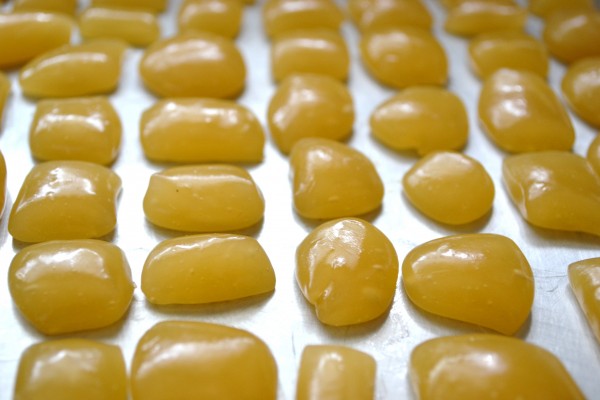
    Honey Spice Throat Drops

    http://www.graciousrain.com/2012/11/20/honey-spice-cough-drops/

    And oh, my goodness, I’m feeling very clever right now. What do you think about a cough drop that has anti-viral properties and still tastes incredible? Hmmm? I’ll tell you, you’ve never had anything like this. I just hit me one night–while I was sound asleep–maybe I dreamed it, I don’t know. But I woke up thinking, “I need to make my own cough drops and these ones will not just soothe a sore throat, but they can actually fight off the virus that causing it in the first place.” So there.