Showing posts with label turmeric. Show all posts

Wednesday, January 29, 2014

Creamy turmeric and ginger tea made with coconut milk is a traditional south Asian beverage, Golden Milk is rich in potent antioxidants and has strongly anti-inflammatory properties.

Golden Milk: Creamy Turmeric and Ginger Tea with Coconut Milk

Making Golden Tea: Turmeric, Ginger and Honey in a Molcajete
This winter, we discovered Golden Milk or Turmeric Tea, and fell in love with its astringent, but smooth and bright flavor.  I often make it now instead of the hot chocolates, molasses milks and herbal chai my family loves.  When I can get it, I like to use fresh turmeric in my cooking.  I love its faint metallic, astringent flavor and the bright yellow-orange it gives my pilafs and curries.
In wintertime, when access to raw milk becomes scarce, I tend to use coconut milk and coconut water in this recipe; however, if you have good access to fresh milk, be sure to use it as it’s delightful with both cow’s milk and coconut milk.

Turmeric and Ginger

Turmeric and ginger are rhizomes, and while they look like roots, they’re actually the subterraneous stems of tropical plants.  Both turmeric and ginger have long been lauded for their medicinal as well as culinary properties, and often season the traditional foods of south Asian kitchens.
When you peel away the papery skin that envelops the turmeric rhizome, it reveals a brilliant orange color.  This orange pigment colors the foods in which it is cooked, and gives Golden Milk its characteristic yellow-gold color.  It is also this pigment, as well as other components found in turmeric, that contribute to its strong antioxidant capacity.  While turmeric has long-been used in traditional south Asian folk medicine, only recently have researchers begun looking into its effects on various cancers, cardiovascular disease and Alzheimer’s disease and diabetes. Curcumin, a component of turmeric, is strongly anti-inflammatory.
Ginger, like turmeric, offers strong antioxidant capacity and has similarly enjoyed a long history of use in folk medicine where it is traditionally used to easy stomach upset or to ease the discomfort caused by flus and colds.  Preliminary research also links ginger to slowed tumor growth and to the inhibition of the growth of cancerous ovarian cells, though ginger’s affect on cancer is poorly understood and warrants more research.
While it’s relatively easy to find fresh ginger in any grocery store, health food store or supermarket, finding fresh turmeric is a little more challenging.  I typically find fresh turmeric in health food stores only seasonally – in winter.  I typically purchase powdered turmeric online (available here – where I purchase most of my organic spices).

Ghee

When I prepare my Golden Milk, I begin first by combining freshly grated ginger and turmeric with grass-fed ghee to form a fine paste. Long used in Ayurvedic cooking, ghee is a type of clarified butter.  Ghee prepared from the butter of grass-fed cows is extraordinarily rich in fat-soluble vitamins A and K2; it is also a good source of conjugated linoleic acid, a healthy fat with anticarcinogenic properties.
Turmeric and ginger, both rich in antioxidants, also work synergistically together with ghee, as ghee, and other healthy fats, enable those fat-soluble nutrients to be better absorbed.
You can purchase grass-fed ghee in many health food stores, as well as online.

Manuka Honey

Lastly, I use raw Manuka honey as a sweetener.  Manuka honey is a single varietal honey from New Zealand with a thick texture and a strong, almost medicinal flavor.  It is rich in antioxidants and has strong antimicrobial properties.  Due to demand and relatively limited supply, Manuka honey is expensive, and any raw honey can be substituted for it in this recipe with little change in flavor.
I typically purchase our Manuka honey online from reputable sources, and I use it only sparingly.

 
Golden Milk: Turmeric and Ginger Tea with Coconut Milk


Read more: http://nourishedkitchen.com/golden-tea-turmeric-ginger-tea-coconut-milk/#ixzz2roKBQRZh

Golden Milk: Turmeric and Ginger Tea with Coconut Milk
Prep Time: 5 minutes
Cook Time: 10 minutes
Total Time: 15 minutes
Yield: 2 cups
Creamy, faintly sweet and fragrant with the potent flavors of ginger and turmeric, Golden Milk is a deeply nourishing drink, warming and perfect for winter afternoons.
Ingredients
  • 1 1-inch knob fresh turmeric
  • 1 1/2-inch knob fresh ginger
  • 2 teaspoons ghee 
  • 1 cup full-fat coconut milk 
  • 1 cup coconut water 
  • 1 tablespoon manuka honey
Instructions
  1. Peel both the turmeric and ginger, then grate them finely into a mortar or a molcajete (I use this one.) Spoon the ghee into the mortar or molcajete, and grind the ghee into the turmeric and ginger with your pestle until they form a fine paste.
  2. Pour the coconut milk and coconut water into a saucepan, and spoon in the paste made with turmeric, ginger and ghee. Turn the heat up to medium-high and warm the ingredients together until little bubbles just begin to creep up the sides of the pot. Turn off the heat and cover the saucepan, allowing the turmeric and ginger to steep about 3 minutes. Strain the golden milk through a fine-mesh strainer or tea strainer into a tea pot. Stir in the Manuka honey and continue stirring until it dissolves. Serve warm.
Notes
Golden Milk is traditionally made with cow's milk. If you wish to omit the coconut milk and coconut water, simply substitute 2 cups whole milk.
If you cannot find fresh turmeric, substitute 2 teaspoons organic powdered turmeric.

Monday, November 25, 2013


Curcumin causes colon cancer cells to self-destruct 

(thanks "Dagny!!)

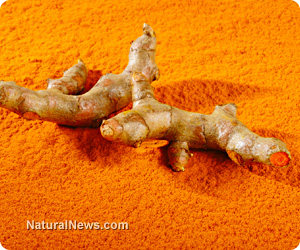
(NaturalNews) The second leading cause of cancer-related death in America, colon cancer, is projected to take over 50,000 lives in 2013, just in the US. The steep death toll can be prevented, however, because the causes of colon cancer are preventable and are no coincidence. Cancer of the colon is based on risk factors acquired through lifestyle decisions.

These risk factors do not include stereotypical medical excuses like family genetics and being over 50 years old.

Stereotypical colon cancer risk factors debunked

People of the same family may harbor similar genes, but more importantly, they may pass on the same mindsets. Similar negative gene expression may actually come from families who tend to practice and teach the same philosophies about thinking, eating and medicating.

In fact, gene expression can be completely altered and changed in the face of cancer when a new mindset and eating approach is undertaken. (Certain substances like turmeric can alter proteins in colon cancer cells.)

Age is no risk factor for cancer either. Just because a person is over age 50, doesn't mean they need a colonoscopy from a medical doctor. One can be completely confident that they are not harboring cancer by knowing their nutrition levels and understanding their body's signs and the condition of their stool.

If there's one assurance that trumps all, it's the understanding that natural substances like turmeric have the greatest impact on killing cancer cells in the colon. Turmeric, and its active ingredient, curcumin, has been tested for its ability to destroy colon cancer cells at the Department of Surgery, Dalhousie University, Halifax, Nova Scotia, Canada.

The results, were astounding.

Curcumin obliterates colon cancer cells

In the study, researchers looked at three kinds of colon cancer cells, p53(+/+), p53(-/-) HCT-116, and p53 HT-29.

Cancer cell death was observed through curcumin's ability to reduce pro-caspase-3 levels, polymerase-1 cleavage and chromatin condensation. In a time- and dosage-dependent manner, curcumin caused wild-type p53 HCT-116 cells to self-destruct, while obliterating mutant p53 HT-29 cells in their tracks.

The researchers were so astounded that they proposed that curcumin may actually have therapeutic potential in the management of colon cancer. With its ability to inhibit the growth of neoplastic cells, curcumin is king against colon cancer. In the presence of curcumin, colon cancer cells went through a process of phosphorylation, which is a complete altering of the function and activity of certain protein enzymes. This was all for the better, as oxidative stress was alleviated and superoxide anion production was increased.

Affordable curcumin cancer treatments could save over 50,000 lives without the devastating side effects

Health care is not expensive after all, and no one has to lose their hair to overcome cancer. The medical system and the insurance companies may only cover and recommend chemotherapy drugs and radiation treatment, but that way of thinking is not working. Look at all the dying people. It's not working. (A government health insurance mandate won't make the broken health care system work either.)

Instead, cancer treatment can be as simple as consuming daily doses of turmeric. Who said you needed to poison the immune system with radiation and chemotherapy just to kill some cancer in the colon?

Medical doctors in America typically graduate and are accredited simply by following one way of thinking. This means they probably have no clue about the evidence of turmeric killing cancer. Maybe they are restricted from recommending a cheaper, natural therapy that actually works. Maybe turmeric doesn't pay off their student loans and high salaries. Regardless, turmeric itself can travel in the body, alkalize it and kill cancer cells in their tracks.

An alkaline state of body should be first priority

Furthermore, the importance of starving cancer cells by creating an alkaline state in the body is disregarded by mainstream medical doctors. An alkaline state makes bacteria, virus, cancer and fungus growth practically impossible. Alkalizing the body, which is rooted in a holistic lifestyle eating approach, should be the first step in any cancer treatment.

How might patients get to an alkaline state?

First, the hospital wouldn't feed the patients processed food. They'd hydrate the patients' bodies with filtered water and feed them fresh herbs and vegetables from the hospital garden. Patients would be fed only foods that are alkaline forming. A few examples of these foods include apple cider vinegar, probiotic cultures, berries, spirulina, mostly any herb, peppers, mushrooms, broccoli, garlic and spices like cinnamon and turmeric.

You can prevent and destroy cancer right here, right now

There's no coincidence to colon cancer incidence, and you can begin to help yourself, right now, and begin preventing and destroying cancer in the colon. As a matter of fact, you are the only person that can help you right now, because the last time I checked, the doctor wasn't bringing in fresh vegetables, herbs and doses of turmeric for you to eat at the clinic or hospital. He's probably over there talking to the pharmaceutical rep, taking an incentive, ready to put you on a new experimental drug.

Sources for this article include:

http://science.naturalnews.com

http://ccalliance.org

http://www.rense.com

Tuesday, November 19, 2013

600 Reasons Turmeric May Be The World’s Most Important Herb


There is a medicinal spice so timelessly interwoven with the origins of human culture and metabolism, so thoroughly supported by modern scientific inquiry, as to be unparalleled in its proven value to human health and well-being.
Indeed, turmeric turns the entire drug-based medical model on its head.  Instead of causing far more side effects than therapeutic ones, as is the case for most patented pharmaceutical medications, turmeric possesses hundreds of potential side benefits, having been empirically demonstrated to positively modulate over 160 different physiological pathways in the mammalian body.
While no food or herb is right for everyone, and everything has the potential for unintended, adverse side effects, turmeric is truly unique in its exceptionally high margin of safety vis-à-vis the drugs it has been compared with, e.g. hydrocortisone, ibuprofen, chemotherapy agents. Furthermore, nothing within the modern-day pharmaceutical armamentarium comes even remotely close to turmeric's 6,000 year track record of safe use in Ayurvedic medicine.[1]
Despite its vast potential for alleviating human suffering, turmeric will likely never receive the FDA stamp of approval, due to its lack of exclusivity, patentability and therefore profitability. Truth be told, the FDA's "gold standard" for proving the value of a prospective medicinal substance betrays the age old aphorism: "he who owns the gold makes the rules," and unless an investor is willing to risk losing the 800+ million dollars that must be spent upfront, the FDA-required multi-phased double-blind, randomized clinical trials will not occur. For additional details on this rather seedy arrangement read our article on the topic: Why The Law Forbids The Medicinal Use of Natural Substances.
Here at GreenMedInfo.com, we have reviewed over 5,000 study abstracts from the National Library of Medicine's bibliographic database known as MEDLINE and have discovered over 600 potential health benefits of turmeric, and/or its primary polyphenol known as curcumin. These can be viewed on our turmeric research page which is dedicated to disseminating the research on the topic to a larger audience.
Some of the most amazing demonstrated properties include:
Again, what is so amazing is not that turmeric may have value in dozens of health conditions simultaneously, or that it may improve conditions that are completely resistant to conventional treatment, but that there are over six hundred additional health conditions it may also be valuable in preventing and/or treating. Consider also the fact that turmeric grows freely on the Earth, and you will understand why its very existence threatens billions of dollars in pharmaceutical industry revenue. 
Learn more about this research in the video below (keeping in mind that it is several years old and needing some updating), and please spread the information to others who may benefit from learning more on the topic.
http://www.greenmedinfo.com/blog/600-reasons-turmeric-may-be-worlds-most-important-herb