Showing posts with label recipe. Show all posts

Friday, December 19, 2014

Pumpkin Butter Recipes

These pumpkin butter recipes are a delicious answer if you've been wondering what to do with leftover pumpkin.

By Lorraine Worley
September/October 1980
No need to waste perfectly good pumpkin—or squash—when you have our pumpkin butter recipes.
PHOTO: LORRAINE WORLEY

Pumpkin Gnocchi With Sage Butter Recipe
Learn how to make gnocchi using pumpkin or squash purée.

For a good many years I regretted—but thought unavoidable—the waste that occurred when I'd have to cut open (and thus expose to spoilage) a huge pumpkin or winter squash in order to make a few pies. The dilemma was solved recently, though, when I came across "pumpkin butter" and pumpkin butter recipes. It's a treat that's both delicious and easy to store.
To make 15 to 17 quarts of the versatile spread, you'll need 40 pounds of pumpkin or squash (cooked and pureed), 2 1/2 to 3 quarts of honey, 6 tablespoons of cinnamon, 4 teaspoons of nutmeg, and 4 teaspoons of ground cloves.
Make sure the fruit is free of dirt, then cut it in half and scoop out the seeds and the stringy insides. If the pumpkin or squash you're using has a tough skin, the easiest way to cook it is to simply bake the two sections in the oven at 325°F until they're very soft ... and then remove the "meat" from the shells with a big spoon.
However, if you're going to use a food mill—rather than a blender—to process the pulp (and, surprisingly, I've found the hand-operated strainer to be the more time-efficient device), you may want to cut soft-skinned varieties in 2" chunks and bake the pieces. (If you don't have access to an oven, just put the cubes into your canner—along with an inch or two of water—and steam them until they're done. My nine-quart canner will hold about 40 pounds if it's packed full. So I'd estimate that one of the more common seven-quart canners can be used to hold about 30 pounds of butter-to-be.)

Thick and Luscious

When your pumpkin or squash is fully cooked, puree it (using either a blender or a food mill, as you prefer), put the yellow-orange liquid into your canner or a big kettle (until the container is about half full), and start it cooking. Pumpkin butter, you'll find, can be prepared in only an hour or two ... a fraction of the time required to process apple butter. When the spread starts to thicken, add the honey and spices (which will turn the mixture a golden brown) and taste-test to see whether it pleases your palate. Now let the sauce simmer—stirring it every so often to prevent sticking—and when it's thick enough to support an upright wooden spoon, you're ready to freeze the puree.
The United States Dept. of Agriculture no longer recommends canning pumpkin butters and purees for food safety reasons. Learn more at http://goo.gl/uGTyDW.


Once your butter's done, you may well wonder just what you're going to do with 15 to 17 quarts of pumpkin butter! Well, fear not ... the delicious spread is incredibly versatile. Here are a few of my own favorite recipes ... just to get you started.

Yeasted Pumpkin Bread

Dissolve 1 teaspoon of yeast in 1/4 cup of warm water and let it stand while you combine 1/4 cup of molasses, 1/4 cup of honey, and 1/2 cup of melted butter. Next stir in 1 1/2 cups of pumpkin butter, 1/3 cup of water or milk, 1 cup of whole wheat flour, 1/2 teaspoon of cinnamon, and 1/2 teaspoon of ground cloves. Now add the yeast and let the mixture rise in a warm place for 1 or 2 hours ... after which you can work in 2 more cups of whole wheat flour and 1 cup of chopped hazelnuts or walnuts. Finally, spoon the dough into a greased loaf pan ... let it rise until it almost doubles in size ... then bake it at 350°F for 1 hour.   

Pumpkin Butter Pie

Combine 1 3/4 cups of pumpkin butter, 1/8 to 1/4 cup of honey or molasses, 1 cup of milk, 2 eggs, 1 teaspoon of cinnamon, and 1/2 teaspoon of ground cloves. Then pour the mixture into an unbaked whole wheat pie crust, and put it in a 350°F oven until the custard sets (about 65 minutes).   

Banana-Pumpkin Milkshake

Process 2 cups of pumpkin butter, 1 cup of walnuts, and 2 cups of milk (you might try substituting whipping cream for part of the milk) in a blender until the nuts are totally shredded. Add 2 bananas (they're best frozen) and 2 more cups of milk, and blend the drink thoroughly.   

Pumpkin Butter Cake 

Beat two egg whites until they're stiff. Next, cream 1/2 cup of melted butter and 1 cup of honey together ... and stir in 1 cup of pumpkin butter, 2 egg yolks, and 1 1/2 cups of whole wheat flour. Add 1 tablespoon of cinnamon, 1 teaspoon of vanilla extract, 1 cup (or more) of chopped walnuts, and 1 cup of raisins. Fold in the egg whites, and bake the treat for 1 hour at 350°F in a greased and floured 8" or 9" cakepan.

Wednesday, January 29, 2014

Creamy turmeric and ginger tea made with coconut milk is a traditional south Asian beverage, Golden Milk is rich in potent antioxidants and has strongly anti-inflammatory properties.

Golden Milk: Creamy Turmeric and Ginger Tea with Coconut Milk

Making Golden Tea: Turmeric, Ginger and Honey in a Molcajete
This winter, we discovered Golden Milk or Turmeric Tea, and fell in love with its astringent, but smooth and bright flavor.  I often make it now instead of the hot chocolates, molasses milks and herbal chai my family loves.  When I can get it, I like to use fresh turmeric in my cooking.  I love its faint metallic, astringent flavor and the bright yellow-orange it gives my pilafs and curries.
In wintertime, when access to raw milk becomes scarce, I tend to use coconut milk and coconut water in this recipe; however, if you have good access to fresh milk, be sure to use it as it’s delightful with both cow’s milk and coconut milk.

Turmeric and Ginger

Turmeric and ginger are rhizomes, and while they look like roots, they’re actually the subterraneous stems of tropical plants.  Both turmeric and ginger have long been lauded for their medicinal as well as culinary properties, and often season the traditional foods of south Asian kitchens.
When you peel away the papery skin that envelops the turmeric rhizome, it reveals a brilliant orange color.  This orange pigment colors the foods in which it is cooked, and gives Golden Milk its characteristic yellow-gold color.  It is also this pigment, as well as other components found in turmeric, that contribute to its strong antioxidant capacity.  While turmeric has long-been used in traditional south Asian folk medicine, only recently have researchers begun looking into its effects on various cancers, cardiovascular disease and Alzheimer’s disease and diabetes. Curcumin, a component of turmeric, is strongly anti-inflammatory.
Ginger, like turmeric, offers strong antioxidant capacity and has similarly enjoyed a long history of use in folk medicine where it is traditionally used to easy stomach upset or to ease the discomfort caused by flus and colds.  Preliminary research also links ginger to slowed tumor growth and to the inhibition of the growth of cancerous ovarian cells, though ginger’s affect on cancer is poorly understood and warrants more research.
While it’s relatively easy to find fresh ginger in any grocery store, health food store or supermarket, finding fresh turmeric is a little more challenging.  I typically find fresh turmeric in health food stores only seasonally – in winter.  I typically purchase powdered turmeric online (available here – where I purchase most of my organic spices).

Ghee

When I prepare my Golden Milk, I begin first by combining freshly grated ginger and turmeric with grass-fed ghee to form a fine paste. Long used in Ayurvedic cooking, ghee is a type of clarified butter.  Ghee prepared from the butter of grass-fed cows is extraordinarily rich in fat-soluble vitamins A and K2; it is also a good source of conjugated linoleic acid, a healthy fat with anticarcinogenic properties.
Turmeric and ginger, both rich in antioxidants, also work synergistically together with ghee, as ghee, and other healthy fats, enable those fat-soluble nutrients to be better absorbed.
You can purchase grass-fed ghee in many health food stores, as well as online.

Manuka Honey

Lastly, I use raw Manuka honey as a sweetener.  Manuka honey is a single varietal honey from New Zealand with a thick texture and a strong, almost medicinal flavor.  It is rich in antioxidants and has strong antimicrobial properties.  Due to demand and relatively limited supply, Manuka honey is expensive, and any raw honey can be substituted for it in this recipe with little change in flavor.
I typically purchase our Manuka honey online from reputable sources, and I use it only sparingly.

 
Golden Milk: Turmeric and Ginger Tea with Coconut Milk


Read more: http://nourishedkitchen.com/golden-tea-turmeric-ginger-tea-coconut-milk/#ixzz2roKBQRZh

Golden Milk: Turmeric and Ginger Tea with Coconut Milk
Prep Time: 5 minutes
Cook Time: 10 minutes
Total Time: 15 minutes
Yield: 2 cups
Creamy, faintly sweet and fragrant with the potent flavors of ginger and turmeric, Golden Milk is a deeply nourishing drink, warming and perfect for winter afternoons.
Ingredients
  • 1 1-inch knob fresh turmeric
  • 1 1/2-inch knob fresh ginger
  • 2 teaspoons ghee 
  • 1 cup full-fat coconut milk 
  • 1 cup coconut water 
  • 1 tablespoon manuka honey
Instructions
  1. Peel both the turmeric and ginger, then grate them finely into a mortar or a molcajete (I use this one.) Spoon the ghee into the mortar or molcajete, and grind the ghee into the turmeric and ginger with your pestle until they form a fine paste.
  2. Pour the coconut milk and coconut water into a saucepan, and spoon in the paste made with turmeric, ginger and ghee. Turn the heat up to medium-high and warm the ingredients together until little bubbles just begin to creep up the sides of the pot. Turn off the heat and cover the saucepan, allowing the turmeric and ginger to steep about 3 minutes. Strain the golden milk through a fine-mesh strainer or tea strainer into a tea pot. Stir in the Manuka honey and continue stirring until it dissolves. Serve warm.
Notes
Golden Milk is traditionally made with cow's milk. If you wish to omit the coconut milk and coconut water, simply substitute 2 cups whole milk.
If you cannot find fresh turmeric, substitute 2 teaspoons organic powdered turmeric.

Korean Marinade, Crock-pot Chicken
For Marinade:
  • 1 20-oz can crushed tomatoes
  • 1/2 to 1 3-oz can tomato paste
  • 3 tbsp garlic, crushed or chopped (about 2 cloves)
  • 3 tbsp Tamari or soy sauce
  • 2 tbsp honey
  • 2 tbsp fresh orange juice (or juice of a sweet citrus fruit, tangerine, etc.)
  • 1 tbsp rice wine vinegar (or dry white wine)
  • 1 tbsp sesame oil
  • 3 green onions, finely chopped
  • 1 tsp pepper
  • 1 tsp paprika
  • 1/2 tsp red chili flakes
  • 1 cup water (if needed for thinning mixture slightly)
For Crock-pot:
  • 2 pounds chicken breast, with or without bone-in
  • 1 large yellow onion, roughly chopped
Directions:
Mix marinade together until tomato paste and honey are dissolved and everything is well incorporated.
Place half of the marinade into the crock-pot. Add the chicken and onions and pour the remaining marinade over the top.
Turn the crock-pot to the low setting and let cook “Slow and Low” for at least 7-8 hours. The longer the better and the lower the temperature, the more the flavors meld together and the chicken falls apart.
DELICIOUS!
Easy Asian Chicken Stir Fry
Adapted from P. F. Chang’s Chicken Lettuce Wraps
“Secret” Stir Fry Sauce:
  • 1/2 cup water
  • 4 tbsp Tamari or  soy sauce
  • 4 tbsp rice wine vinegar
  • 2 tbsp red chili paste
  • 1 tbsp honey
  • 1 tbsp lemon juice
  • 1/8 tsp sesame oil
  • 1 tbsp Dijon or hot mustard
  • 3 garlic cloves, crushed
  • 1+ tsp salt
  • 1/2 tsp freshly ground black pepper, or white pepper
Chicken & Veggies:
  • 1-1.5 pounds boneless chicken breast, sliced into strips or pieces/cubes
  • 1-2 tbsp olive oil
  • 1/2-1 cup water (as needed)
  • 1 large yellow onion, sliced- any shape
  • 2 large carrots, cut into 1/2 inch thick rounds
  • 1 large broccoli floret, cut into pieces
  • 2 cups Shiitake mushrooms
  • Additional 1/2 cup water
Directions:
Prepare “Secret” Sauce by combining all ingredients in a medium sized bowl. Mix well and set aside.
Heat a large skillet on high. Pour in the olive oil and chicken, adding the water as necessary to keep chicken from sticking to pan. Heat until chicken pieces are almost completely cooked through, stirring frequently.
When chicken is almost done, but slightly still pink, remove from heat and cover. Let stand. (The chicken will steam and be very tender by doing this.)
In another medium skillet, cook onions, carrots, broccoli, and water, about 5 minutes until slightly tender. Stir frequently. Add in 4 tablespoons of “Secret” Sauce, mixing well with vegetables. Continue to cook vegetables until desired tenderness, about 10 to 20 minutes, covered.
When vegetables are finished cooking, add to the chicken and return skillet to heat. Pour the remainder of the “Secret” Sauce into the chicken and veggies. Stir well and heat for additional 5 minutes.
Serve hot.

Monday, January 27, 2014

Vegetarian pies: they kept us healthy on the farm. By Habeeb Salloum
Issue #87 • May/June, 2004
Delicate, flavorful, and very satisfying are the descriptions with which a number of culinary experts label the countless pies or turnovers found in every country on earth. It is said that if all snack foods are ranked in order, these would, without question, lead the list. Filled with an infinite combination of stuffing, they are, in the main, delicious, nutritious, and simple to prepare.
As a child, I will always remember the aroma flowing out of the kitchen when, after returning from school, I opened the door to our home. The mouth-watering smell of baking vegetarian and, at times, meat pies would increase my hunger pangs a hundred fold. No matter what type of pie mother was making that day, the smell from the kitchen would always ensnare me in its culinary bewitching web.
My mother seemed to have a never-ending storehouse of ideas for new types of pies. This was especially true in summer and autumn when our garden overflowed with vegetables. With no type of refrigeration at our disposal, during the warm months we ate very little meat. Hence, her vegetarian pies were a welcome addition to our diet. For lunch, snacks, or main courses, they were always delicious and memorable. Their memories have always lingered with me. For many years I have never tired of replicating my mother's pies and developing numerous other versions.
Known in the eastern Arab-speaking lands as sambousik, fatayer, or lahme bi ajeen, they are always to be found on the housewife's daily menu. For school lunches, snacks at home, or a meal a wife carries to her husband working the fields, pies, especially spinach, are usually included. When leaving their homelands, like our family, to other countries, the emigrants from the Middle East never forget their pies, especially those freshly baked, perfuming the home with their seductive pungency.
In that part of world, from the tiny sambousik to the larger fatayer or lahme bi ajeen, they are often offered as a savory and appetizing fast food. People enjoy munching them on the streets, their enticing aromas flowing from small bakeries and restaurants too overpowering to resist. The first thing I do when I reach Damascus, Beirut, or any other urban center in the Middle East, is search for a bakery, and there are many.
Traditionally most pies are stuffed with meats or a combination of vegetables and meats. Only a few, like cheese or spinach pies, are usually made with nonmeat fillings. Long favored by the masses, these vegetarian delights have for centuries been an important food in the kitchens of these lands.
On the other hand, besides cheese and spinach, more innovative cooks, like my mother, throughout the Middle East have replaced the meats with nuts and almost every kind of vegetable. In the process they have created a great number of appetizing and succulent vegetarian pies.
These can be made very small, medium size, or large enough for a one-person meal. The petit and medium versions can be served as appetizers, for snacks, as part of buffet meals, or as supplements to soups and salads. King-size and baked, they make a delectable and filling all-in-one entrée. Also, excellent for lunches and as picnic fare, they add much to the culinary world of sandwich-type foods.
Vegetarian pies can be stuffed with a never-ending variety of nonmeat ingredients and most are simple to prepare. They can be made in advance and frozen, then removed and allowed to thaw half an hour before being baked. Very delightful when served hot, they lose only a little of their mouth-watering taste if eaten cold.
The following vegetarian pies are some of the ones mother used to bake and a number which are my own creations.

Dough for the pies

1 Tbsp. sugar
1 pkg. dry yeast
1 cup lukewarm water
3 cups flour
½ tsp. salt
1/8 tsp. ground ginger
4 Tbsp. olive oil
Dissolve sugar and yeast in ¼ cup of the lukewarm water, then allow to stand until yeast begins to froth.
In the meantime, combine flour, salt, and ginger in a mixing bowl, then make a well in the middle. Add the yeast, water, and oil. Knead into a dough, adding more flour or water if necessary. (Do not allow the dough to become sticky.) Shape into a ball, then brush the outside with a few drops of oil. Place on a floured tray or pan, then cover with a damp cloth. Allow to rest in a warm spot until it becomes double in size.
Note: An equal amount of frozen dough will serve equally well for all the following recipes.

Spinach pies

Spinach pies are the most commonly made pies in the Middle East. They are found on the menu of almost every feast. 1 dough recipe
1 pkg. spinach (10 oz.), thoroughly washed and finely chopped
2 medium onions, chopped
3 Tbsp. pine nuts or slivered almonds
4 Tbsp. olive oil
2 Tbsp. lemon juice
¾ tsp. salt
½ tsp. pepper
½ tsp. nutmeg
1/8 tsp. cayenne
Prepare the dough for the pies, then set aside.
Make a filling by thoroughly combining all the ingredients just before rolling out the dough into rounds, then set aside.
Form the dough into 20 balls, then place them on a floured tray. Cover with a damp cloth, then allow to stand in a warm place for 30 minutes.
Roll the balls into five to six-inch rounds, then divide the filling and place two heaping tablespoons of filling on each round, stirring the filling each time. (Preferably the filling should be divided into 20 equal parts.) Fold the dough over the filling, then close by firmly pinching edges together into half moon or triangle shape.
Place the pies on well-greased baking trays, then bake in a 350° F preheated oven for 20 minutes or until pies turn golden brown. Remove from the oven, then brush with olive oil. Serve hot or cold.

Leek pies

Leeks, not much used in cooking in North America, make an excellent-succulent pie. 1 dough recipe
4 heaping cups of thoroughly washed chopped leeks
4 medium onions, chopped
4 cloves garlic, crushed
1 small hot pepper, very finely chopped
2 Tbsp. sumach (Sumach, sometimes spelled sumac, sammak, summag, and other ways, can be purchased in Middle Eastern food markets.)
2 Tbsp. finely chopped fresh coriander leaves (cilantro)
¼ cup olive oil
¼ cup lemon juice
1 tsp. salt
½ tsp. pepper
Prepare the dough for the pies, then set aside.
Make a filling by thoroughly combining all remaining ingredients, then set aside.
Form the dough into 20 balls, and place them on a floured tray. Cover with a damp cloth and allow to stand in a warm place for 30 minutes, then roll the balls into five to six-inch rounds.
Follow the spinach recipe when making and baking the leek pies

Eggplant and tomato pies

1 dough recipe
1 eggplant, about 1 ½ lbs, peeled and cut into 1/4-inch cubes
1 tsp. salt
6 Tbsp. olive oil
2 medium onions, chopped
1 small hot pepper, finely chopped
4 cloves garlic, crushed
2 large tomatoes, finely chopped
1 tsp. oregano
½ tsp. pepper
2 eggs, beaten
Prepare the dough for the pies then set aside
Sprinkle eggplant cubes with the salt, then place in a strainer over a pot. Place heavy weight atop eggplant cubes, then allow to drain for one hour.
Heat the oil in a frying pan, then sauté onions over medium heat for 10 minutes. Add the eggplant cubes, hot pepper, and garlic, then stir-fry for five minutes, adding more oil if necessary.
Make filling by stirring in the remaining ingredients, then stir-fry for a few more minutes. Allow to cool.
In the meantime, form the dough into 20 balls, then place them on a floured tray. Cover with a damp cloth and allow to stand in a warm place for 30 minutes, then roll the balls into five to six-inch rounds.
Follow the spinach recipe for making and baking eggplant and tomato pies.

Potato and tomato pies

Eaten just out of the oven, these pies are simply delicious. 1 dough recipe
4 cups shredded potatoes
2 medium tomatoes, finely chopped
1 large onion, finely chopped
1 small hot pepper, very finely chopped
2 cloves garlic, crushed
2 Tbsp. finely chopped fresh coriander leaves (cilantro)
2 Tbsp. melted butter
1 egg, beaten
1 tsp. salt
1 tsp. cumin
½ tsp. pepper
Prepare the dough for the pies, then set aside.
Make a filling by thoroughly combining all the remaining ingredients, then set aside.
Form the dough into 20 balls, then place them on a floured tray. Cover with a damp cloth and allow to stand in a warm place for 30 minutes, then roll the balls into 5 to 6 inch rounds.
Follow the spinach recipe for making and baking potato and tomato pies.

Pea and zucchini pies

1 dough recipe
2 ½ cups 1/4-inch cubes of unpeeled zucchini
1 ½ cups fresh or thawed frozen peas
1 large onion, finely chopped
4 cloves garlic, crushed
4 Tbsp. ground almonds
1 tsp. salt
1 tsp. oregano
½ tsp. pepper
½ tsp. paprika
¼ tsp. cayenne
Prepare the dough for the pies, then set aside.
Make a filling by thoroughly mixing all remaining ingredients, then set aside.
Form the dough into 20 balls, then place them on a flowered tray. Cover with a damp cloth and allow to stand in a warm place for 30 minutes, then roll the balls into 5 to 6 inch rounds.
Follow the spinach recipe for making and baking the pea and zucchini pies.

Mushroom pies

1 dough recipe
4 cups thinly sliced mushrooms, thoroughly washed
1 ½ cups chopped green onions
1 medium sweet green pepper, finely chopped
¼ cup finely chopped parsley
2 cloves garlic, crushed
4 Tbsp. olive oil
1 tsp. salt
1 tsp. marjoram
½ tsp. pepper
¼ tsp. cayenne
Prepare the dough for the pies, then set aside.
Make a filling by thoroughly combining all remaining ingredients, then set aside.
Form the dough into 20 balls, then place them on a floured tray. Cover with a damp cloth and allow to stand in a warm place for 30 minutes, then roll the balls into five to six-inch rounds.
Follow the spinach recipe for making and baking the mushroom pies.

Corn pies

This is one of my own creations, similar to others that mother made during our farming years.
1 dough recipe
4 Tbsp. olive oil
1 medium sweet pepper, finely chopped
1 medium onion, finely chopped
1 small hot pepper, finely chopped
4 cloves garlic, crushed
4 ½ cups fresh or thawed frozen corn
½ cup finely chopped parsley
1 tsp. salt
½ tsp. pepper
½ tsp. powdered mustard
½ tsp. cumin Prepare the dough for the pies, then set aside.
In the meantime, heat oil in a frying pan, then sauté sweet pepper, onion, hot pepper, and garlic over a medium heat for five minutes. Add the corn, then stir-fry for further five minutes.
To make the filling, stir in the remaining ingredients, then remove from the heat and allow to cool.
In the meantime, form the dough into 20 balls, then place them on a floured tray. Cover with a damp cloth and allow to stand in a warm place for 30 minutes, then roll the balls into five to six-inch rounds.
Follow the spinach recipe for making and baking the corn and pepper pies.

Chickpeas pies

Often prepared by my mother, chickpea pies are believed to have been eaten by the peasants in the Middle East since pre-Roman times. 1 dough recipe
4 Tbsp. olive oil
½ tsp. salt
½ tsp. pepper
1 cup chickpeas, soaked overnight and drained
Prepare the dough for the pies, then set aside.
In the meantime, combine remaining ingredients, then set aside.
Form the dough into 20 balls, then place them on a floured tray. Cover with a damp cloth, then allow them to stand in a warm place for 30 minutes.
Roll the balls into 1/8-inch thick rounds, then place on well greased cookie tray. Stir chickpea mixture, then press firmly into the dough a handful of chickpeas on each pie.
Bake in a 350° F preheated oven for 15 minutes or until edges of pies turn light brown. Place under broiler until top browns, then serve hot.

Lentil pies

Since lentils contain an equal amount of protein as lean meat and are much more easily digestible, these pies, besides being tasty are very nourishing. 1 dough recipe
1 cup lentils, rinsed
4 cups water
2 medium onions, finely chopped
4 cloves garlic, crushed
1 small hot pepper, very finely chopped
4 Tbsp. tomato paste
4 Tbsp. olive oil
4 Tbsp. lemon juice
1 tsp. ground coriander
1 tsp. salt
½ tsp. pepper
½ tsp. cumin
Prepare the dough for the pies, then set aside.
In the meantime, place the lentils and water in a saucepan, then bring to a boil. Cover, then simmer over medium heat for 40 minutes or until the lentils are soft. Drain the lentils and allow them to cool, then mash and combine with the remaining ingredients to make a filling.
Form the dough into 20 balls, then place them on a flowered tray. Cover with a damp cloth and allow to stand in a warm place for 30 minutes, then roll the balls into 5 to 6 inch rounds.
Follow the spinach recipe for making and baking the lentil pies.

Thyme and sumach pies

In the Greater Syria area of the Middle East, this is a favored breakfast dish, eaten piping hot. 1 dough recipe
½ cup olive oil
3 Tbsp. thyme
3 Tbsp. sumach
2 Tbsp. sesame seeds
1 tsp. marjoram
¼ tsp. salt
1/8 tsp. cayenne
Prepare the dough for the pies, then set aside.
In the meantime, thoroughly mix all remaining ingredients, then set aside.
Form the dough into 20 balls, then place them on a floured tray. Cover with a damp cloth, then allow to stand in a warm place for 30 minutes.
Roll the balls into 1/8-inch thick rounds, then place on well greased cookie tray. Spread the mixed ingredients evenly over top of rounds, then bake in a 350° F preheated oven for 15 minutes or until edges of pies turn light brown. Serve hot or cold. 
http://www.backwoodshome.com/articles2/salloum87.html

Saturday, January 25, 2014

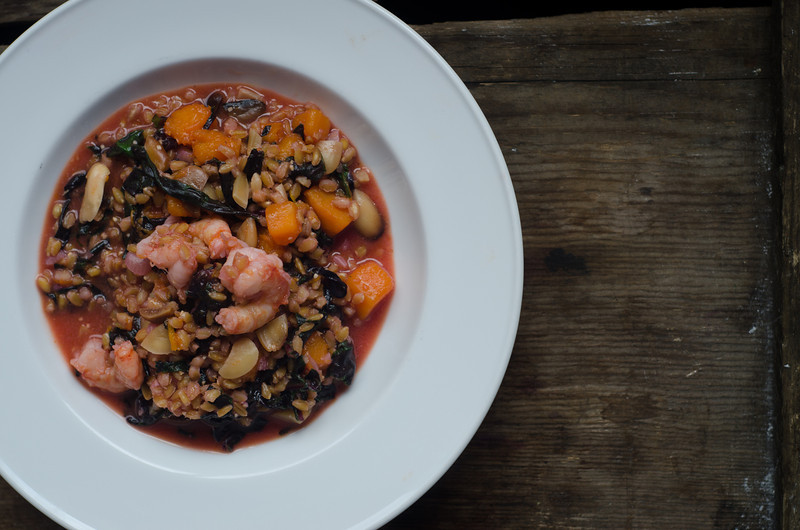
Einkorn and Spotted Shrimp Risotto with Butternut Squash and Almonds

Einkorn and Spotted Shrimp Risotto with Butternut Squash and Almonds
In wintertime, I rely on simple, warming one-dish dinners – and risottos appear often on our dinner menu.  They require so little clean-up, and the slow commitment to stirring the risotto as it cooks offers me a point of peace and meditative quiet.  This version of risotto, is one of my favorites.  Instead of rice, I use einkorn wheat berries which give the risotto a wonderful chewiness, while almonds offer a crunch and both butternut squash and spot prawns contribute a touch of sweetness.  I often serve it with red orach, a leafy vegetable with a brilliant purple color that we often find in our CSA.  The red orach colors the broth a lovely shade of pink, but if you don’t have it, simply substitute spinach.

Einkorn: An Ancient Grain

Einkorn is an ancient variety of wheat, and the first wheat to be cultivated by epi-paleolithic humans in what is now southeast Turkey.  After its initial cultivation, einkorn spread throughout Europe, the Middle East and into north Africa.  As a non-hybridized, heirloom variety of wheat, einkorn is richer in phytonutrients than modern wheat, higher in protein, and higher in antioxidants.
Einkorn’s flavor is at once both simple and complex, richer and with a chewy texture and nutty taste when cooked.  Like all grains, einkorn is best prepared by soaking it first in warm water for 18 to 24 hours.  This helps to soften the grain to prepare it for cooking, and it also helps to facilitate the deactivation of food phytate, a component found in grains and pulses that can prevent full absorption of trace minerals.

Where to Buy Einkorn

You can purchase einkorn online (see sources) as well as in well-stocked health food stores.

Pacific Spot Prawns

Pacific Spot Prawns are small shrimp with a lovely sweet flavor.  Like many varieties of shellfish, Pacific Spot Prawns are a good source of vitamin D, B vitamins and iodine. Particularly important in winter months when sun exposure is likely limited, vitamin D helps to support immune system health.
U.S. and Canadian wild-caught spot prawns also remain one of the best choices available for readers concerned about sustainable seafood options.  They’re ranked as “good alternative” and “best choice,” by the Monterey Bay Aquarium’s Seafood Watch Program.

Bone Broth

Along with einkorn and vegetables, bone broth provides the basis for this simple risotto.  Bone broth is a favorite in the traditional foods community.  It is rich in minerals, rich in gelatin and extraordinarily rich in amino acids.  Unlike broth, which is made mostly from meat and boiled for a short period of time, and unlike stock, which is typically made from bones and boiled for a few hours, real  bone broth is made by boiling bones and cartilage-rich joints often in excess of 24 hours, ensuring that the broth is a concentrated source of trace minerals, gelatin and other nutrients.  You can learn more about bone broth here.

How to Make (or where to buy) Bone Broth

We make bone broth weekly at home, both on the stove and in the slow cooker; however, if you do not have the time or do not wish to make bone broth, you can purchase it online and have it shipped to your door.
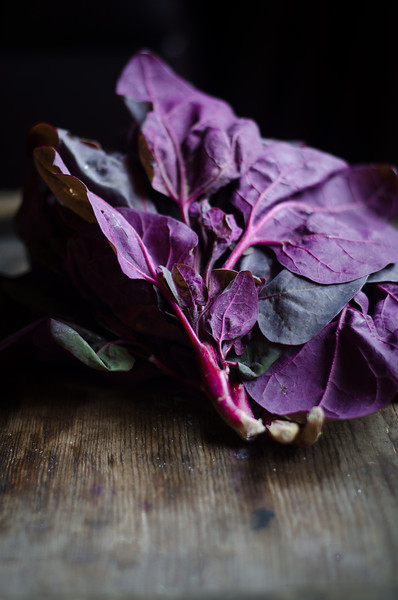
Red Orach: a Leafy Vegetable with a Brilliant Purple Color
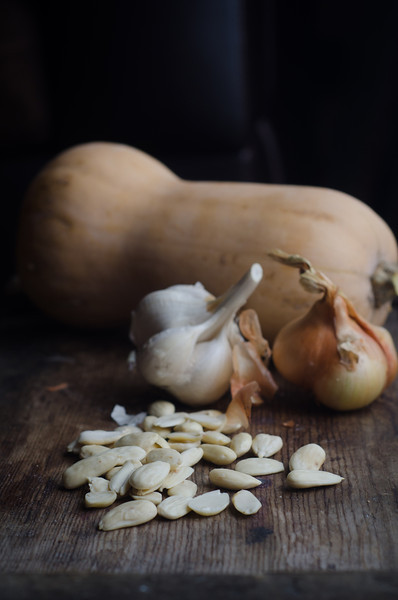
Butternut Squash, Garlic and Almonds
Einkorn and Spotted Shrimp Risotto with Butternut Squash and Almonds
Cook Time: 50 minutes
Total Time: 18 hours, 50 minutes
Yield: serves 4 to 6
A winter-time favorite, this risotto is spiked with garlic, shallot, butternut squash and Pacific spot shrimp. Red Orach, a purple leafy vegetable often available at farmers markets or through CSAs, is added to the risotto toward the end, coloring the dish a faint pink. If you don't have Red Orach, substitute spinach.
Ingredients
  • 2 cups einkorn wheat berries 
  • 1 tablespoon apple cider vinegar
  • 1 tablespoon extra virgin olive oil 
  • 1 tablespoon clarified butter or ghee 
  • 3 cloves garlic, chopped
  • 1 shallot, sliced thin
  • 1/2 cup blanched almonds, coarsely chopped
  • 1 cup chopped butternut squash
  • 3/4 pound Pacific spot prawns 
  • 4 cups chicken bone broth, plus additional broth as needed
  • 1/2 cup dry white wine
  • 1 bunch red orach, trimmed of tough stems and coarsely chopped
Instructions
  1. The night before you plan to cook the pilaf, place the einkorn wheat berries into a medium mixing bowl. Cover them with warm water, and stir in the apple cider vinegar. Allow the einkorn to soak, tightly covered, for 18 to 24 hours, then drain them in a fine-mesh sieve, rinse them well and set them aside.
  2. Warm the olive oil and ghee in a wide stainless steel or enameled cast iron skillet over medium heat. When the ghee melts and mingles with the olive oil, toss in the garlic and shallot. Fry them in the olive oil, stirring frequently to prevent scorching, for 3 to 5 minutes, or until they become fragrant. Stir in the almonds and continue cooking them a further 2 minutes, or until they begin to brown ever so slightly.
  3. Turn the down the heat to medium-low. Stir in the soaked einkorn, and stir into the garlic, shallot and almonds for 3 minutes. Stir in the butternut squash, and pour in the broth 1/2 cup at a time, stirring continuously with each addition, until the liquid is absorbed by the cooking grains, about 30 minutes. Stir in the spotted shrimp and the white wine, cooking until the shrimp curl under the heat of the stove, about 3 minutes. Stir in the red orach, and continue cooking until the liquid is largely absorbed by the grains, and the red orach wilts in the heat of the risotto. Adjust seasoning with salt, and serve warm.
Notes
If you cannot find Red Orach, a purple-colored leafy vegetable with a flavor reminiscent of spinach, substitute spinach.

Red Orach

Friday, December 20, 2013

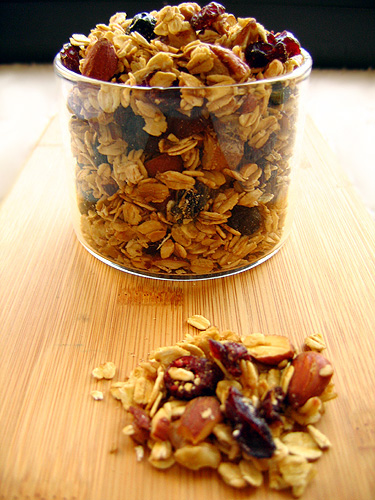
Granola recipe


3 cups oats
3 cups coconut
2 cups sliced almonds

½ cup honey
½ cup brown sugar
¼ cup water
3 Tbsp oil (I used canola)

2 cups dried fruit

Preheat oven to 325 degrees.  Mix dry ingredients together – set aside.  Mix honey, brown sugar, water and oil.  Heat until brown sugar has dissolved.  Pour liquid ingredients into dry ingredients – mix well.  Divide mixture in half and spread in a thin layer on two cookie sheets.  Bake for about 45 minutes – mixing once halfway through.  When slightly brown, take out of oven – let cool and mix in dried fruit.

Friday, November 29, 2013

Easy Pot Pie


Serves:6
Prep Time:
Cook Time:

Ingredients

1 pkgpillsbury double pie crust
2 can(s)15 oz. original veg-all mixed vegetables drained (they even have potatoes in them)
1 can(s)campbells cream of chicken soup
1tub 10oz. of philadelphia cooking creme savory garlic
salt and pepper to your liking
2whole chicken breast diced ( i used rotisserie chicken all ready cooked)
1egg
1 Tbspwater

Directions

1
 Put your crust in a pie pan. Then in a bowl mix soup, cooking creme,salt and pepper. Then Fold in veg. and chicken. Then put in all in your pie pan.
2
 Put top crust on . pinch crust together. Then brush on one beaten egg with water. Makes it golden color.Cook 375 for 45 minutes.

Tuesday, November 19, 2013

Cowboy Caviar Recipe

INGREDIENTS:
1 (11oz) can white shoepeg corn, drained & rinsed
1 (15oz) can black beans, drained & rinsed
1 (10 oz) can Rotel tomatoes, with juice
2 ripe avocados, diced
2/3 c. red onion, chopped
1/4 c. olive oil
1/4 c. red wine vinegar
2 cloves garlic, minced
3/4 tsp. salt
1 tsp. cumin
2/3 c. cilantro, chopped
a few dashes of tabasco (optional)

Combine all ingredients, adding avocados last, and toss gently. Serve with chips.
I normally don't use the tabasco since the Rotel tomatoes add a little spice, but if you like extraspice...go for it!
 

NOTE: my store was out of shoepeg corn, so I used canned yellow corn and still turned out great! If you don't have black beans, use black-eyed peas, or whatever you've got! Or if you have a plethora of fresh tomatoes from your garden, use those instead of the Rotel. It's a very versatile recipe and can be adapted to your liking.


http://bebealamodedesigns.blogspot.com/2011/07/cowboy-caviar.html