Showing posts with label monetary policy. Show all posts

Tuesday, May 3, 2016

European Stocks Tumble After EU Slashes Growth, Inflation Guesses

Tyler Durden's picture


Despite unleashing his bazooka, Mario Draghi - like his colleagues at The BoJ - appears to have hit the limit of his impotence as the European Commission cut its outlook for growth and inflation across the Union for 2016 and 2017. Citing the economic slowdown in China and other emerging markets, geopolitical tensions and uncertainty ahead of the U.K. referendum on EU membership, WSJ reports EU’s economists also cautioned that the strength of factors that have been supporting growth in the region, such as low oil prices and a weaker euro, could start to fade. This sparked modest Euro weakness (after a non-stop surge in the last week) dragging down European stocks and darkening the outlook for the banking system further.
As The Wall Street Journal reports,
According to the forecasts by the European Commission, the EU’s executive arm, the economy of the 19-country eurozone is expected to grow 1.6% this year. This is slightly below the 1.7% expansion the commission had forecast in February, and the 1.7% it expanded in 2015.

In 2017, the eurozone economy will expand by 1.8%, the commission said, slightly lower than earlier predictions which saw it growing 1.9%.

Growth in the 28-country EU is seen at 1.8% this year, down slightly from the commission’s February forecast and lower than the 2% it recorded in 2015. The EU’s economic output will likely expand 1.9% next year, also below the 2.0% forecast earlier this year.

The new, slightly lower forecasts highlight how Europe’s scars from the financial crisis, and the debt crisis that followed, continue to dampen its recovery.

In its forecasts, the commission said that while cheaper oil and easy monetary policy by the European Central Bank have boosted consumption and exports, the pace of growth across the 28-country bloc and the euro area remains relatively moderate.
This sparked a modest drop in EURUSD...


And European stocks continue to tumble...


Led by Italy and Spain to the downside...


As Italian banks collapse again... which should be no surprise one third of the bailout fund has already been depleted...


So having told "savers" to pile a third of their assets into stocks, Draghi apperars powerless to create 'wealth' for the repressed as realisation dawns across global investors that it's all smoke and mirrors.
But don;t worry they are on it...
“Growth in Europe is holding up despite a more difficult global environment,” said Pierre Moscovici, the EU commissioner for economic and financial affairs.

“The recovery in the euro area remains uneven, both between Member States and between the weakest and the strongest in society. That is unacceptable and requires determined action from governments, both individually and collectively,” he added.

Thursday, March 10, 2016

Cheap Oil, the U.S. Dollar and the Deep State

Posted on  by Charles Hugh Smith

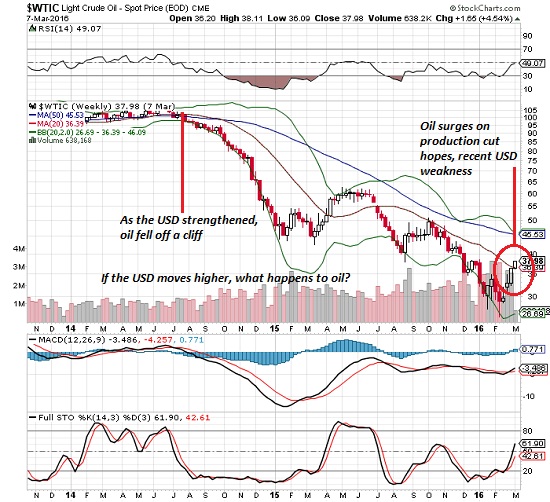
That oil fell off a cliff once the U.S. dollar (USD) began its liftoff in mid-2014 is, well, interesting. Causation, correlation or coincidence? There are a variety of opinions on this, as there should be. What we do know is the soaring USD blew up a bunch of carry trades that borrowed money denominated in USD and invested the cash in emerging markets paying much higher yields. Here’s WTIC oil:
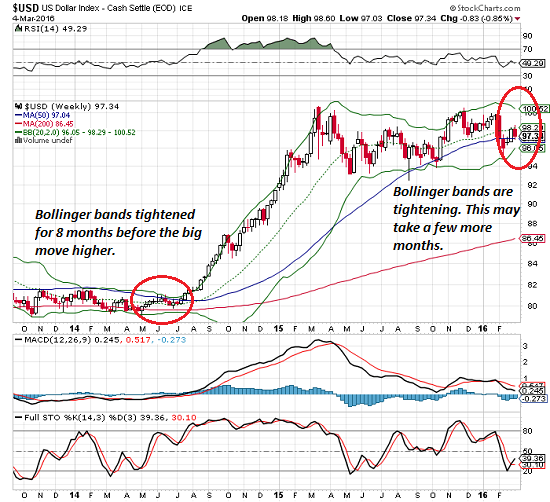
And here’s the USD Index:
We also know the Saudis announced that the kingdom would pump every barrel it could “to maintain market share,” which is generally understood to mean crush competitors such as Russia and U.S. shale producers.
We also know that storage facilities are almost full up (Oil Fundamentals Could Cause Oil Prices To Fall, Fast!).
We also know that global growth is slowing, so demand could weaken sharply going forward.
And lastly, we know that many oil exporters are heavily dependent on oil revenues to fund their oligarchy/monarchy/ruling elites, their military and their vast social welfare programs, which keep the restive masses from overthrowing the oligarchy, etc.
Here is the U.S., heavily indebted producers must pump or die, as they need every dime of revenue to service their vast debts.
If we add all this up– carry trades blowing up, weakening demand and heavy pressures to maintain production–we get a perfect set-up for a continued decline in oil.
Many observers are expecting the Federal Reserve to pull out all the stops to weaken the dollar. They think this because a strong dollar hurts U.S. exports. If oil and the USD are indeed correlated, a weaker dollar would trigger a boost in oil prices–a welcome “saved by the bell” for indebted U.S. producers, and the bankers who lent tens of billions of dollars to them.
If you glance at the above chart of the dollar index, you’ll note the Bollinger Bands are tightening. This usually presages a big move up or down. We don’t know which way the USD will move, but since it’s in a Bull market, we might surmise the move will be a continuation of the current trend, i.e. up.
Technically, a 20% gain to the 120 level would be quite typical of a long-term uptrend.
What would an additional 20% gain in the USD do to oil? If the correlation holds (and perhaps it won’t–there are no guarantees), it would very likely crush oil to new and breathtaking lows. Analyst Art Berman recently suggested a target of $16.50/barrel, and this corresponds rather neatly with USD at 120 (a 20% gain).
Lower oil prices are not an unalloyed “win” for the U.S. The U.S. energy sector is getting pummeled, and soon its lenders will start booking staggering losses. The decline in petrodollars also means there is less demand for U.S. Treasuries from oil exporters.
Enter the U.S. Deep State, which is only marginally interested in Wall Street bankers’ losses or petrodollar recycling into Treasuries. Global hegemony ultimately rests on issuing the reserve currency in size, and the sheer magnitude of financial resources that can be brought to bear to do what is viewed as necessary.
The collapse in oil has led to an unprecedented transfer of wealth from producers to consumers. Oil exporters (the number of which is diminishing, as populations and domestic consumption levels soar throughout the oil-producing world) have far fewer USD to spend on military adventures, social welfare, the tallest buildings in the world, and so on.
If global bankers wise up (and they are smart gals/guys), lending to oil producers is about to dry up like the proverbial mist in Death Valley. Why loan money to someone with $35/barrel oil in the ground if oil is heading to $20 or lower?
Who goes broke/goes home/is overthrown at sustained $20/barrel oil? You can make your own list, but it pretty much includes every oil exporter.
So who wins in a scenario in which the USD gains another 20% and pins oil to new, sustained lows? Consumers, of course, but as Zero Hedge and others have explained, this windfall isn’t leading to robust consumer spending. Rather, households are saving the proceeds, hunkering down in the recessionary winds they see rising.
The U.S. oil sector will take some serious lumps, along with every other producer. We can anticipate huge writedowns of uncollectible debt, bankruptcies, and all the other collateral damage (pun intended) of a bust.
But who is left relatively unscathed in terms of financial power and hegemony? The U.S. Should the USD soar another 20%, China would be forced to devalue its currency, causing massive capital flows out of China and an immediate loss of trillions of dollars of purchasing power for all who hold yuan/RMB. Not much of a win there.
All this is to suggest that those expecting a major weakening in the USD to push oil higher shouldn’t hold their breath awaiting this outcome. Maybe the USD will weaken 20%, but why would it do so when every other central bank is weakening its currency? Wouldn’t it make much more sense to drain wealth and geopolitical leverage from oil exporters?

Wednesday, March 9, 2016

Who Controls the Central Banks? Mark Carney, Governor of the … “Bank of Goldman Sachs”

Posted on  by WashingtonsBlog

By Prof Michel Chossudovsky, who publishes Global Research.
Bank of England Ignites Quantitative Inflation
In the event of a vote in favour of Brexit, The Governor of the Bank of England Dr. Mark Carney reassured the British public: “we will do everything in our power to discharge our responsibility to achieve monetary stability and financial stability…”
Carney intimated that “financial instability” and “poor economic outcomes” are associated with the Brexit process: a rather unsubtle message to investors, brokers as well as speculators. He also warned MPs that Brexit could lead to an exodus of banks and financial institutions from the City of London.
“[There is no] blanket assurance that there would not be issues in the short term with respect to financial stability and that potential reduction in financial stability could be associated – and normally would be associated – with poor economic outcomes, as we have seen in the past”.
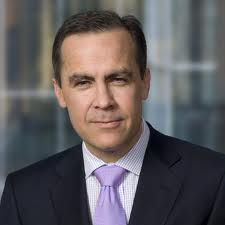
The governor of the Bank of England Mark Carney (image right) is a former Goldman Sachs official which is the World’s foremost “institutional speculator”. He spent thirteen years with Goldman before heading the Bank of Canada.
At the time of his 2013 appointment to the Bank of England, he was not a citizen of the United Kingdom: Mark Carney was the first foreigner to occupy that position since the founding of the Governor and Company of the Bank of England in 1694.
Were there powerful interests involved in the recruitment of the Governor of the BoE? Who was behind Carney’s candidacy? At the time of his appointment, the issue of U.K. “sovereignty” and Carney’s citizenship were hushed up by the British media.
Brexit and Financial Instability
Carney was fully aware that an “authoritative statement” pertaining to “financial stability” would have an immediate impact on financial markets. On whose behalf was he acting when he made those statements?
Tory MP Jacob Rees-Mogg has accused Mark Carney, of “speculative statements”:
“It is speculative and beneath the dignity of the Bank of England. To be making speculative pro-EU comments.”
The Goldman Sachs Report
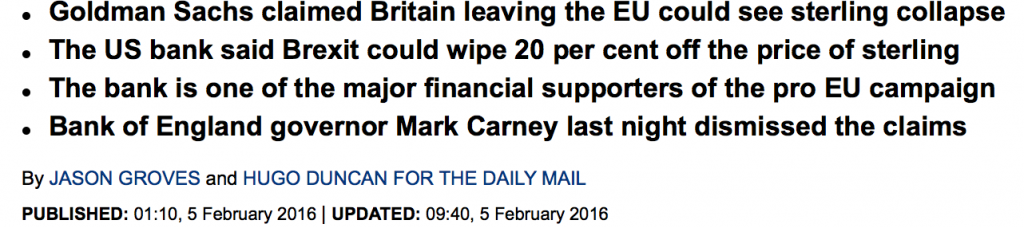
In February, Goldman Sachs warned that in the case of Brexit, the pound sterling “could lose 20 per cent of its value”  Mark Carney’s statements at the House of Commons not only point in the same direction, they also provide legitimacy and “credibility” to Goldman’s assessment.
As an institutional speculator, Goldman’s intent is to influence expectations regarding financial markets (backed by authoritative statements from the Bank of England).
Coinciding with Carney’s recent statements, Goldman Sachs released a report on the detrimental economic and financial impacts of Brexit:
“However, given the substantial unpredictability regarding the UK’s post-Brexit trading and regulatory arrangements, quite how damaging Brexit would be in the long term is subject to a great deal of uncertainty. Arguably of more immediate concern is the effect that the uncertainty itself would have on UK growth.
The EU Treaty sets out a two-year timeframe for departure. During this period, the UK government would have to negotiate the terms upon which it could continue to trade with EU countries…
Some of these trade negotiations and many of the regulatory/legal decisions would be relatively straightforward. But many would not. …
During this period, UK-based businesses would face considerable uncertainty: exporting companies would not know the terms on which they would be able to supply export markets abroad once Brexit is complete; importing companies would not know the terms on which they would be able to import; and all companies would be confronted with increased regulatory/legal uncertainty. (Excerpts of report)
Carney dismissed the claims of Goldman in early February. But now he supports them.
Where do Mark Carney’s statements originate, from the Bank of England or from Goldman Sachs, his former employer?
Goldman is known to be the World’s foremost “institutional speculator”. Foreknowledge of statements and decisions by central banks are often used by financial institutions in speculative operations. Inside knowledge and connections are part of this process, they are the “bread and butter” of the “institutional speculator”.
The important question which the British media has not addressed: what is the relationship between Mark Carney and Goldman Sachs.
The Goldman Trojan Horse
Is there a Trojan Horse within the Bank of England with Goldman Sachs sitting on the inside?
While Carney was appointed by Her Majesty, unofficially, he still has “links” to Goldman Sachs.
Is he in conflict of interest?
Next time there’s a financial meltdown, your money could be rescuing Goldman Sachs.
Yes, thanks to a new deal struck by Mark Carney, the former Goldman man now running the Bank of England, the US investment bank could end up enjoying the next round of British taxpayer bailout money. (The Independent, 20 August 2015)
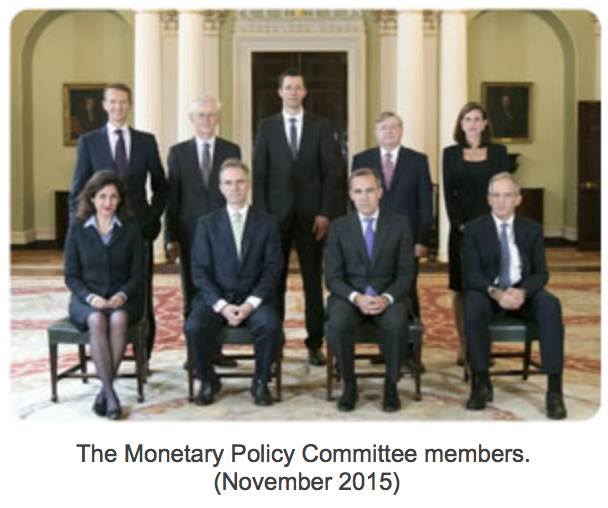
Moreover, several key senior positions within the Bank of England are held by former Goldman officials. Mark Carney was appointed in 2013. The following year (2014), Dr. Ben Broadbent, a Senior Economist for Goldman Sachs was appointed Deputy Governor in charge of Monetary Policy.
Bankers from Goldman are strewn across key policy-making arenas across the world like no other financial institution.
As well as the Governor of the Bank of England, his deputy Ben Broadbent is ex Goldman, as were two previous Monetary Policy Committee members, David Walton and Sushil Wadhwani.
Across the Channel, European Central Bank chief Mario Draghi is a Goldman man, while in the US, Goldmanites make up a quarter of the Federal Reserve system’s regional presidents. (Ibid).
Concluding Remarks
Central Banks are complicit in the manipulation of financial markets including stock markets, commodities, gold and currency markets, not to mention the oil and energy markets which have been the object of a carefully engineered “pump and dump” speculative onslaught.
Who controls the central banks? Monetary policy does not serve the public interest.

Monday, January 18, 2016

The Fed's Stunning Admission Of What Happens Next

Tyler Durden's picture

http://www.zerohedge.com/news/2016-01-17/feds-stunning-admission-what-happens-next
Following an epic stock rout to start the year, one which has wiped out trillions in market capitalization, it has rapidly become a consensus view (even by staunch Fed supporters such as the Nikkei Times) that the Fed committed a gross policy mistake by hiking rates on December 16, so much so that this week none other than former Fed president Kocherlakota openly mocked the Fed's credibility when he pointed out the near record plunge in forward breakevens suggesting the market has called the Fed's bluff on rising inflation.
All of this happened before JPM cut its Q4 GDP estimate from 1.0% to 0.1% in the quarter in which Yellen hiked.
To be sure, the dramatic reaction and outcome following the Fed's "error" rate hike was predicted on this website on many occasions, most recently two weeks prior to the rate hike in "This Is What Happened The Last Time The Fed Hiked While The U.S. Was In Recession" when we demonstrated what would happen once the Fed unleashed the "Ghost of 1937."
As we pointed out in early December, conveniently we have a great historical primer of what happened the last time the Fed hiked at a time when it misread the US economy, which was also at or below stall speed, and the Fed incorrectly assumed it was growing.
We are talking of course, about the infamous RRR-hike of 1936-1937, which took place smack in the middle of the Great Recession.

Here is what happened then, as we described previously in June.
[No episode is more comparable to what is about to happen] than what happened in the US in 1937, smack in the middle of the Great Depression. This is the only time in US history which is analogous to what the Fed will attempt to do, and not only because short rates collapsed to zero between 1929-36 but because the Fed’s balance sheet jumped from 5% to 20% of GDP to offset the Great Depression.
Just like now.
Follows a detailed narrative of precisely what happened from a recent Bridgewater note:
The first tightening in August 1936 did not hurt stock prices or the economy, as is typical.

The tightening of monetary policy was intensified by currency devaluations by France and Switzerland, which chose not to move in lock-step with the US tightening. The demand for dollars increased. By late 1936, the President and other policy makers became increasingly concerned by gold inflows (which allowed faster money and credit growth).

The economy remained strong going into early 1937. The stock market was still rising, industrial production remained strong, and inflation had ticked up to around 5%. The second tightening came in March of 1937 and the third one came in May. While neither the Fed nor the Treasury anticipated that the increase in required reserves combined with the sterilization program would push rates higher, the tighter money and reduced liquidity led to a sell-off in bonds, a rise in the short rate, and a sell-off in stocks. Following the second increase in reserves in March 1937, both the short-term rate and the bond yield spiked.

Stocks also fell that month nearly 10%. They bottomed a year later, in March of 1938, declining more than 50%!
Or, as Bank of America summarizes it: "The Fed exit strategy completely failed as the money supply immediately contracted; Fed tightening in H1’37 was followed in H2’37 by a severe recession and a 49% collapse in the Dow Jones."
* * *
As it turns out, however, the Fed did not even have to read this blog, or Bank of America, or even Bridgewater, to know the result of its rate hike. All it had to do was to read... the Fed.
But first, as J Pierpont Morgan reminds us, it was Charles Kindleberger's "The World in Depression" which summarized succinctly just how 2015/2016 is a carbon copy of the 1936/1937 period. In explaining how and why both the markets and the economy imploded so spectacularly after the Fed's decision to tighten in 1936, Kindleberger says:
"For a considerable time there was no understanding of what had happened. Then it became clear. The spurt in activity from October 1936 had been dominated by inventory accumulation. This was especially the case in automobiles, where, because of fears of strikes, supplies of new cars had been built up. It was the same in steel and textiles - two other industries with strong CIO unions."
If all off this sounds oddly familiar, here's the reason why: as we showed just last week, while inventories remain at record levels, wholesale sales are crashing, and the result is that the nominal spread between inventories and sales is all time high.

The inventory liquidation cycle was previewed all the way back in June in "The Coming US Recession Charted" long before it bacame "conventional wisdom."
Kindleberger continues:
When it became evident after the spring of of 1937 that commodity prices were not going to continue upward, the basis for the inventory accumulation was undermined, and first in textiles, then in steel, the reverse procees took place.
Oil anyone?
And then this: "The steepest economic descent in the history of the United States, which lost half the ground gained for many indexes since 1932, proved that the economic recovery in the United States had been built on an illusion."
Which, of course, is what we have been saying since day 1, and which even such finance legends as Bill Gross now openly admit when they say that the zero-percent interest rates and quantitative easing created leverage that fueled a wealth effect and propped up markets in a way that now seems unsustainable, adding that "the wealth effect is created by leverage based on QE’s and 0% rates."
And not just Bill Gross. The Fed itself.
Yes, it was the Fed itself who, in its Federal Reserve Bulletin from June 1938 as transcribed in the 8th Annual General Meeting of the Bank of International Settlements, uttered the following prophetic words:
The events of 1929 taught us that the absence of any rise in prices did not prove that no crisis was pending. 1937 has taught us that an abundant supply of gold and a cheap money policy do not prevent prices from falling.
If only the Fed had listened to, well, the Fed.
What happened next? The chart below shows the stock market reaction in 1937 to the Fed's attempt to tighten smack in the middle pf the Great Depression.

If the Fed was right, the far more prophetic 1937 Fed that is not the current wealth effect-pandering iteration, then the market is about to see half its value wiped out.

h/t @pierpont_morgan

Monday, January 4, 2016

"Refuse To Compromise", Ron Paul Implores "Purism Is Practical"

Tyler Durden's picture

 http://www.zerohedge.com/news/2016-01-04/refuse-compromise-ron-paul-implores-purism-practical
Those who advocate ending, instead of reforming, the welfare-warfare state are often accused of being “impractical.” Some of the harshest criticisms come from libertarians who claim that advocates of “purism” forgo opportunities to make real progress toward restoring liberty. These critics fail to grasp the numerous reasons why it is crucial for libertarians to consistently and vigorously advance the purist position.
First, and most important, those who know the truth have a moral obligation to speak the truth. People who understand the need for drastic changes in foreign, domestic, and, especially, monetary policy should not pretend that a little tinkering will fix our problems. Those who do so are just as guilty of lying to the public as is a promise-breaking politician. Attempting to advance liberty by lying is not just immoral; it is also a flawed strategy that is doomed to fail.
The inevitable failure of “reforms” that do not eliminate the market distortions caused by government intervention will be used to discredit both the freedom philosophy and its advocates. The result will be increased support for more welfare, more warfare, and more fiat money. Thus, those who avoid discussing the root causes of our problems, not those they smear as impractical purists, are the ones undermining liberty.
For example, many Obamacare opponents refuse to advocate for true free-market health care. Instead, they propose various forms of “Obamacare lite.” By ceding the premise that government should play a major role in health care, proponents of Obamacare lite strengthen the position of those who say the way to fix Obamacare is by giving government more power. Thus, Obamacare lite supporters are inadvertently advancing the cause of socialized medicine. The only way to ensure that Obamacare is not replaced by something worse is to unapologetically promote true free-market health care.
This is not to suggest libertarians should reject transitional measures. A gradual transition is the best way to achieve liberty without causing massive social and economic disruptions. However, we must only settle for compromises that actually move us in the right direction. So we should reject a compromise budget that “only” increases spending by 80 percent. In contrast, a budget that actually reduces spending by 20 percent would be a positive step forward.
Those who advocate a so-called extreme position can often move the center of political debate closer to the pure libertarian position. This can actually increase the likelihood of taking real, if small, steps toward liberty. More importantly, the best way to ensure that we never achieve real liberty is for libertarians to shy away from making the case for the free society.
Sometimes ideological movements are able to turn yesterday’s “fringe” ideas into today’s “mainstream” position. Just a few years ago it was inconceivable that a significant number of states would legalize medical, and even reactional, marijuana or that a majority of states would have passed laws allowing citizens to openly carry firearms. The success of these issues is not due to sudden changes in public opinion, but to years of hard work by principled advocates and activists.
The ever-growing number of Americans who are joining the liberty movement are not interested in “reforming” the welfare-warfare state. They also have no interest in “fixing" the Federal Reserve via “rules-based” monetary policy. Instead, this movement is dedicated to auditing, then ending, the Fed and stopping the government from trying to run the economy, run the world, and run our lives. If this movement refuses to compromise its principles, we may succeed in restoring a society of liberty, peace, and prosperity in our lifetimes.

Monday, November 16, 2015

If We Don’t Change the Way Money Is Created and Distributed, Rising Inequality Will Trigger Social Disorder

Centrally issued money optimizes inequality, monopoly, cronyism, stagnation, low social mobility and systemic instability.
If we don’t change the way money is created and distributed, wealth inequality will widen to the point of social disorder.
Everyone who wants to reduce wealth inequality with more regulations and taxes is missing the key dynamic: the monopoly on creating and issuing money necessarily widens wealth inequality, as those with access to newly issued money can always outbid the rest of us to buy the engines of wealth creation.
Control of money issuance and access to low-cost credit create financial and political power. Those with access to low-cost credit have a monopoly as valuable as the one to create money.
Compare the limited power of an individual with cash and the enormous power of unlimited cheap credit.
Let’s say an individual has saved $100,000 in cash. He keeps the money in the bank, which pays him less than 1% interest. Rather than earn this low rate, he decides to loan the cash to an individual who wants to buy a rental home at 4% interest.
There’s a tradeoff to earn this higher rate of interest: the saver has to accept the risk that the borrower might default on the loan, and that the home will not be worth the $100,000 the borrower owes.
The bank, on the other hand, can perform magic with the $100,000 they obtain from the central bank. The bank can issue 19 times this amount in new loans—in effect, creating $1,900,000 in new money out of thin air.
This is the magic of fractional reserve lending. The bank is only required to hold a small percentage of outstanding loans as reserves against losses. If the reserve requirement is 5%, the bank can issue $1,900,000 in new loans based on the $100,000 in cash: the bank holds assets of $2,000,000, of which 5% ($100,000) is held in cash reserves.
This is a simplified version of how money is created and issued, but it helps us understand why centrally issued and distributed money concentrates wealth in the hands of those with access to the centrally issued credit and those who have the privilege of leveraging every $1 of cash into $19 newly created dollars that earn interest.
Imagine if we each had a relatively modest $1 million line of credit at 0.25% interest from a central bank that we could use to issue loans of $19 million. Let’s say we issued $19 million in home loans at an annual interest rate of 4%. The gross revenue (before expenses) of our leveraged $1 million would be $760,000 annually –let’s assume we net $600,000 per year after annual expenses of $160,000. (Recall that the interest due on the $1 million line of credit is a paltry $2,500 annually).
Median income for workers in the U.S. is around $30,000 annually. Thus a modest $1 million line of credit at 0.25% interest from the central bank would enable us to net 20 years of a typical worker’s earnings every single year. This is just a modest example of pyramiding wealth.

Next let’s say we each get a $1 billion line of credit which we leverage into $19 billion in loans earning 4%. Now our net annual income is $600 million, the equivalent income of 20,000 workers. We did nothing to improve productivity, nor did we produce any goods or services. We simply used the power of central banking and fractional reserve lending to skim $600 million in financial rents from those actually producing goods and services.
Note that we are not uniquely evil or avaricious in maximizing our private gain from the central bank system; we are simply responding rationally to the system’s incentives.
The system concentrates wealth and subverts democracy not because participants are different from the rest of us but because they are acting rationally within the system. Would you turn down $600,000 a year? How about $600 million a year?
It makes no sense for banks and financiers not to maximize their gains in this system. Those who fail to maximize their gains will be fired.

I hope you understand by now that the current system of issuing money and credit benefits the few at the expense of the many. The vast privilege and the equally vast inequality it generates is the only possible output of the system.
This inequality cannot be reformed away; it is intrinsic to centrally issued money and private banking.
The problem isn’t fiat money; it’s centrally issued money/credit that is distributed to the few at the expense of the many. If we want to limit the subversion of democracy and reduce wealth inequality, we must decentralize and democratize the issuance and distribution of money.
In the current system, money isn’t created to reward increasing productivity. It is created to increase the wealth and power of the privileged.
If we want to connect the creation and distribution of money/credit with productivity, we must issue new money directly to those creating value and boosting productivity, bypassing the privileged few in central and private banks.
By concentrating wealth and power, centrally issued and distributed money doesn’t just subvert democracy. It also optimizes inequality, monopoly, cronyism, stagnation, low social mobility and systemic instability.
This entry is drawn from my new book A Radically Beneficial World: Automation, Technology and Creating Jobs for All: The Future Belongs to Work That Is Meaningful. Get a 25% discount on my new book this week only (ends 11/15/15).

Monday, October 12, 2015

Ben Carson Upsets Mainstream Media: Openly Questions Fiat Money

Tyler Durden's picture

Submitted by Ryan McMaken via The Mises Institute,
Neurosurgeon-turned-Presidential candidate Ben Carson has been under attack this week by our PC-enforcers in the media. While most of the media scorn has been directed at Carson’s defense of gun ownership following last week’s shooting in Oregon – Matt O’Brien of the Washington Post slapped at Carson for flirting with the gold standard.
In an article on Friday criticizing Jeb Bush for not condemning the gold standard harshly enough (Bush only offered a timid "I don't think so" when asked whether the US should make such a move), O’Brien highlighted some surprisingly sound comments Dr. Carson made earlier this week during an interview with NPR. While discussing the nation’s current debt, Carson said:
"[T]he only reason that we can sustain that kind of debt is because of our artificial ability to print money, to create what we think is wealth, but it is not wealth, because it's based upon our faith and credit. You know, we decoupled it from the domestic gold standard in 1933, and from the international gold standard in 1971, and since that time, it's not based on anything. Why would we be continuing to do that?”
Because of views like this, O’Brien dismisses Carson as not being a “candidate of serious policy.”
Unfortunately for O’Brien, he spends the rest of his column demonstrating that his own views on the gold standard, which he refers to as “the world’s worst idea today”, should not be taken seriously.
Along with offering the typical flawed-Friedmanite narrative of how the Federal Reserve’s dedication to preserving the gold standard, O’Brien is concerned about the impact a gold standard has on interest rates.
Without a hint of irony, O’Brien suggests that interest rates guided by the market simply lack the wisdom of our current PhD Standard:
"The question, then, is when gold actually does "want" to go up. And the answer is not when the economy would want it to. That's because the price of gold doesn't go up when the economy is overheating, and down when it's cooling off. If it did, then the gold standard would give us high interest rates when we needed them, and low interest rates too."
So O’Brien’s problem is with the fact that the market does not follow his Keynesian models on how interest rates should behave. Like most self-proclaimed “economic wonks” in DC, O’Brien can’t imagine a world in which the Fed is limited in what it can do to respond to a recession.
Perhaps it’s time for Mr. O’Brien to read about the Forgotten Depression
And maybe Dr. Ben Carson needs a new addition to his wardrobe.

Friday, October 9, 2015

Is a Ban on Physical Cash Coming Soon?

Phoenix Capital Research's picture


http://www.zerohedge.com/news/2015-10-07/ban-physical-cash-coming-soon
The Central Banks hate physical cash. So much so they there will likely try to ban it in the near future.

You see, almost all of the “wealth” in the financial system is digital in nature.

1)   The total currency (actual cash in the form of bills and coins) in the US financial system is a little over $1.36 trillion.

2)   When you include digital money sitting in short-term accounts and long-term accounts then you’re talking about roughly $10 trillion in “money” in the financial system.
3)   In contrast, the money in the US stock market (equity shares in publicly traded companies) is over $20 trillion in size.

4)   The US bond market  (money that has been lent to corporations, municipal Governments, State Governments, and the Federal Government) is almost twice this at $38 trillion.

5)   Total Credit Market Instruments (mortgages, collateralized debt obligations, junk bonds, commercial paper and other digitally-based “money” that is based on debt) is even larger $58.7 trillion.
6)   Unregulated over the counter derivatives traded between the big banks and corporations is north of $220 trillion.

When looking over these data points, the first thing that jumps out at the viewer is that the vast bulk of “money” in the system is in the form of digital loans or credit (non-physical debt).

Put another way, actual physical money or cash (as in bills or coins you can hold in your hand) comprises less than 1% of the “money” in the financial system.

As far as the Central Banks are concerned, this is a good thing because if investors/depositors were ever to try and convert even a small portion of this “wealth” into actual physical bills, the system would implode (there simply is not enough actual cash).

Remember, the current financial system is based on debt. The benchmark for “risk free” money in this system is not actual cash but US Treasuries.

In this scenario, when the 2008 Crisis hit, one of the biggest problems for the Central Banks was to stop investors from fleeing digital wealth for the comfort of physical cash. Indeed, the actual “thing” that almost caused the financial system to collapse was when depositors attempted to pull $500 billion out of money market funds.

A money market fund takes investors’ cash and plunks it into short-term highly liquid debt and credit securities. These funds are meant to offer investors a return on their cash, while being extremely liquid (meaning investors can pull their money at any time).
This works great in theory… but when $500 billion in money was being pulled (roughly 24% of the entire market) in the span of four weeks, the truth of the financial system was quickly laid bare: that digital money is not in fact safe.

To use a metaphor, when the money market fund and commercial paper markets collapsed, the oil that kept the financial system working dried up. Almost immediately, the gears of the system began to grind to a halt.

When all of this happened, the global Central Banks realized that their worst nightmare could in fact become a reality: that if a significant percentage of investors/ depositors ever tried to convert their “wealth” into cash (particularly physical cash) the whole system would implode.

As a result of this, virtually every monetary action taken by the Fed since this time has been devoted to forcing investors away from cash and into risk assets. The most obvious move was to cut interest rates to 0.25%, rendering the return on cash to almost nothing.

However, in their own ways, the various QE programs and Operation Twist have all had similar aims: to force investors away from cash, particularly physical cash.

After all, if cash returns next to nothing, anyone who doesn’t want to lose their purchasing power is forced to seek higher yields in bonds or stocks.

The Fed’s economic models predicted that by doing this, the US economy would come roaring back. The only problem is that it hasn’t. In fact, by most metrics, the US economy has flat-lined for several years now, despite the Fed having held ZIRP for 5-6 years and engaged in three rounds of QE.

As a result of this… mainstream economists at CitiGroup, the German Council of Economic Experts, and bond managers at M&G have suggested doing away with cash entirely.
If you think this sounds like some kind of conspiracy theory, consider that France just banned any transaction over €1,000 Euros from using physical cash. Spain has already banned transactions over €2,500. Uruguay has banned transactions over $5,000. And on and on.

This is just the beginning. Indeed… we've uncovered a secret document outlining how the US Federal Reserve plans to incinerate savings.


Thursday, September 10, 2015

698K Native-Born Americans Lost Their Job In August: Why This Suddenly Is The Most Important Jobs Chart

Tyler Durden's picture

http://www.zerohedge.com/news/2015-09-07/698k-native-born-americans-lost-their-job-august-why-suddenly-most-important-jobs-ch
After the Fed admitted over a year ago that the US unemployment rate (which in 2012 was supposed to be a rate hike "threshold" once it hit 6.5% and is now at 5.1%) has become irrelevant in a country where a record 94 million people have left the labor force, and with the Fed poised to hike rates even though US hourly wages have not only not increased for the past 7 years, but for the vast majority of the labor force continue to decline, some have asked - is there any labor-related chart that matters any more?
The answer: a resounding yes, only it is none of the conventional charts that algos and sometimes humans look at.
The one chart that matters more than ever,has little to nothing to do with the Fed's monetary policy, but everything to do with the November 2016 presidential elections in which the topic of immigration, both legal and illegal, is shaping up to be the most rancorous, contentious and divisive.
The chart is the following, showing the cumulative addition of foreign-born and native-born workers added to US payrolls according to the BLS since December 2007, i.e., since the start of the recession/Second Great Depression.


The chart is especially important because what it shows for just the month of August will be enough to provide the Trump - and every other - campaign with enough soundbites and pivot points to last it for weeks on end: namely, that in August a whopping 698,000 native-born Americans lost their job. This drop was offset by 204,000 foreign-born Americans, who got a job in the month of August.


But the punchline: since December 2007, according to the Household Survey, only 790,000 native born American jobs have been added. Contrast that with the 2.1 million foreign-born Americans who have found a job over the same time period...

... and you have a combustible mess that will lead to serious fireworks during the next GOP primary.

Tuesday, June 30, 2015

Greece: The Five Possible Paths Forward

Tyler Durden's picture

http://www.zerohedge.com/news/2015-06-30/these-are-greeces-5-possible-paths
Greece is poised between remaining a member of the eurozone or leaving it. In fact, as WSJ's Stephen Fidler explains, there are five possible future currency arrangements for Greece. Here they are...
1. Greece stays in the eurozone: This is the option likely to cause the smallest short-term disruption to the Greek economy.  The Greek central bank would retain access to liquidity from the European Central Bank, and the Greek banks would stay on life support. This looks increasingly likely to be accompanied by some kind of further negotiated debt relief. To get it, Greece would almost certainly have to agree to more conditions of the sort successive Greek governments have found it hard to accept.

2. Greece keeps the euro, but sits outside the eurozone: Jacob Funk Kierkegaard of the Peterson Institute for International Economics in Washington calls this the “Montenegro option” and argues this is the most likely outcome should Greece exit the eurozone.  This would not be “a new drachma, but Montenegro—i.e. Greece becomes just another relatively poor unilaterally euroized non-EU Balkan economy,” he writes here. In some ways, this would be the worst of all worlds because Greece would lose access to the ECB. Countries using a foreign currency as legal tender have no access to a lender-of-last-resort, which means that every bank liquidity crisis becomes a solvency crisis. They therefore tend to have stunted domestic financial sectors — which almost every academic study shows is bad for growth — or have a banking system owned by foreigners, which exports the lender-of-last resort role to other countries’ central banks. (Mexico didn’t adopt the dollar after the 1994-95 financial crisis — but in order to avoid an undue shrinkage of its banking sector, it allowed most of its banks to be bought by foreigners.)

3. A currency board: In this case, Greece would create a new currency but lock it to the euro  – as Estonia did with the German mark in 1992 after it gained independence from the Soviet Union. The amount of new drachmas in circulation would be limited by the size of Greece’s international reserves: about $5.8 billion at the last count. Advocates argue that this would impose discipline on the Greeks — poor economic policies lead to an outflow of reserves and therefore of the domestic monetary base, which pushes up drachma interest rates, while good policies have the reverse effect. The drawback is that again the central bank is limited in its lender-of-last resort powers because it cannot create money freely. It also imposes discipline that, for now, may make it look unappetizing to Greece’s current rulers. It’s not much talked about, has a few enthusiastic and long-standing cheerleaders, but is a theoretical possibility. Here’s Steve Hanke arguing in favor.

4. A dual system: Here the drachma and the euro would circulate side-by-side. This has many historical precedents going back centuries. In practice, a dual system is likely to emerge when the Greek government runs out of euros and has to pay its domestic bills in government IOUs. The IOUs could at some future date be redeemed in euros, or could be eventually redeemed in drachmas, but they would initially be euro-denominated obligations of the government that would have a lesser value in the public mind than euro notes or coins. This state of affairs could continue for a long time, but there is an economic tendency called Gresham’s Law: ”Bad money chases out good.” Over time, euros would disappear from circulation because people would hoard them as a store of value  – and people would spend the government IOUs. De facto, the drachma, whether or not it would so be called, would become the main means of exchange.

5. The new drachma: The move to the new drachma may well not come with a bang, but gradually — as described in 4 above. But an eventual formal switch of the currency would give Greece control over its own monetary policy.  However, a new currency — which would likely float against the euro and other major currencies — would likely create enormous short-term disruption, not least because a heavy devaluation would follow and the banks would in effect be insolvent. Longer-term, it could be a motor for future growth of the Greek economy — because it would stimulate demand for Greek exports by lowering in real-terms the price of goods and services produced in Greece.  Longer term, the effects of a devaluation depends on the quality of economic policies that accompany it. It will create inflation, by increasing the costs of imports. One important issue is how much the government raises wages and pensions to compensate for higher inflation. The more domestic wages and pensions are allowed to rise, the less impact the devaluation will have in simulating Greek exports longer term and the lower the benefits to economic growth.
*  *  *
Place your bets.

Wednesday, June 17, 2015

Goldman Asks, Is The Bundesbank "Ominously" Trying To Sabotage The ECB's QE?

Tyler Durden's picture

http://www.zerohedge.com/news/2015-06-16/goldman-asks-ominously-bundesbank-trying-sabotage-ecbs-qe
When the sell-off in German Bunds first got going, it looked like a temporary squeeze, with the largest position in the market – the ECB QE trade – coming under pressure after much weaker-than-expected Q1 GDP on 4/29.


However, as (Draghi mouthpiece) Goldman notes, there is something more than supply dynamics or ECB communications going on, as the Bundesbank (Buba) buying has fallen short of its purchases (in average maturity terms) from the very beginning. Goldman warns, ominously, this kind of signal – from the key hawk in the Eurosystem – has the potential to undercut the credibility of ECB QE, since it weakens the portfolio balance channel.
*  *  *
Goldman previously argued that the weak activity reading rattled a market that had been operating on a core thesis of strong US growth. The resulting uncertainty caused Bund yields and EUR/$ to rise, with the DAX also selling off on the day. Since then, something more ominous has come into play...
One clue has been the communications ping pong from the ECB. On May 18, Executive Board member Coeure said “the rapidity of the reversal in Bund yields is worrisome,” citing it as another example of “extreme volatility in global capital markets.”

ECB President Draghi sent the opposite message on Jun. 3, saying “one lesson is that we should get used to periods of higher volatility,” followed on Jun. 10 by Executive Board member Coeure stating that “the ECB does not intend to counter [Bund] volatility in the short term."

Goldman took a dim view of all this in our last FX Views, even if a charitable interpretation is that President Draghi basically sent a dovish message on Jun.10 and simply didn’t want to signal "activism" in the face of short-term volatility.

After all, one goal of ECB QE ought to be to make Europe’s safe haven asset (Bunds) expensive, so that investors get pushed into risky assets like equities and the Euro periphery.

If there is ambivalence, it sends a harmful message to markets that, after all, are still new to ECB QE. This might be one reason why EUR/$ has held up, even as US data (payrolls, retail sales) have picked up.


There is something more than supply dynamics or ECB communications going on, something that has the potential to undercut the credibility of ECB QE.

As Goldman explains below, the Bundesbank has reduced the weighted-average maturity of its Bund purchases from 8.1 years in March to 5.7 in May, in contrast to the Eurosystem as a whole where this number has stayed around 8.0 years.
It's not like the Bundesbank is not spending its money (as we noted previously, in fact May - just as ECB telegraphed to its most valuable clients - saw purchases soar)..


but it is what it is spending it on, not how much that matters...
The ECB publishes monthly data for the outstanding stock of bonds bought under its QE program, together with a weighted average for the corresponding number of years to maturity. We use these data to calculate the average maturity of monthly buying by the Eurosystem (Exhibit 3).


This shows that the average maturity of ECB bond buying is around 8.0 years, in line with what Executive Board member Coeure said in his May 18 speech. However, while Italy and Spain see purchases that have an average maturity above that of the outstanding debt stock, Bundesbank buying has fallen short from the very beginning.

There are obviously many explanations for what is going on (see below).

But this kind of signal – from the key hawk in the Eurosystem – has the potential to undercut the credibility of ECB QE, since it weakens the portfolio balance channel.

After all, it was supposed to be low yields in core Europe into risk assets. If those yields now rise and become more volatile, such portfolio effects will be lessened.
*  *  *
What Goldman is implicitly suggesting is:
Buba is intentionally focusing on shorter-dated maturities, unwilling to throw away its cash on the high prices that bond holders will demand for high cash coupon debt (when in fact the central bank should be price agnostic if it had truly "got ECB religion")
So is Buba really sabotaging Draghi?
Or is this a warning to Weidmann to stop being stingy with the bond buying?
Remember also, Goldman needs low-ish bond yields and low-ish volatility for its QE-driven weak EUR trade to pay off...
It remains our view that fundamentals will ultimately take EUR/$ lower in line with our forecast. That said, we see recent Bund volatility and what it means for the credibility of ECB QE as the first material challenge to our view.
So there's ulterior motives for this 'warning' whereever we look.
*  *  *
Perhaps it is also the timing of such a note that implies a louder warning... with Grexit around the corner, those "expensive" long-dated Bunds are going to be even more pricey when Buba needs to step in and buy to prove contagion is not there.