Showing posts with label Goldman Sachs. Show all posts

Tuesday, May 17, 2016

America's Age Of Impunity

Tyler Durden's picture

http://www.zerohedge.com/news/2016-05-16/americas-age-impunity
Authored by Jeffrey Sachs, originally posted at The Boston Globe,
The Panama Papers opened yet another window on the global system of financial corruption, showing how political leaders and businesses use shell companies in secrecy havens like the British Virgin Islands and many US states to evade taxes and hide corruption and other crimes. Yet the system of corruption depends on another factor beyond secrecy, one that is perhaps even more important: impunity. Impunity means that the rich and powerful escape from punishment even when their malfeasance is in full view.
Impunity is epidemic in America. The rich and powerful get away with their heists in broad daylight. When a politician like Bernie Sanders calls out the corruption, the New York Times and Wall Street Journal double down with their mockery over such a foolish “dreamer.” The Journal recently opposed the corruption sentence of former Virginia governor Bob McDonnell for taking large gifts and bestowing official favors — because everybody does it. And one of its columnists praised Panama for facilitating the ability of wealthy individuals to hide their income from “predatory governments” trying to collect taxes. No kidding.
Our major institutions, the ones that should know better, are often gross enablers of impunity. Consider my alma mater, Harvard University, and its recent nuptial with hedge-fund manager John Paulson. Paulson was the coconspirator with Goldman Sachs of one of the most notorious scams of the recent financial bubble.
Paulson and Goldman constructed and marketed a portfolio of toxic assets to sell to unwitting investors so that Paulson could bet against the portfolio. Goldman and Paulson thereby turned the sucker investors’ quick $1 billion loss into an equivalent $1 billion gain for Paulson, with Goldman collecting on fees. The SEC fined Goldman but left Paulson untouched. As one disillusioned SEC investigator put it: The SEC is “an agency that polices the broken windows on the street level and rarely goes to the penthouse floors.” Yet Harvard was delighted last year to take $400 million of Paulson’s ill-gotten gains, leave Paulson with the rest, name its engineering school after Paulson, and declare Paulson to be “the epitome of a visionary leader.”
Impunity. Paulson remains a much-celebrated figure on Wall Street. He has many kindred spirits, such as his partner in crime, Goldman CEO Lloyd Blankfein, who has described himself as just a banker “doing God’s work.” Or consider JP Morgan CEO Jamie Dimon, whose bank has paid well over $30 billion in fines while Dimon remains CEO with a $27 million salary for 2015. The hedge-fund industry itself is a case study of impunity. With few exceptions, it is domiciled in tax and secrecy havens, enjoys crass tax breaks brokered by cronies in Congress (such as Wall Street Senator Chuck Schumer), and pays itself billion-dollar-plus paychecks even while leaving investors with below-market returns or outright losses over the years.
The recourse to cheating within the financial industry now seems to be deeply ingrained, part of the corporate culture, and enabled by the prevailing impunity. An ingenious scientific study published in December 2014 showed the rot. Employees of a major international bank were divided into a control group and a treatment group. All subjects were asked to flip a coin 10 times and report truthfully on the number of heads, with more heads resulting in a bigger monetary prize. The treatment group was subtlety reminded they were bankers, while the control group was not. Simply reminding them that they were professional bankers was enough to induce the employees to cheat by exaggerating the number of heads they flipped.
Impunity is of course not limited to banking. Consider the poster-child of impunity in Big Pharma, Gilead Sciences. Gilead brazenly bought the patents on a life-saving cure for Hepatitis C and then gouged patients and taxpayers by charging $1,000 per pill — for a drug that costs $1 per pill to manufacture. Hundreds of thousands of Americans are unable to afford treatment, and many are dying, while Gilead earns far more in profits each year than it paid for the patents. Gilead adds to this deadly effrontery by booking its profits in an offshore tax haven.
Or consider another tech company in the health sector, Theranos, led by Elizabeth Holmes, until recently much lionized on Wall Street. Holmes, it now seems, may have been lying about Theranos’s supposed high-tech blood-testing technology and reporting faulty blood test results to boot. Yet when confronted with these serious concerns, Theranos board member and famed lawyer David Boies expressed his view that the board has “complete confidence in Elizabeth Holmes as a founder of the company, as a scientist, and as an administrator.” It seems not to have dawned on Boies and the board to call for an urgent, impartial, and complete investigation of the serious allegations swirling around the company.
Impunity is not an accidental or incidental defect of American society. It is a system foisted on us by the rich and powerful, and it continues to work its magic. It has enabled Hillary Clinton to come within reach of the presidential nomination without releasing the transcripts of her highly paid speeches to Wall Street banks. The Clintons long ago perfected the art of impunity, becoming rich and powerful by blurring the lines between their campaign fund-raising, public policies in office, Clinton Foundation work, big-money speeches, and off-the-record favors for foreign governments.
This week British Prime Minister David Cameron hosted an Anti-Corruption Summit in London in the wake of the Panama Papers. He was speaking accurately when he was caught on an open microphone telling the Queen that leaders of two “fantastically corrupt countries,” Nigeria and Afghanistan, would be at the summit. Nigeria’s new president, Muhammadu Buhari, himself a corruption-fighter, concurred with Cameron’s assessment, but called on the UK to return the money stolen by Nigeria’s former leaders and deposited in British and other Western banks. He might well have added the historic role, for more than a half century, of Royal Dutch Shell in Nigeria’s oil-sector corruption.
Buhari is, in fact, making a much larger point. While there is enough top-level political corruption to go around — from Afghanistan and Nigeria to Malaysia, Brazil, South African, FIFA, and many more places — the channels of corruption and secrecy havens are largely owned and operated by the big boys — the United States and the UK — and depend absolutely on the gross impunity that prevails at the highest reaches of power and finance in the United States.

Friday, April 15, 2016

The Fed Sends A Frightening Letter To JPMorgan, Corporate Media Yawns

Tyler Durden's picture

http://www.zerohedge.com/news/2016-04-15/fed-sends-frightening-letter-jpmorgan-corporate-media-yawns
Submitted by Pam Martens and Russ Martens via WallStreetOnParade.com,
Yesterday the Federal Reserve released a 19-page letter that it and the FDIC had issued to Jamie Dimon, the Chairman and CEO of JPMorgan Chase, on April 12 as a result of its failure to present a credible plan for winding itself down if the bank failed. The letter carried frightening passages and large blocks of redacted material in critical areas, instilling in any careful reader a sense of panic about the U.S. financial system.
A rational observer of Wall Street’s serial hubris might have expected some key segments of this letter to make it into the business press. A mere eight years ago the United States experienced a complete meltdown of its financial system, leading to the worst economic collapse since the Great Depression. President Obama and regulators have been assuring us over these intervening eight years that things are under control as a result of the Dodd-Frank financial reform legislation. But according to the letter the Fed and FDIC issued on April 12 to JPMorgan Chase, the country’s largest bank with over $2 trillion in assets and $51 trillion in notional amounts of derivatives, things are decidedly not under control.
At the top of page 11, the Federal regulators reveal that they have “identified a deficiency” in JPMorgan’s wind-down plan which if not properly addressed could “pose serious adverse effects to the financial stability of the United States.” Why didn’t JPMorgan’s Board of Directors or its legions of lawyers catch this?
It’s important to parse the phrasing of that sentence. The Federal regulators didn’t say JPMorgan could pose a threat to its shareholders or Wall Street or the markets. It said the potential threat was to “the financial stability of the United States.”
That statement should strike fear into even the likes of presidential candidate Hillary Clinton who has been tilting at the shadows in shadow banks while buying into the Paul Krugman nonsense that “Dodd-Frank Financial Reform Is Working” when it comes to the behemoth banks on Wall Street.
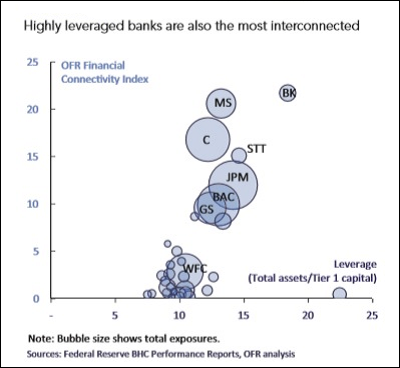
How could one bank, even one as big and global as JPMorgan Chase, bring down the whole financial stability of the United States? Because, as the U.S. Treasury’s Office of Financial Research (OFR) has explained in detail and plotted in pictures (see below), five big banks in the U.S. have high contagion risk to each other. Which bank poses the highest contagion risk? JPMorgan Chase.
The OFR study was authored by Meraj Allahrakha, Paul Glasserman, and H. Peyton Young, who found the following:
“…the default of a bank with a higher connectivity index would have a greater impact on the rest of the banking system because its shortfall would spill over onto other financial institutions, creating a cascade that could lead to further defaults. High leverage, measured as the ratio of total assets to Tier 1 capital, tends to be associated with high financial connectivity and many of the largest institutions are high on both dimensions…The larger the bank, the greater the potential spillover if it defaults; the higher its leverage, the more prone it is to default under stress; and the greater its connectivity index, the greater is the share of the default that cascades onto the banking system. The product of these three factors provides an overall measure of the contagion risk that the bank poses for the financial system.”
The Federal Reserve and FDIC are clearly fingering their worry beads over the issue of “liquidity” in the next Wall Street crisis. That obviously has something to do with the fact that the Fed has received scathing rebuke from the public for secretly funneling over $13 trillion in cumulative, below-market-rate loans, often at one-half percent or less, to the big U.S. and foreign banks during the 2007-2010 crisis. The two regulators released background documents yesterday as part of flunking the wind-down plans (living wills) of five major Wall Street banks. (In addition to JPMorgan Chase, plans were rejected at Wells Fargo, Bank of America, State Street and Bank of New York Mellon.) One paragraph in the Resolution Plan Assessment Framework and Firm Determinations (2016) used the word “liquidity” 11 times:
“Firms must be able to reliably estimate and meet their liquidity needs prior to, and in, resolution. In this regard, firms must be able to track and measure their liquidity sources and uses at all material entities under normal and stressed conditions. They must also conduct liquidity stress tests that appropriately capture the effect of stresses and impediments to the movement of funds. Holding liquidity in a manner that allows the firm to quickly respond to demands from stakeholders and counterparties, including regulatory authorities in other jurisdictions and financial market utilities, is critical to the execution of the plan. Maintaining sufficient and appropriately positioned liquidity also allows the subsidiaries to continue to operate while the firm is being resolved. In assessing the firms’ plans with regard to liquidity, the agencies evaluated whether the companies were able to appropriately forecast the size and location of liquidity needed to execute their resolution plans and whether those forecasts were incorporated into the firms’ day-to-day liquidity decision making processes. The agencies also reviewed the current size and positioning of the firms’ liquidity resources to assess their adequacy relative to the estimated liquidity needed in resolution under the firm’s scenario and strategy. Further, the agencies evaluated whether the firms had linked their process for determining when to file for bankruptcy to the estimate of liquidity needed to execute their preferred resolution strategy.”
Apparently, the Federal regulators believe JPMorgan Chase has a problem with the “location,” “size and positioning” of its liquidity under its current plan. The April 12 letter to JPMorgan Chase addressed that issue as follows:
“JPMC does not have an appropriate model and process for estimating and maintaining sufficient liquidity at, or readily available to, material entities in resolution…JPMC’s liquidity profile is vulnerable to adverse actions by third parties.”
The regulators expressed the further view that JPMorgan was placing too much “reliance on funds in foreign entities that may be subject to defensive ring-fencing during a time of financial stress.” The use of the term “ring-fencing” suggests that the regulators fear that foreign jurisdictions might lay claim to the liquidity to protect their own financial counterparty interests or investors.
JPMorgan’s sprawling derivatives portfolio that encompasses $51 trillion notional amount as of December 31, 2015 is also causing angst at the Fed and FDIC. The regulators wanted more granular detail on what would happen if JPMorgan’s counterparties refused to continue doing business with it if rating agencies cut its credit ratings. The regulators asked for a “narrative describing at least one pathway” for winding down the derivatives portfolio, taking into account a number of factors, including “the costs and challenges of obtaining timely consents from counterparties and potential acquirers (step-in banks).” The regulators wanted to see the “losses and liquidity required to support the active wind-down” of the derivatives portfolio “incorporated into estimates of the firm’s resolution capital and liquidity execution needs.” 
According to the Office of the Comptroller of the Currency’s (OCC) derivatives report as of December 31, 2015, JPMorgan Chase is only centrally clearing 37 percent of its derivatives while a whopping 63 percent of its derivatives remain in over-the-counter contracts between itself and unnamed counterparties. The Dodd-Frank reform legislation had promised the public that derivatives would all become exchange traded or centrally cleared. Indeed, on March 7 President Obama falsely stated at a press conference that when it comes to derivatives “you have clearinghouses that account for the vast majority of trades taking place.”
But the OCC has now released four separate reports for each quarter of 2015 showing just the opposite of what the President told the press and the public on March 7. In its most recent report the OCC, the regulator of national banks, states that “In the fourth quarter of 2015, 36.9 percent of the derivatives market was centrally cleared.”
Equally disturbing, the most dangerous area of derivatives, the credit derivatives that blew up AIG and necessitated a $185 billion taxpayer bailout, remain predominately over the counter. According to the latest OCC report, only 16.8 percent of credit derivatives are being centrally cleared. At JPMorgan Chase, more than 80 percent of its credit derivatives are still over-the-counter.

Wall Street Mega Banks Are Highly Interconnected: Stock Symbols Are as Follows: C=Citigroup; MS=Morgan Stanley; JPM=JPMorgan Chase; GS=Goldman Sachs; BAC=Bank of America; WFC=Wells Fargo.

Three of the five largest U.S. banks (JPMorgan Chase, Bank of America and Wells Fargo) have now had their wind-down plans rejected by the Federal agency insuring bank deposits (FDIC) and the Federal agency (Federal Reserve) that secretly sluiced $13 trillion in rollover loans to the insolvent or teetering banks in the last epic crisis that continues to cripple the country’s economic growth prospects. Maybe it’s time for the major newspapers of this country to start accurately reporting on the scale of today’s banking problem.

Thursday, April 14, 2016

Inside the $5.1B Goldman Sachs subprime mortgage settlement

http://www.cbsnews.com/news/inside-the-5-billion-dollar-goldman-sachs-subprime-mortgage-settlement/?linkId=23337679
News of the $5 billion settlement thrust Goldman Sachs into the glare of the public spotlight, and the cross hairs of the presidential campaign.
Senator Bernie Sanders called it "a fraudulent organization," while Governor John Kasich said "the Wall Street firms engaged in greed, massive greed."
In February, Morgan Stanley settled for $3.2 billion, Wells Fargo agreed to pay $1.2 billion, J.P. Morgan Chase paid $13 billion three years ago, and Bank of America coughed up a whopping $16.6 billion in 2014.
Goldman admitted that in bundling mortgages from subprime loan specialists like Countrywide Financial -- and then selling them to investors as bonds -- it largely failed to address financial problems it knew about.
In one period during August 2006, Goldman found what it called an "unusually high" percentage of loans with credit and compliance defects.
When one transaction manager was asked by Goldman officials "How do we know that we caught everything," he answered: "We don't."
Another responded it "depends on what you mean by everything." And when an outside analyst wrote a positive review of Countrywide, the head of due diligence at Goldman wrote in an e-mail: "if they only knew."
This was a civil case, so no one is going to jail. And that's likely to add to the anger, according to Robert Weissman of advocacy group Public Citizen.
"Millions of people were thrown out of jobs, millions of people lost their homes, communities were destroyed -- all because of their wrong doing. Yet they are escaping any criminal accountability, it seems."
While a $5 billion civil penalty is a lot of money, approximately half of it appears to be tax deductible -- meaning Goldman Sachs will be getting a tax break that could shave about a billion dollars off the total they've agreed to pay.

Tuesday, April 12, 2016

Bernanke's Former Advisor: "People Would Be Stunned To Know The Extent To Which The Fed Is Privately Owned"

Tyler Durden's picture

http://www.zerohedge.com/news/2016-04-11/bernankes-former-advisor-people-would-be-stunned-know-extent-which-fed-privately-own
With every passing day, the Fed is slowly but surely losing the game.
Only it is not just former (and in some cases current) Fed presidents admitting central banks are increasingly powerless to boost the global economy, even if they still have sway over capital markets. What is far more insidious to the Fed's waning credibility is when former economists affiliated with the Fed start repeating mantras that until recently were only a prominent feature in the so-called fringe media.
This is precisely what happened today when former central bank staffer and Dartmouth College economics professor Andrew Levin, special adviser to then Fed Chairman Ben Bernanke between 2010 to 2012, joined with an activist group to argue for overhauls at the central bank that they say would distance it from Wall Street and make its activities more transparent and accountable to the public.
Levin is pressing for the overhaul with Fed Up coalition activists. Many of the proposed changes target the 12 regional Federal Reserve Banks, which are quasi-private and technically owned by commercial banks in their respective districts.
All of that is not surprising. What he said to justify his new found cause, however, is.
"A lot of people would be stunned to know” the extent to which the Federal Reserve is privately owned, Mr. Levin said. The Fed “should be a fully public institution just like every other central bank” in the developed world, he said in a conference call announcing the plan. He described his proposals as "sensible, pragmatic and nonpartisan."
Why is that stunning? Because it has long been a bone of contention if only among the fringe media, that at its core the Fed is merely a private institution, beholden only to its de facto owners: not the people of the U.S. but to a small cabal of banks. Worse, the actual org chart of who owns what is not disclosed, even as the vast majority of the U.S. population remains deluded that the Fed is a publicly owned institution.
As the WSJ goes on to note, the former central bank staffer said he sees his ideas as designed to maintain the virtues the central bank already brings to the table. They aren’t targeted at changing how policy is conducted today. “What’s important here is that reform to the Federal Reserve can last for 100 years, not just the near term,” he said.
And this is coming from a former Fed employee and Ben Bernanke's personal advisor! That in itself is a most striking development, because now that the insiders are finally speaking up, it will be a race among both current and prior Fed workers to reveal as much dirty laundry as possible ahead of what is increasingly being perceived by many as the Fed's demise.
To be sure, Levin's personal campaign for Fed transformation will not be easy, and as the WSJ writes, what is being sought by Mr. Levin and the activists is significant and would require congressional action. Ady Barkan, who leads the Fed Up campaign, said the Fed’s current structure “is an embarrassment to America” and Fed leaders haven’t been “willing or able” to make changes.
Specifically, Levin wants the 12 regional Fed banks to be brought fully into the government. He also wants the process of selecting new bank presidents—they are key regulators and contributors in setting interest-rate policy—opened up more fully to public input, as well as term limits for Fed officials.
This would represent a revolution to the internal staffing of the Fed, which will no longer be at the mercy of its now-defunct shareholders, America's commercial banks; it would also mean that Goldman Sachs would lose all its leverage as the world's biggest central bank incubator, a revolving door relationship which has allowed the Manhattan firm to dominate the world of finance for the decades.
Levin’s proposal was made in conjunction with the Center for Popular Democracy’s Fed Up coalition, a group that has been pressuring the central bank for more accountability for some time. The left-leaning group has been critical of the structure of the regional banks, and has been pressing the Fed to hold off on raising rates in a bid to make sure the recovery is enjoyed not just by the wealthy, in their view.
The proposal was revealed on a conference call that also included a representative from Bernie Sanders’s presidential campaign, although all campaigns were invited to participate.
The WSJ adds that according to Levin, who knows the Fed's operating structure intimately, says the members of the regional Fed bank boards of directors, the majority of whom are selected by the private banks with the approval of the Washington-based governors, should be chosen differently. The professor says director slots now reserved for financial professionals regulated by the Fed should be eliminated, and that directors who oversee and advise the regional banks should be selected in a public process involving the Washington governors and local elected officials. These directors also should better represent the diversity of the U.S.
Levin also wants formal public input into the selection of new bank presidents, with candidates’ names known publicly and a process that allows for public comment in a way that doesn’t now exist. The professor also wants all Fed officials to serve for single seven-year terms, which would give them the needed distance from the political process while eliminating situations where some policy makers stay at the bank for decades. Alan Greenspan, for example, was Fed chairman from 1987 to 2006.
As the WSJ conveniently adds, the selection of regional bank presidents has become a hot-button issue. Currently, the leaders of the New York, Philadelphia, Dallas and Minneapolis Fed banks are helmed by men who formerly worked for or had close connections to investment bank Goldman Sachs.
Levin called for watchdog agency the Government Accountability Office to annually review and report on Fed operations, including the regional Fed banks. He also wants the regional Fed banks to be covered under the Freedom of Information Act. A regular annual review hopefully would insulate the effort from perceptions of political interference, Mr. Levin said.
* * *
While ending the Fed may still seem like a pipe dream, at least until the market's next major crash at which point the population may  finally turn on the culprit behind America's serial boom-bust culture, the U.S. central bank, Levin's proposal would get to the heart of the most insidious conflict of interest in the US: the fact that the Federal Reserve works not for the people of America, but for its owners - the banks.
Which is also why, sadly, this proposal will be dead on arrival, as its passage would represent the biggest loss for Wall Street in the past 103 years, far more significant than anything Dodd-Frank could hope to accomplish.

Monday, March 21, 2016

Valeant Throws Its Former CFO Under The Bus; Accuses Him Of Cooking The Books After Coming Over From Goldman Sachs


Tyler Durden's picture

Valeant Throws Its Former CFO Under The Bus; Accuses Him Of Cooking The Books After Coming Over From Goldman Sachs
Back in October, we tried to "tie the Valeant roll-up together: Presenting The Goldman "Missing Link" in which we showed that Howard Schiller, Valeant's CFO from December 2011 to June 2015, previously ran Goldman Sachs’ health-care practice until 2009, when he became the chief operating officer of Goldman’s investment bank. The next year, the bank advised Valeant on its breakout purchase of Biovail Corp.

As noted in October, after Schiller arrived at Valeant, in late 2011, the drug company orchestrated some of its most controversial deals. In the process, Valeant enriched its shareholders (on what now appears to have been outright fraud), as its market value soared from $14 billion to $70 billion during Schiller’s tenure as CFO, as one Wall Street analyst after another placed “buy” on its stock.
And, as Bloomberg wrote then, "Goldman Sachs and other banks brought in investors, making many millions in fees in the process."
In short (and not so short - see below) it was an epic conflict of interest, one which enriched Goldman with hundreds of milliions in advisory fees.
As such we find it hardly surprising that as part of its stunning announcement earlier today, in which Valeant announced that CEO Pearson is out and Bill Ackman is joining the Board (in the process accepting liability if further fraud is discovered), the company - in looking for easy scapegoats - also threw its former CFO under the bus.
This is what it said:
Assessment of Disclosure Controls and Procedures and Internal Controls Over Financial Reporting

As a result of the restatement, management is continuing to assess the company's disclosure controls and procedures and internal control over financial reporting. Management, in consultation with the committee, has concluded that one or more material weaknesses exist in the company's internal control over financial reporting and that, as a result, internal control over financial reporting and disclosure controls and procedures were not effective as of December 31, 2014 and disclosure controls and procedures were not effective as of March 31, 2015 and the subsequent interim periods in 2015 and that internal control over financial reporting and disclosure controls and procedures will not be effective at December 31, 2015.  

The improper conduct of the company's former Chief Financial Officer and former Corporate Controller, which resulted in the provision of incorrect information to the Committee and the company's auditors, contributed to the misstatement of results. In addition, as part of this assessment of internal control over financial reporting, the company has determined that the tone at the top of the organization and the performance-based environment at the company, where challenging targets were set and achieving those targets was a key performance expectation, may have been contributing factors resulting in the company's improper revenue recognition.   

In connection with the Ad Hoc Committee's work to date, certain remediation actions have been recommended and are being implemented by the company, including placing the company's former Corporate Controller on administrative leave. The board and the talent and compensation committee, based on recommendations of the Ad Hoc Committee, have determined that the deficient control environment, among other things, would impact executive compensation decisions with respect to 2015 compensation for certain members of senior management. The company is in the process of implementing additional remedial measures. 
And then this:
Valeant today announced that William A. Ackman, CEO of Pershing Square Capital Management, L.P., will join its board of directors, effective immediately. Mr. Ackman, whose firm has a 9.0% stake in Valeant, will join Pershing Square's Vice Chairman, Stephen Fraidin, on the board.  As the maximum size of Valeant's board currently is fixed at 14 directors, Katharine B. Stevenson voluntarily resigned from the Board to create a vacancy to permit Mr. Ackman's appointment. The Board requested that former chief financial officer Howard Schiller tender his resignation as a director, but Mr. Schiller has not done so. 
And so the amicable relationship between Valeant and Goldman is over, which probably means that Valeant will not hire Goldman's restructuring team to advise it on its imminent Chapter 11 bankruptcy case.
* * *
For those who missed it last time, here again is "Tying The Valeant Roll-Up Together: Presenting The Goldman "Missing Link""
While the Valeant soap opera has had constant, heart-pounding drama for weeks and following yesterday's report that it allegedly fabricated prescriptions, even an element of career-ending (and prison-time launching) criminality, so far one thing had been missing: an antagonist tied to Goldman Sachs.
Thanks to a profile by Bloomberg, we are delighted to reveal the "missing link", one which ties everything together. Its name is Howard Schiller.
Schiller was, between December 2011 and June 2015, the CFO of Valeant, and is currently on its board of directors.
More importantly, prior to joining Valeant, he worked for 24 years at Goldman Sachs as chief operating officer for the Investment Banking Division of Goldman Sachs, responsible for the management and strategy of the business.
How and why did Schiller end up at Valeant? Jeff Ubben, of the hedge fund ValueAct Capital, helped bring in J. Michael Pearson from McKinsey to run Valeant. Pearson then helped lure Schiller from Goldman Sachs.
And, as Bloomberg notes, "Goldman Sachs and other banks brought in investors, making many millions in fees in the process."
All thanks to the "roll-up" strategy that blossomed and ballooned under Schiller.
Because much more important than using Valeant as a Wall Street fee piggybank, which in turn resulted in a circular loop whereby virtually every analyst covering the company had a "buy" recommendation as we showed two weeks ago...


.... which then pushed its price ever higher, making it even easier to acquire smaller (or larger) companies using the stock as currency, and creating the impression of virtually perpetual growth (simply due to the lack of any purely organic growth comps), and even more important than the company's current fiasco involving Philidor (which may or may not involve a criminal investigation before too long), was that Valeant was nothing more than a massively indebted serial acquirer, or a "roll-up", taking advantage of the recent euphoria for specialty pharma exposure, and with Ackman on board, a sterling activist investor to provide his stamp of approval (recall the surge of Weight Watchers stock just because Oprah Winfrey came on board).
That aggressive roll up strategy was the brainchild of Schiller (and Pearson) which in turn was developed with Wall Street's help in one massive monetary synergy, whereby everyone profited, as long as the stock kept going up.
With the price crashing, the entire business model of the Valeant "roll-up" has now come undone.
So now that the time to count bodies has begun, let's meet the architect who was the brain behind Valeant aggressive expansion spree.
Schiller ran Goldman Sachs’ health-care practice until 2009, when he became the chief operating officer of Goldman’s investment bank. The next year, the bank advised Valeant on its breakout purchase of Biovail Corp.

After Schiller arrived at Valeant, in late 2011, the drug company orchestrated some of its most controversial deals. In the process, Valeant enriched its shareholders. Its market value soared from $14 billion to $70 billion during Schiller’s tenure as CFO, as one Wall Street analyst after another placed “buy” on its stock.
It also enriched Wall Street:
Under Pearson and Schiller, Valeant became a lucrative client for Wall Street. Goldman Sachs, for instance, was entitled to more than $15 million in fees for the Biovail deal. The firm also earned about $55 million for helping the drug maker raise $9.3 billion in debt and equity financing for the 2013 acquisition of Bausch & Lomb Inc., including its role as sole underwriter of a $2 billion stock sale, regulatory filings show.
... Goldman at this point, of course, was Schiller's former employer. Surely there was no conflict of interest there.
Goldman Sachs Lending Partners served as the lead lender among a group of banks that provided a credit line and term loans to Valeant. Later, the same banking group agreed to raise as much as $8 billion in financing for Valeant’s proposed acquisition of Allergan Inc. Goldman Sachs didn’t participate in that group offering financing and stepped down as the banking group’s administrative agent because it was involved in defending Allergan against the deal.
We don't understand: why would that stop the bank that was just fined a whopping $50 million for wilfully and criminally stealing inside information (which helped it make who knows how many billions in profits) from the New York Fed?
And then, just as abruptly as when Hank Paulson quit Goldman to join the Treasury just so he could cash out of his GS stock tax free, Schiller announced his resignation one short month after Valeant's failed attempt to acquire Allergan (in collusion with Bill Ackman who made hundreds of millions buying calls on Allergan having material non-public information that a hybrid strategic/financial bid was coming) fell appart after it was outbid by Actavis Plc.
As Bloomberg observes, "it was an opportune exit." Under the terms of his departure, he stands to continue vesting in a stock and options package that made up the bulk of his $46 million in pay through 2014, according to company filings.
It gets better: before stepping down, he sold $24 million of Valeant stock to pay taxes, including a portion when the shares were trading above $200, company filings show.
Call him lucky, just don't call him a criminal.
But while he is no longer CFO, he most certainly has present this past Monday on a conference call in which Valeant defended its relationship with Philidor: "Valeant turned to him, rather than to a company officer, to walk investors through a big part of Valeant’s presentation about its ties to Philidor."
Schiller told listeners that Valeant had launched a pilot prescription-fulfillment program through Philidor, and based on its success decided to strengthen its relationship with the specialty pharmacy. Then, last December, Valeant "acquired the option to acquire Philidor," he said.
Just four days later, after news broke that Philidor was fabricating prescriptions, that view changed at 5 am this morning when the company announced that "we have lost confidence in Philidor’s ability to continue to operate in a manner that is acceptable to Valeant and the patients and doctors we serve."
Call it unlucky, just don't call it criminal.
During the Monday call, Umer Raffat, an analyst at Evercore ISI, raised a question on many people’s minds: Why did Schiller leave when he did? “I feel like no one’s satisfied, and I keep getting that question from many investors in many meetings. So, would appreciate all your input there,” Raffat said.
Schiller reiterated that after two careers over 30 years, he wanted to "do some things on my own.”
He continued: “The timing was right. And again, just to be absolutely crystal clear, if I had –- and which I’m guessing, it could be an undertone of the question, if I had any concerns whatsoever about Valeant or Mike I would not have stayed on the board. It’s as simple as that."

Pearson quickly followed up. He said Schiller had called him shortly after the stock-commentary site Citron Research, run by short-seller Andrew Left, sent Valeant’s stock into a tailspin with a report questioning the company’s accounting and its relationship with Philidor, the pharmacy. Pearson has since called for authorities to investigate Citron.
Good, and when those authorities find nothing wrong with Citron, which merely blew the whistle on a rollup that many others had suspected for years, they can focus all their attention on Valeant.
For their benefit, here is a quick primer from HBS on the rapid rise and even more rapid collapse of some of the best known (and most infamous), as well as unknown roll-ups yet, and what exactly bursts their bubble:
The notion behind roll-ups is to take dozens, hundreds, or even thousands of small businesses and combine them into a large one with increased purchasing power, greater brand recognition, lower capital costs, and more effective advertising. But research shows that more than two-thirds of roll-ups have failed to create any value for investors.

We were interested to find that many roll-ups were afflicted by fraud—among them, MCI WorldCom, Philip Services, Westar Energy, and Tyco—but we won’t focus on those in this article because for the most part the lesson is simply, “Don’t do it.” Instead, let’s look at the fortunes of Loewen Group. Based in Canada, it grew quickly by buying up funeral homes in the U.S. and Canada in the 1970s and 1980s. By 1989, Loewen owned 131 funeral homes; it acquired 135 more the next year. Earnings mounted, and analysts were enthusiastic about the company’s prospects given the coming “golden era of death”—the demise of baby boomers.

Yet there wasn’t much to be gained from achieving scale. Loewen could realize some efficiencies in areas like embalming, hearses, and receptionists, but only within fairly small geographic proximities. The heavy regulation of the funeral industry also limited economies of scale: Knowing how to comply with the rules in Biloxi doesn’t help much in Butte. A national brand has little value, because bereaved customers make choices based on referrals or previous experience, and being perceived as a local neighborhood business is actually an advantage. In fact, Loewen often hid its ownership. And it damaged whatever reputation it did have with its methods of shaming the bereaved into buying more expensive products and services (such as naming its low-end casket the “Welfare Casket”).

Nor did increased size improve the company’s cost of capital. Funeral homes are steady, low-risk businesses, so they already borrow at low rates. The cost of acquiring and integrating the homes far outweighed the slight scale gains. What’s more, the increase in the death rate that Loewen had banked on when buying up companies never happened. Fast-forward several years and the company filed for bankruptcy, after rejecting an attractive bid. (Relaunched under the name Alderwoods, Loewen was sold to the same suitor for about a quarter of the previous offer.)

Often roll-ups cannot sustain their fast rate of acquisition. In the beginning, all that matters is growth—buying a company or two or four a month, with all the cultural and operational issues that accompany a takeover. Investors know that profitability is hard to decipher at this point, so they focus on revenue, and executives know that they don’t have to worry about consistent profitability until the roll-up reaches a relatively steady state. Operating costs frequently balloon as a result. Worse, knowing that the company is in buying mode, sellers demand steeper prices. Loewen overpaid for many of its properties. In another case, as Gillett Holdings and others tried to roll up the market for local television stations in the 1980s, the stations began demanding prices equal to 15 times their cash flow. Gillett, which bought 12 stations in 12 months and then acquired a company that owned six more, filed for bankruptcy protection in 1991.

Finally, roll-up strategies often fail to account for tough times, which are inevitable. A roll-up is a financial high-wire act. If companies are purchased with stock, the share price must stay up to keep the acquisitions going. If they’re purchased with cash, debt piles up. All it took to finish off Loewen was a small decline in the death rate. For Gillett, it was an unexpected TV ad slump. When you go into a roll-up, you need to know exactly how big a hit you can withstand. If you’re financing with debt, what will happen if you have a 10%—or 20% or 50%—decline in cash flow for two years? If you’re buying with stock, what if the stock price drops by 50%?
This is precisely what just happened to junk-rated Valeant (which has leverage of just over 6 times) which - even if found innocent of any Philidor wrongdoing - is essentially finished: the rollup bubble has burst and now it has to show it can be profitable and generate cash.
Judging by its stock price today, few are hanging around to see if it can.

Wednesday, March 9, 2016

Who Controls the Central Banks? Mark Carney, Governor of the … “Bank of Goldman Sachs”

Posted on  by WashingtonsBlog

By Prof Michel Chossudovsky, who publishes Global Research.
Bank of England Ignites Quantitative Inflation
In the event of a vote in favour of Brexit, The Governor of the Bank of England Dr. Mark Carney reassured the British public: “we will do everything in our power to discharge our responsibility to achieve monetary stability and financial stability…”
Carney intimated that “financial instability” and “poor economic outcomes” are associated with the Brexit process: a rather unsubtle message to investors, brokers as well as speculators. He also warned MPs that Brexit could lead to an exodus of banks and financial institutions from the City of London.
“[There is no] blanket assurance that there would not be issues in the short term with respect to financial stability and that potential reduction in financial stability could be associated – and normally would be associated – with poor economic outcomes, as we have seen in the past”.
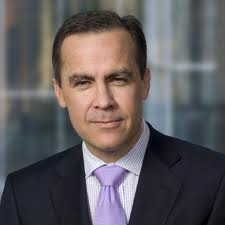
The governor of the Bank of England Mark Carney (image right) is a former Goldman Sachs official which is the World’s foremost “institutional speculator”. He spent thirteen years with Goldman before heading the Bank of Canada.
At the time of his 2013 appointment to the Bank of England, he was not a citizen of the United Kingdom: Mark Carney was the first foreigner to occupy that position since the founding of the Governor and Company of the Bank of England in 1694.
Were there powerful interests involved in the recruitment of the Governor of the BoE? Who was behind Carney’s candidacy? At the time of his appointment, the issue of U.K. “sovereignty” and Carney’s citizenship were hushed up by the British media.
Brexit and Financial Instability
Carney was fully aware that an “authoritative statement” pertaining to “financial stability” would have an immediate impact on financial markets. On whose behalf was he acting when he made those statements?
Tory MP Jacob Rees-Mogg has accused Mark Carney, of “speculative statements”:
“It is speculative and beneath the dignity of the Bank of England. To be making speculative pro-EU comments.”
The Goldman Sachs Report
In February, Goldman Sachs warned that in the case of Brexit, the pound sterling “could lose 20 per cent of its value”  Mark Carney’s statements at the House of Commons not only point in the same direction, they also provide legitimacy and “credibility” to Goldman’s assessment.
As an institutional speculator, Goldman’s intent is to influence expectations regarding financial markets (backed by authoritative statements from the Bank of England).
Coinciding with Carney’s recent statements, Goldman Sachs released a report on the detrimental economic and financial impacts of Brexit:
“However, given the substantial unpredictability regarding the UK’s post-Brexit trading and regulatory arrangements, quite how damaging Brexit would be in the long term is subject to a great deal of uncertainty. Arguably of more immediate concern is the effect that the uncertainty itself would have on UK growth.
The EU Treaty sets out a two-year timeframe for departure. During this period, the UK government would have to negotiate the terms upon which it could continue to trade with EU countries…
Some of these trade negotiations and many of the regulatory/legal decisions would be relatively straightforward. But many would not. …
During this period, UK-based businesses would face considerable uncertainty: exporting companies would not know the terms on which they would be able to supply export markets abroad once Brexit is complete; importing companies would not know the terms on which they would be able to import; and all companies would be confronted with increased regulatory/legal uncertainty. (Excerpts of report)
Carney dismissed the claims of Goldman in early February. But now he supports them.
Where do Mark Carney’s statements originate, from the Bank of England or from Goldman Sachs, his former employer?
Goldman is known to be the World’s foremost “institutional speculator”. Foreknowledge of statements and decisions by central banks are often used by financial institutions in speculative operations. Inside knowledge and connections are part of this process, they are the “bread and butter” of the “institutional speculator”.
The important question which the British media has not addressed: what is the relationship between Mark Carney and Goldman Sachs.
The Goldman Trojan Horse
Is there a Trojan Horse within the Bank of England with Goldman Sachs sitting on the inside?
While Carney was appointed by Her Majesty, unofficially, he still has “links” to Goldman Sachs.
Is he in conflict of interest?
Next time there’s a financial meltdown, your money could be rescuing Goldman Sachs.
Yes, thanks to a new deal struck by Mark Carney, the former Goldman man now running the Bank of England, the US investment bank could end up enjoying the next round of British taxpayer bailout money. (The Independent, 20 August 2015)
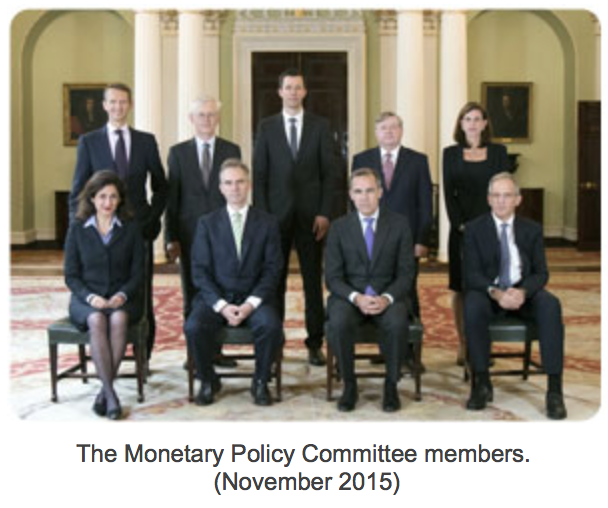
Moreover, several key senior positions within the Bank of England are held by former Goldman officials. Mark Carney was appointed in 2013. The following year (2014), Dr. Ben Broadbent, a Senior Economist for Goldman Sachs was appointed Deputy Governor in charge of Monetary Policy.
Bankers from Goldman are strewn across key policy-making arenas across the world like no other financial institution.
As well as the Governor of the Bank of England, his deputy Ben Broadbent is ex Goldman, as were two previous Monetary Policy Committee members, David Walton and Sushil Wadhwani.
Across the Channel, European Central Bank chief Mario Draghi is a Goldman man, while in the US, Goldmanites make up a quarter of the Federal Reserve system’s regional presidents. (Ibid).
Concluding Remarks
Central Banks are complicit in the manipulation of financial markets including stock markets, commodities, gold and currency markets, not to mention the oil and energy markets which have been the object of a carefully engineered “pump and dump” speculative onslaught.
Who controls the central banks? Monetary policy does not serve the public interest.

Tuesday, March 8, 2016

The Strange Story Of The Goldman Banker Subpoenaed In Malaysian Slush Fund Probe

Tyler Durden's picture


http://www.zerohedge.com/news/2016-03-08/strange-story-goldman-banker-subpoenaed-malaysian-slush-fund-probe
By late January, Tim Leissner was irritated.
Irritated that Goldman wouldn’t support his move to Los Angeles to be with his famous wife Kimora Lee, irritated that the firm wouldn’t let him give an internship to the son of a shadowy, as-yet-unnamed go-between in a deal to finance a controlling stake in an Indonesian copper mine, and especially irritated that the bank seemed to be looking a lot harder at the deals he was working on in Southeast Asia in the wake of the 1MDB scandal.
And why shouldn't he be frustrated? After all, Leissner built Goldman’s SE Asia operation. Who is the executive committee to tell him he can’t pass out internships as bribes on the way to financing Indonesian copper mines? And as far as 1MDB goes, Leissner didn’t recall anyone in New York complaining when the bank raked in hundreds of millions in underwriting fees for the deals that helped finance Najib’s slush fund (for more on the origins of the 1MDB scandal you can read here, here, and here).
“It’s not my fault Najib messed the whole thing up,” Leissner must have been thinking.
(Leissner and Kimora)
Be that as it may, Goldman had seen enough by the start of 2016.
Leissner, once the crown banker jewel in the Squid’s Asian tentacle, had become a liability. Investigations into 1MDB were underway in the U.S., Singapore, Switzerland, Hong Kong and Abu Dhabi. Someone, somewhere, was going to get to the bottom of how this disastrously indebted “development bank” got itself into dire straits and at the end of the rabbit hole there’s going to a giant Vampire Squid.
So what did Goldman do? Well, they cooked up an excuse to cut a critical loose end.
"Goldman placed Tim Leissner, the firm’s Southeast Asia chairman, on leave after a review of his email found that he had allegedly sent an unauthorized reference letter on behalf of an individual to another financial firm in 2015,” WSJ wrote this morning. “The letter also included statements that Goldman believes to be inaccurate.”
That review led to Leissner’s previously reported “mystery” leave. As we wrote at the time, "whether or not Leissner's leave and decision to high tail it out of Singapore has anything to do with the 1MDB scandal is an open question, but the timing certainly looks curious." Although no one knew it then, Leissner had already resigned by the time news of his "vacation" hit the wires.
“The email review also came as Goldman [questioned] a potentially lucrative mining deal in Indonesia being led by Mr. Leissner because of the involvement of someone in the deal who the bank believed could hurt the firm’s reputation,” WSJ goes on to detail. “Bank investigators found that Mr. Leissner had offered an internship to a child of the individual.”
Ultimately, Goldman backed out of the deal. Leissner was incensed. At $50 million, it would have been the biggest deal for Goldman in the region since the 1MDB bond offerings.  
It seems fairly obvious that Goldman saw the writing on the wall here and simply ordered the firm's investigators to scour Leissner's e-mail for an excuse to fire him ahead of revelations about 1MDB. Now, some possibly make-believe person of questionable repute and a possibly make-believe internship Leissner was set to give this anonymous individual's son will be trotted out as the reason the most important banker in SE Asia just had to go.
You know, because Goldman wouldn't want to damage its sterling reputation.
“?After leaving Goldman, Mr. Leissner took on an advisory role with Wildcat Capital Management, the family office of private-equity giant David Bonderman” with whose TPG Capital Leissner is close, WSJ says, in closing. “A person familiar with the matter said Mr. Leissner was no longer an adviser to his firm. It is unclear why he ended his relationship with the family office.”
Yes, it’s “unclear why he ended his relationship with the family office,” but one possibility is that Wildcat didn’t want anything to do with the looming 1MBD investigation by US authorities. As WSJ also reported early this morning, US investigators have subpoenaed Leissner in connection with the ongoing FBI and DoJ probe.
So, sorry Tim. The world is a collection of "fair weather fans," so to speak. You find out who your real friends are when the chips are down and for you, Lloyd Blankfein apparently isn't one of them.

Saturday, February 27, 2016

NY Times To Hillary: Release Those Damn Bank Speech Transcripts

Tyler Durden's picture


http://www.zerohedge.com/news/2016-02-27/ny-times-hillary-release-those-damn-bank-speech-transcriptsHillary Clinton is under the microscope. And rightfully so.
At a time when the American electorate has definitively rejected the entrenched political establishment in favor of two so-called “protest candidates” in Donald Trump and Bernie Sanders, voters want to know why they should elect the former First Lady and Secretary of State.
Why, Americans seem to be asking, is Clinton entitled to be President? Why should it be a foregone conclusion that another member of the country’s political aristocracy gets to stroll into the Oval Office? Republican voters soundly rejected the status quo when Jeb Bush’s campaign fell flat in the face of the Trump juggernaut, but Clinton is a larger-than-life figure (and we don’t necessarily mean that in a good way) who large swaths of the electorate are still inclined to vote for if only because “more of the same” sounds better than “who the hell knows” when it comes to where the country goes starting in 2017.
But perhaps more than ever, America is fed up with business as usual inside the Beltway and if there’s anyone who embodies that concept, it’s Clinton. She’s widely viewed as dishonest and there are serious questions about whether special interests and state actors exercise undue influence over decisions via contributions to the Clinton family charities, through paid speeches, and through who knows what other channels.
More specifically, Americans want to know what Clinton told audiences at speeches she made behind closed doors at events sponsored by Wall Street. This is critical because Clinton has pledged to rein in big banks and go beyond Dodd-Frank to address TBTF. Below, find an Op-Ed from The New York Times, whose editorial board wants Clinton “show voters those transcripts.”
*  *  *
“Everybody does it,” is an excuse expected from a mischievous child, not a presidential candidate. But that is Hillary Clinton’s latest defense for making closed-door, richly paid speeches to big banks, which many middle-class Americans still blame for their economic pain, and then refusing to release the transcripts.
A televised town hall on Tuesday was at least the fourth candidate forum in which Mrs. Clinton was asked about those speeches. Again, she gave a terrible answer, saying that she would release transcripts “if everybody does it, and that includes the Republicans.”
In November, she implied that her paid talks for the Wall Street firms were part of helping them rebuild after the 9/11 attacks, which “was good for the economy and it was a way to rebuke the terrorists.”
In a debate with Bernie Sanders on Feb. 4, Mrs. Clinton was asked if she would release transcripts, and she said she would “look into it.” Later in February, asked in a CNN town hall forum why she accepted $675,000 for speeches to Goldman Sachs, she got annoyed, shrugged, and said, “That’s what they offered,” adding that “every secretary of state that I know has done that.”
At another town hall, on Feb. 18, a man in the audience pleaded, “Please, just release those transcripts so that we know exactly where you stand.” Mrs. Clinton had told him, “I am happy to release anything I have when everybody else does the same, because every other candidate in this race has given speeches to private groups.”
On Tuesday, Mrs. Clinton further complained, “Why is there one standard for me, and not for everybody else?”
The only different standard here is the one Mrs. Clinton set for herself, by personally earning $11 million in 2014 and the first quarter of 2015 for 51 speeches to banks and other groups and industries.
Voters have every right to know what Mrs. Clinton told these groups. In July, her spokesman Nick Merrill said that though most speeches were private, the Clinton operation “always opened speeches when asked to.” Transcripts of speeches that have been leaked have been pretty innocuous. By refusing to release them all, especially the bank speeches, Mrs. Clinton fuels speculation about why she’s stonewalling.
Her conditioning her releases on what the Republicans might or might not do is mystifying. Republicans make no bones about their commitment to Wall Street deregulation and tax cuts for the wealthiest Americans. Mrs. Clinton is laboring to convince struggling Americans that she will rein in big banks, despite taking their money.
Besides, Mrs. Clinton is not running against a Republican in the Democratic primaries. She is running against Bernie Sanders, a decades-long critic of Wall Street excess who is hardly a hot ticket on the industry speaking circuit. The Sanders campaign, asked if Mr. Sanders also received fees for closed-door speeches, came up with two from two decades ago that were not transcribed: one to a hospital trade association, and one to a college, each for less than $1,000. Royalties from a book called “The Speech,” Mr. Sanders’s eight-hour Senate floor diatribe against President Obama’s continuation of Bush-era tax cuts for the wealthy, were donated to the nonprofit Addison County Parent/Child Center in Vermont.
The hazards of Mrs. Clinton, a presidential hopeful, earning more than $200,000 each for dozens of speeches to industry groups were clear from the start. Mrs. Clinton was making paid speeches when shehired consultants to vet her own background in preparation for a run. If they didn’t flag this, they weren’t doing their jobs.
Public interest in these speeches is legitimate, and it is the public — not the candidate — who decides how much disclosure is enough. By stonewalling on these transcripts Mrs. Clinton plays into the hands of those who say she’s not trustworthy and makes her own rules. Most important, she is damaging her credibility among Democrats who are begging her to show them that she’d run an accountable and transparent White House.

Saturday, February 6, 2016

This Is What Hillary Told Wall Street Behind Closed Doors

Tyler Durden's picture


Bernie Sanders has found the chink in Hillary Clinton’s political armor - and it has nothing to do with a private e-mail server.
The riley socialist has begun hitting the former First Lady hard on her liberal credentials, branding her a kind of wannabe progressive with an on-again off-again commitment to things like reforming the type of establishment politics that allow Wall Street to exercise undue influence on Capitol Hill.
In fact, Sanders has zeroed in on Clinton’s ties to the financial world’s biggest players including Goldman Sachs which has paid the Democratic frontrunner and her husband millions for speeches over the course of the last ten years. Those speeches in some cases coincided with Goldman’s efforts to lobby the State Department on issues that directly involved the bank.
Besides the speaking fees, Wall Street has also given more than $14 million to Clinton’s super PAC - the second highest total next to Jeb Bush. “I do not know any progressive who has a super PAC and takes $15 million from Wall Street,” Sanders said on Wednesday, at a town hall event organized by CNN.
“Enough is enough. If you’ve got something to say, say it directly,” Clinton said the next day, effectively daring Sanders to accuse her of being bought and paid for. She also said she would “look into” releasing the transcripts of her paid speeches. But by Friday morning, her campaign seemed to indicate that full disclosure was not forthcoming. “I don’t think voters are interested in the transcripts,” Joel Benenson, Clinton’s pollster.
Well actually voters are interested, and fortunately, Politico has an account of one recent address which underscores Sanders’ concerns. “Clinton offered a message that the collected plutocrats found reassuring, declaring that the banker-bashing so popular within both political parties was unproductive and indeed foolish,” Politico writes. “[She struck] a soothing note on the global financial crisis, she told the audience, in effect: We all got into this mess together, and we’re all going to have to work together to get out of it.” Here’s more:
What the bankers heard her to say was just what they would hope for from a prospective presidential candidate: Beating up the finance industry isn’t going to improve the economy—it needs to stop. And indeed Goldman’s Tim O’Neill, who heads the bank’s asset management business, introduced Clinton by saying how courageous she was for speaking at the bank. (Brave, perhaps, but also well-compensated: Clinton’s minimum fee for paid remarks is $200,000).

Certainly, Clinton offered the money men—and, yes, they are mostly men—at Goldman’s HQ a bit of a morale boost. “It was like, ‘Here’s someone who doesn’t want to vilify us but wants to get business back in the game,’” said an attendee. “Like, maybe here’s someone who can lead us out of the wilderness.”


Clinton’s remarks were hardly a sweeping absolution for the sins of Wall Street, whose leaders she courted assiduously for financial support over a decade, as a senator and a presidential candidate in 2008. But they did register as a repudiation of some of the angry anti-Wall Street rhetoric emanating from liberals rallying behind the likes of Sens. Elizabeth Warren (D-Mass.) and Sherrod Brown (D-Ohio). And perhaps even more than that, Clinton’s presence offered a glimpse to a future in which Wall Street might repair its frayed political relationships.

This is not the first time Wall Street has found itself at odds with one of the political parties in Washington. But it may be the first time since the Great Depression that the New York banker class has been this disconnected from both parties simultaneously.

The strained relations come at a consequential moment for the financial industry, which has rebounded from the 2008 financial crash faster and with bigger gains than the rest of the country, but is now facing the ire of newly emboldened and decidedly anti-Wall Street populists in both political parties. And yet the 2014 and 2016 election cycles will help determine whether banks, already restrained by the Dodd-Frank financial reform law, will face new regulatory restrictions, further rounds of legal action and higher tax rates. “Traditionally, Wall Street plays both sides of the fence on its political donations,” says Charles Geisst, a financial historian and professor at Manhattan College. “What's happening now is neither side is coming through with the things Wall Street feels it is entitled to, and so everybody just wants to give up. But they can’t, because they are going to continue to be in the limelight whether they like it or not.”

“Like the rest of America, Wall Street is looking at Washington and saying whether we agree or disagree, they’re looking at both parties with complete revulsion,” one private equity executive told Politico.
Right. Wall Street is looking at Washington "with complete revulsion." Except when it comes to Clinton. Who offers "a way out of the wilderness." 
Needless to say, Politico's account only serves to underscore the notion that a vote for Hillary is a vote for business as usual inside the Beltway. A ballot for America's entrenched political aristocracy, and a sure fire ticket to more of the same. 
Politico's account brings to mind an important question: could it be that the best candidate for America's highest office isn't even running?...