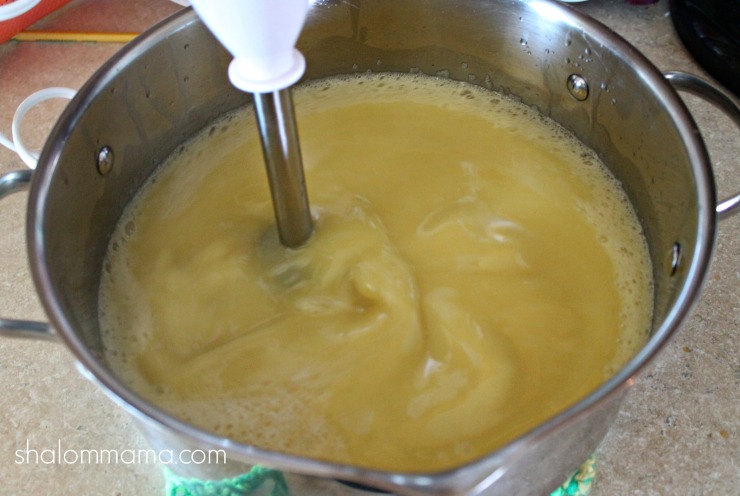
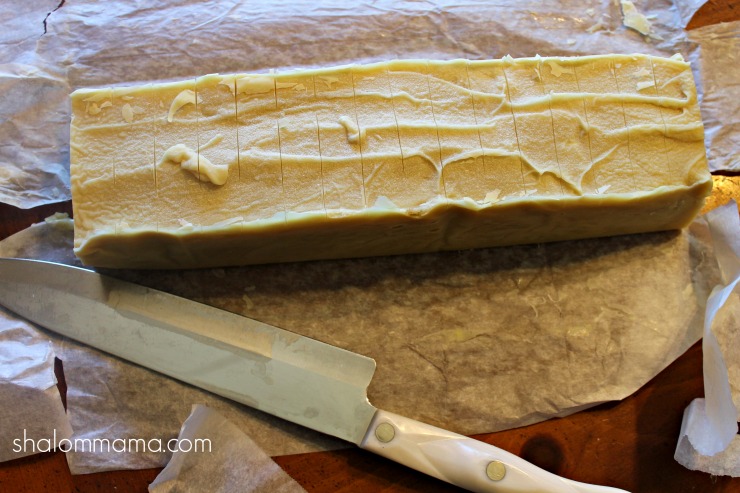
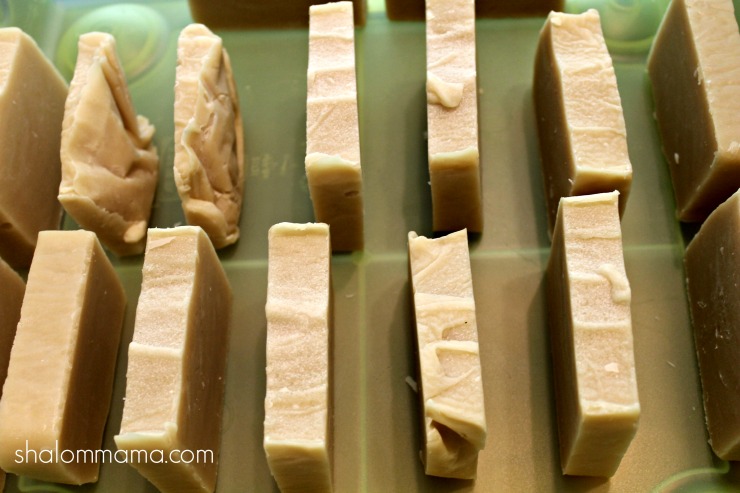
I'm going to make soap this weekend and I'm pretty excited about learning a new craft :)
There are a couple of things I would like to recommend to you before
you make your first soap. No matter what you decide to make, the
quality of your first soaps will be a bit wanting when compared to soaps
you make in a month or more. Test batches are GREAT! All my batches
are about 1# of oils. That makes enough bars to test & a couple to
give away or save to see how they develop. No need to make big 5 or 10#
batches. You won't have enough space to make more! :D The more you
practice, the better you get. You can resize ANY recipe you find using
soapcalc. If you enter any recipe it will give you the % of each
ingredient. Write them down & put the % back into soapcalc with the
weight of the batch size that you want in box 2?. I think that's the
right box.
You don't need a collection of expensive, exotic oils to make soap.
100% coconut oil makes great laundry soap & a lot of people like it
for body soap when superfatted correctly. Lard, Olive oil, Shortening,
Canola, Corn, Soy, Palm are other oils easy to get at your local
grocery or Walmart.
You need lye. Lye & drain cleaner are not necessarily the same.
It needs to be ALL Sodium Hydroxide or NaOH (same thing). It is
available in different areas at different places. Hardware stores are a
good place to buy your first lye. I can buy 1# of lye at Ace Hardware
for $3.99. Rooto Crystals 100% lye. It's good stuff & since I make
those small batches, it lasts me a while, too.
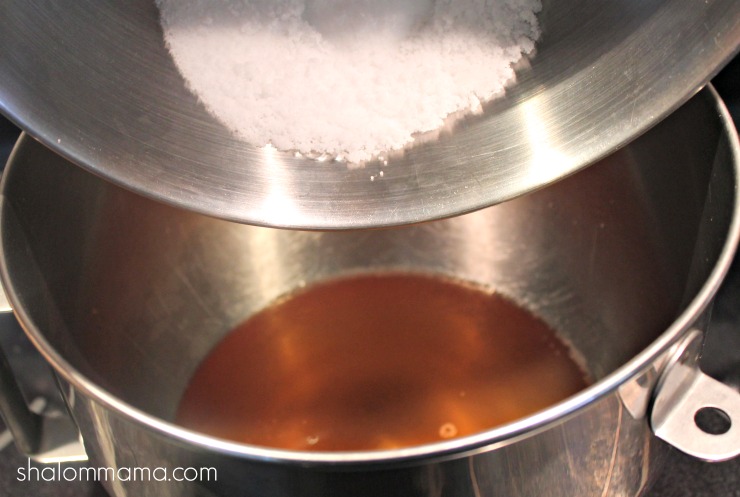
The BEST thing to mix your lye & water in is stainless steel.
Some people use plastic & some use glass. The heat generated &
corrosive nature of the lye shortens the life of both of these
materials. As a result, they may crack at an inconvenient time. My
first batch of soap, I used a tall plastic pitcher that had a crack in
the bottom of it. I didn't know it had a crack. I was kinda scared of
what the lye was going to do so I had the pitcher inside a plastic
bucket. Some people mix their lye in the sink, just in case. I like to
mix it on my porch or outside. There are fumes, but not like a big
chlorine gas cloud. Try not to breathe the fumes (that's why I like to
mix mine, outside). The fumes dissipate quickly. ALWAYS add your lye
to the liquid not the other way around. Stir until dissolved. If you
have crystals in the bottom the lye has not dissolved. If you have scum
on top of the liquid, that can be contamination in your pitcher (I used
to get it from washing my pitcher with soap), or contaminants in your
lye. Just run it through a strainer if it bugs you. A little dust or
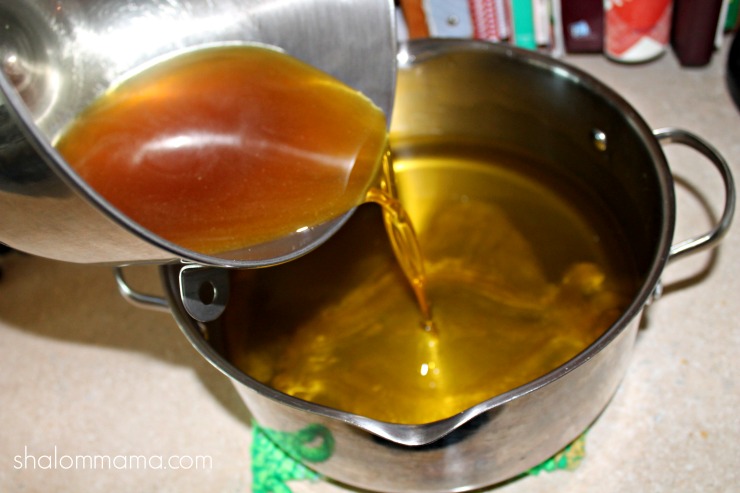
scum isn't gonna hurt my soap, so I usually just dump it in the oils.
Make sure you wear your safety equipment! Eye protection or face
shield, chemical resistant gloves, apron, clean work space, no dogs or
kids underfoot.
Making soap is not rocket science. Ok, maybe making the BEST soap is,
but don't worry about that, yet. You don't need a fancy education or
pricey soap making course to make soap. The more you educate yourself
the better your soap will be, however. You find that there is a lot to
learn about such a simple endeavor, but you can still make a good soap
on your first try.
Keep it simple! I have been on Facebook boards long enough to see all
the new soapmakers that want to start off with milk & beer for their
lye liquid, add their favorite medications, in other words, add all
kinds of things that will mask the basic experience of making soap. You
really will benefit by making a plain soap as your first batch to see
how the soap acts. If you are making HP (Hot Process) you want to know
about how long it takes to cook & what stages it is going through.
I recommend this, as a lot of times a fluid different than distilled
water for lye, or an additive as simple as milk will make the whole
batch temperamental. You need to know what "normal" is before you deal
with problems like seizing, separating, not tracing, so you are better
able to recognize that you have a problem & how to deal with it.
Do not use aluminum when making soap! You can mold in almost anything.
Plastic butter, yogurt, cottage cheese cups, cardboard boxes, wooden
boxes, PVC tubes, silicon baking molds. Remember you have to get your
soap OUT of the mold, too. Lining the mold (see video link below) will
make that real easy. Plastic is flexible & that usually helps, too.
One of my favorite molds is the end cut off of a medium priority mail
box. Of course, you can purchase professional molds made for baking or
soap, too.
If I think of anything else (or you have any suggestions) I will add it.
Getting Started
http://www.lovinsoap.com/2012/10/getting-started-in-soapmaking-without-spending-a-ton-of-money/
Soap Making Equipment, what you need to get started
http://bethannecreates.blogspot.com/2012/07/common-soap-making-terms-and-acronyms.html
http://saponifier.com/an-open-letter-to-new-soapmakers/
http://www.lovinsoap.com/2014/02/ive-made-my-first-batch-of-soaphow-long-until-i-can-sell-it/
How to Crock Pot Hot Process Soap
http://soapingforsanity.blogspot.com/2013/08/tutorial-red-eye-hot-process.html
Modern Procedures & Tips for Cold Process
Comparison of pH test strips used for testing soap
http://milesawayfarm.wordpress.com/2013/12/06/soaping-newbies-12-common-questions/
http://blog.thesage.com/2013/01/31/curing-soap-2/
Primitive Soap Making
"
The
soap making booklet was originally prepared for Christians in Burma
living in mountainous regions who for one reason or another were cut off
from being able to use industrial chemicals, and needed to make soap to
help stop the spread of certain common and tropical diseases." By Paul
Norman
You can download this 24 page booklet or read it in PDF on the web
Traditional Soap Making based on old Pioneer Recipes
Making Soap from Wood Ash Lye
Soap Mold Info
Perfected Method for Lining a Soap Mold with freezer paper
How to Make a Soap Mold out of Coroplast
Soap Calculators
http://www.soapcalc.net/calc/SoapCalcWP.asp
https://www.thesage.com/calcs/LyeCalc.html
http://www.saffireblue.ca/shop/liquid-cream-bar-soap-calculator.htm
http://www.summerbeemeadow.com/content/advanced-calculator-solid-cream-or-liquid-soaps
http://www.soapguild.org/soapmakers/resources/lye-calc.php
Soap Calculator Directions
If these pages don't help you understand Soapcalc, there are LOTS of
tutorials on youtube. One of them is bound to help you figure it out.
It is very important that you learn how to use this tool (or at least
SOME calculator). It helps you check recipes you find to make sure they
will work. It will help you resize a recipe, allows you to design your
own recipe & gives you all the information you need to analyze the
qualities your recipe will bring to a bar, things like hardness,
cleansing, conditioning, bubbly, etc.
http://www.soapcalc.net/info/helptext.asp
Kim McNutt's video describing how to use Soapcalc